Categories
Adventure self help

Ecopsychology: A Catchy Gen-Z Word or New Field of Science?

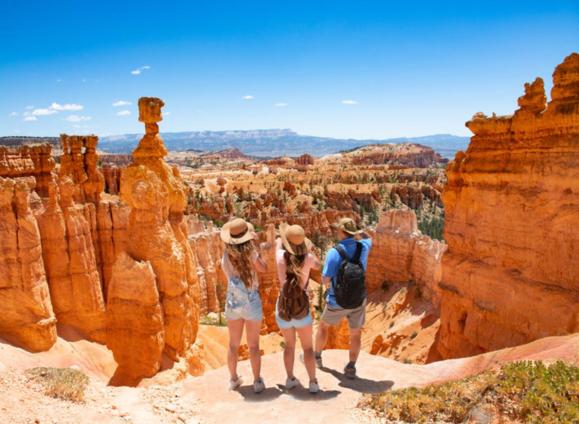
Nature has a unique way of making us feel refreshed and alive. Spending time in the great outdoors can have numerous benefits for our physical, mental, and emotional wellbeing. Being in nature, we are able to unplug and reconnect with a more primal & simplistic state of being. Today, we’re going to talk about Ecopsychology and some of the top benefits of spending time in nature outside. Continue reading to learn how the great outdoors can be more effective than many of your prescription medications.

Estimated time to read:

6–9 minutes

Table of Contents:

  1. What is Ecopsychology?
  2. Nature Can Do Many Things, So Let’s Explore its Benefits:
    1. Reduces Stress and Anxiety
    2. Improves Physical Health
    3. Boosts Immune System
    4. Enhances Creativity
    5. Provides Mental Clarity
  3. Wrapping Up:

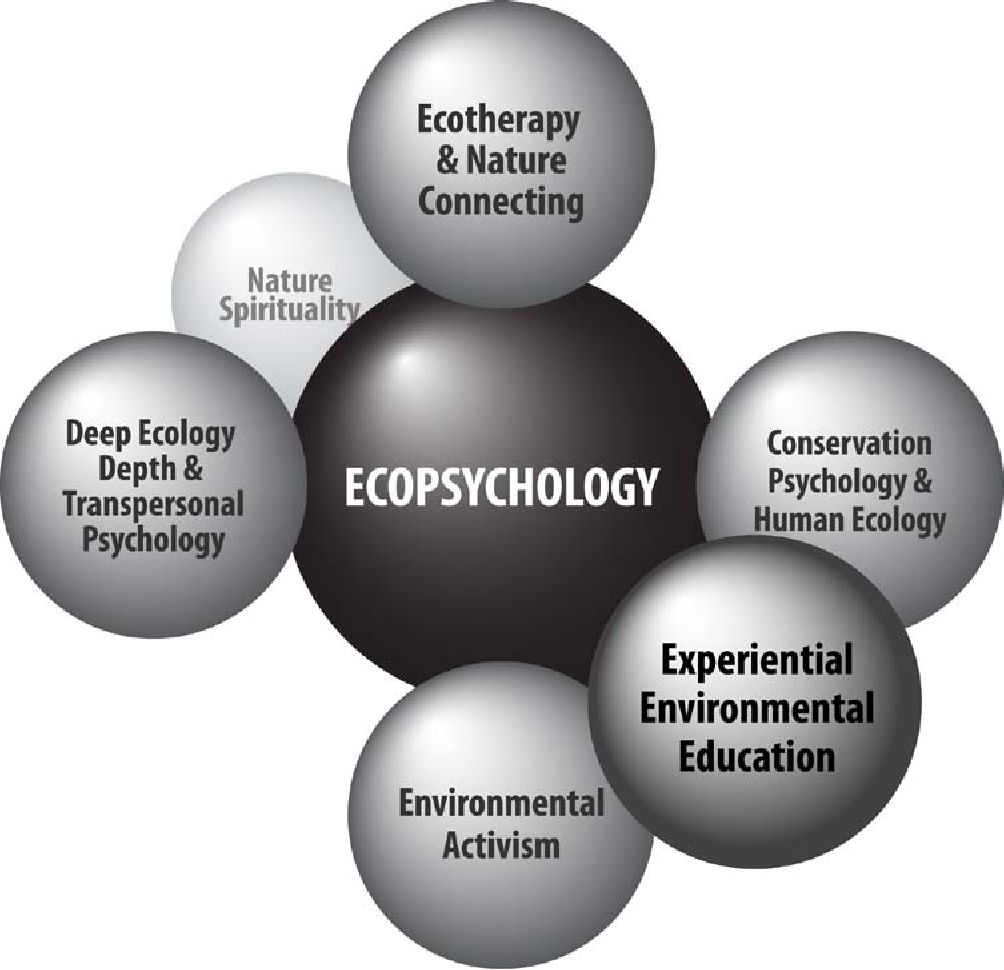
What is Ecopsychology?

Ecopsychology is a word for “the study of nature and how it affects the human mind.” We’ve learned in the last 10+ months while full-time traveling in a RV that there’s nothing that even comes close to comparing with nature. You can take prescription meds, read self-help books, go to therapy, practice gratitude daily, etc. and then adding in time with nature will make you feel even better.

Research done by Yale University, showed that time in nature — as long as people felt safe in their environment — was an antidote for stress. Spending time outdoors can lower blood pressure and stress hormone levels, reduce nervous system arousal, enhance immune system function, increase self-esteem, reduce anxiety, and improve mood.

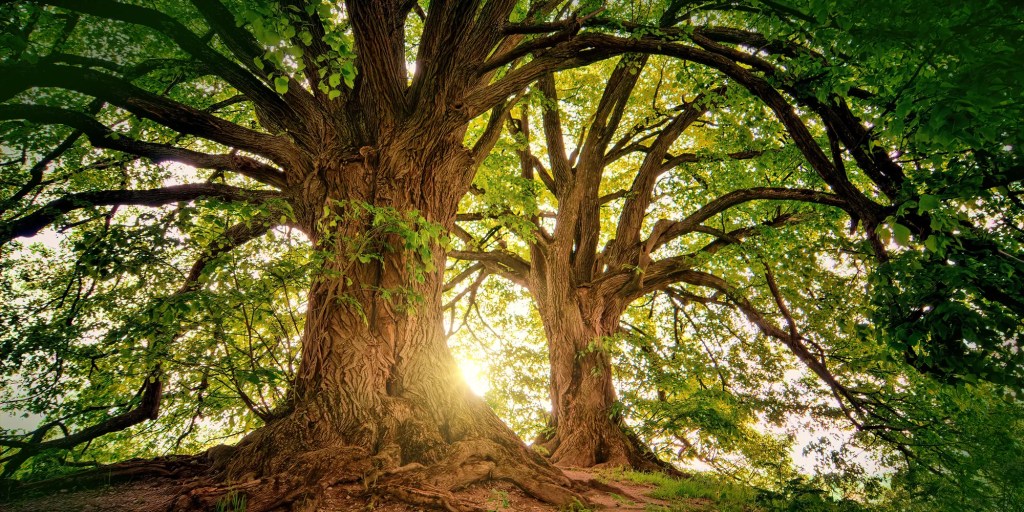
There’s a reason tree roots look like the nerves in the brain.

In other studies done by the American Psychological Association it was discovered that a simple stroll through a city park or a day spent hiking in the wilderness can be extremely beneficial. Their studies showed that exposure to nature was linked to improved attention, lower stress hormones, overall better mood, reduced risk of psychiatric disorders and even upticks in empathy and cooperation.

So why is this the case? What about nature encourages our mind and bodies to breathe slower, reduce anxiety, and function better holistically? Ecopsychology is a growing field that studies how nature and our environment affects our mental health, stress, mood, physical activity, oxygen levels, and more. We originally thought nature freaks were the only ones who thought this way – but numerous studies have shown that the hippies were right all along and modern science is actually on their side.


Nature Can Do Many Things, So Let’s Explore its Benefits:


Reduces Stress and Anxiety

Nature has a calming effect on our minds and bodies. Being surrounded by plants, trees, and fresh air can help reduce stress and anxiety levels. Studies have shown that spending time in nature can significantly lower cortisol levels, a hormone associated with stress.

Stress is a major talking point for everyone – you hear it in the news, at work meetings, and even in casual conversations. Everyone is “so busy” and stressed. The stress may look different person to person but there’s one thing that remains consistent – stress will completly fill any space you allow it to have.

There’s many times when we get stressed from overworking, being too busy, not having enough free time, or even just not sleeping properly. Getting out into nature is a free, easy way to get out and feel better – instantly. You don’t have to call the doctor to get a prescription and wait for it to kick it, you don’t have to sit in a therapy session for an hour, you don’t have to wait another day – just grab your shoes and hit the road, Jack.

Improves Physical Health

Nature is a great place to engage in physical activity. Hiking, walking, and biking are just a few examples of outdoor activities that can improve your cardiovascular health, reduce your risk of obesity, and lower your blood pressure.

It’s well known that we all need to work out, eat healthier, have less sugar and caffeine, and many, many other things that doctors tell us at every annual visit. However, just going out on a walk is enough to help – Rome wasn’t built in a day. While you are out exploring you get to create your own adventure. Do you want to hike 1 mile or 5 miles? The world is your oyster. The key is that you are outdoors doing something, and something is better than nothing.

You’ll also notice it’s easier to not chug coffee, energy drinks, and caffeine-packed beverages when you exercise often. There’s evidence that suggests that the feeling your body gets from caffeine and sugar is similar to the feeling of anxiety or stress. With a lot of caffeine intake, your body is plunged into high stress and anxiety mode against its will, and you are left confused why you feel so jittery and hazily awake. It’s not healthy for any of us, but we do it anyway.

Did you know that walking, hiking, running, or doing any form of exercise outdoors is the healthiest way for your body to produce “natural caffeine?” There’s no drawbacks to taking a walk. Unlike grabbing a sugar filled caffeinated beverage, you won’t have a sugar crash at the end of that walk either.


Boosts Immune System

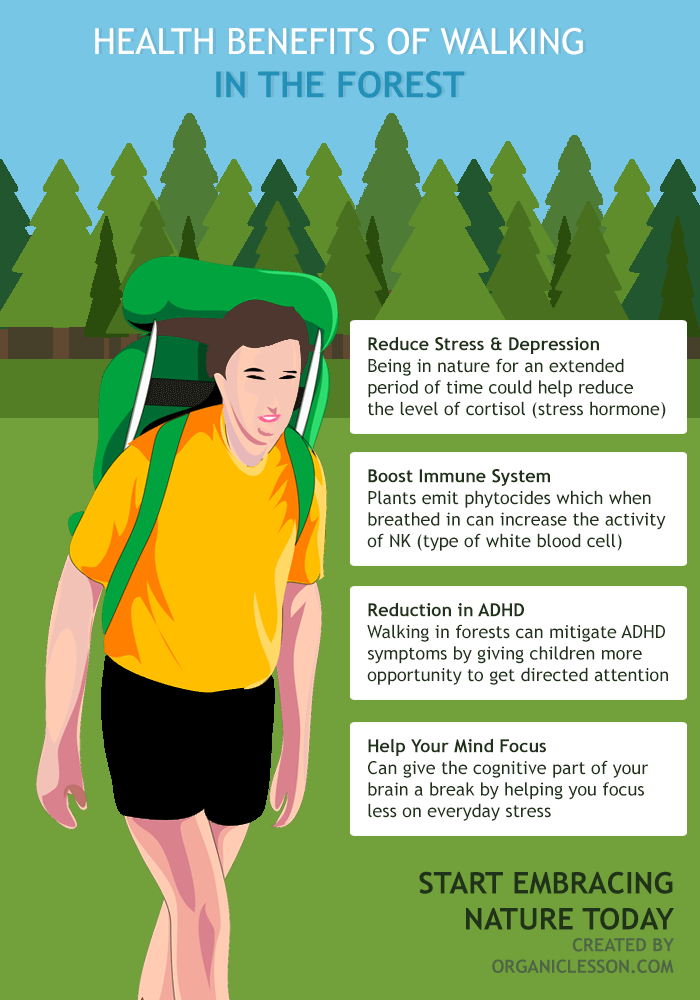
Being in nature can also help boost your immune system. Trees and plants release phytoncides, which are chemicals that help protect them from germs and insects. When we breathe in these natural chemicals, our bodies respond by increasing the number and activity of a type of white blood cell that fights infection and even cancer.
The National Library of Medicine says,

“A growing body of evidence suggests that various forms of being exposed to nature, such as living close to, frequenting or even looking at environments dominated by living material, are able to provide salutogenic effects on human health. They range from beneficial psychological to physiological outcomes such as attention restoration, improved mood, lowered anxiety and decrease in depressive symptoms, improved cardiovascular, metabolic, oncogenic, respiratory and endocrine function as well as faster healing after surgery and longer life-expectancy. Often, these benefits are attributed to indirect effects of nature exposure, such as increased physical activity, social interactions, positive mental effects and exposure to sunlight, but recent findings have also highlighted direct physiological mechanisms that are triggered by exposure to natural environments. This review focuses on direct mechanisms by which nature can affect human health, more specifically on air-borne compounds emitted by natural environments that have the potential to modulate immunological responses when inhaled, such as biogenic volatile organic compounds (BVOCs), terpenes, essential oils, charged ions, pollen, fungi and bacteria.”

Did you know that your immune system could be enhanced by being out in nature? Because studies are finding out that it absoutely can be.


Enhances Creativity

Nature has been found to enhance creativity and problem-solving abilities. In a study conducted by the University of Utah, participants who went on a nature walk prior to testing performed better on a creativity test than those who went on an urban walk.


Provides Mental Clarity

Nature can also help clear our minds and improve our focus. Stepping away from our daily routines and technology can help us recharge and refocus our thoughts.

Have you ever been sitting at work for a few hours and just felt like you can’t focus anymore? There’s too many phones ringing, emails buzzing, your boss wants to have a meeting, and the intern has 500 questions for you today. It’s all happening at once, and the reality is that our brains and bodies were not made to handle this much stimulation at once.

Stress, depression, and other mental illnesses often follow when we are subjected long term to doing something that we can’t sustain. Your mind and body both can not keep up with the constant pinging of the world – so give them a break.

By going outside in nature, you allow yourself to see the trees, plants, animals, and the simplicity of the world. We have stepped away from a simple life in exchange for our digital world of notifications. At any time, you can decide to put down your phone and walk outside. Even turn it off, so that it won’t bother you the rest of the day. We are allowed to rest, and none of us are robots – even if our employers think we are or want us to be. We have to take breaks and reconnect with ourselves.


Wrapping Up:
Spending time in nature can have numerous benefits for our physical, mental, and emotional wellbeing. Whether it’s through hiking, camping, or even just taking a walk in the park, make sure to incorporate nature into your life to reap the (many) benefits it has to offer.

We appreciate you reading this far!

We’ve been full-time living in a RV for 10+ months, follow along with our adventures by clicking the buttons below:

Our latest on Instagram posts:

Subscribe for updates to our blog (we won’t send any spam – we don’t care for that either):
Categories
Adventure travel

Explore America’s National Park System

National Parks are incredible and almost other-worldly. If you haven’t visited one yet, make sure you add one or two to your summer plans now. We’ve been lucky enough to camp at 10 national parks so far, and every single one of them in the national park system have been incredible.

Estimated time to read:
6–10 minutes

Total amount of national parks by state:

Did you know that the United States has 61 national parks within 29 different states? California and Alaska top the list with the most amount of national parks, with western states like Utah, Colorado, and Arizona coming right after. On the flip side, there’s 21 states that do not have a national park within their borders.

Theodore Roosevelt, often called “the conservation president,” impacted the National Park System well beyond his term in office. He doubled the number of sites within the National Park System during his time in office. Between 1901 & 1909, President Teddy Roosevelt signed legislation establishing five new national parks within the National Park System: Crater Lake, Oregon; Wind Cave, South Dakota; Sullys Hill, North Dakota (later re-designated a game preserve); Mesa Verde, Colorado; and Platt, Oklahoma (now part of Chickasaw National Recreation Area). By the end of his term the US was the proud protector of

Teddy Roosevelt was quoted saying:

There is nothing so American as our national parks … The fundamental idea behind the parks … is that the country belongs to the people, that it is in process of making for the enrichment of the lives of all of us.

Teddy Roosevelt

We’re going to show you all of the current national parks by state with images and short explanations. If you’re looking for the ultimate adventure, then this list is where to start with the national park system.

Advertisements

Please consider joining the gone community by subscribing below & following us on social media. It’s 100% free, and well worth the price of admission. We’ll update you with the newest RV lifestyle stories, tips and tricks, mental wellness tips, and so much more. DMs are always open to chat, and we’ll answer any questions you have about this lifestyle – it doesn’t have to be scary! We also promise not to spam your inbox with junk – we don’t care for that either.

You can follow us on social media here:


Adventure is out there – and we’ll help you find it! This list is in alphabetical order by state. Let the virtual adventure begin!

  1. Alaska
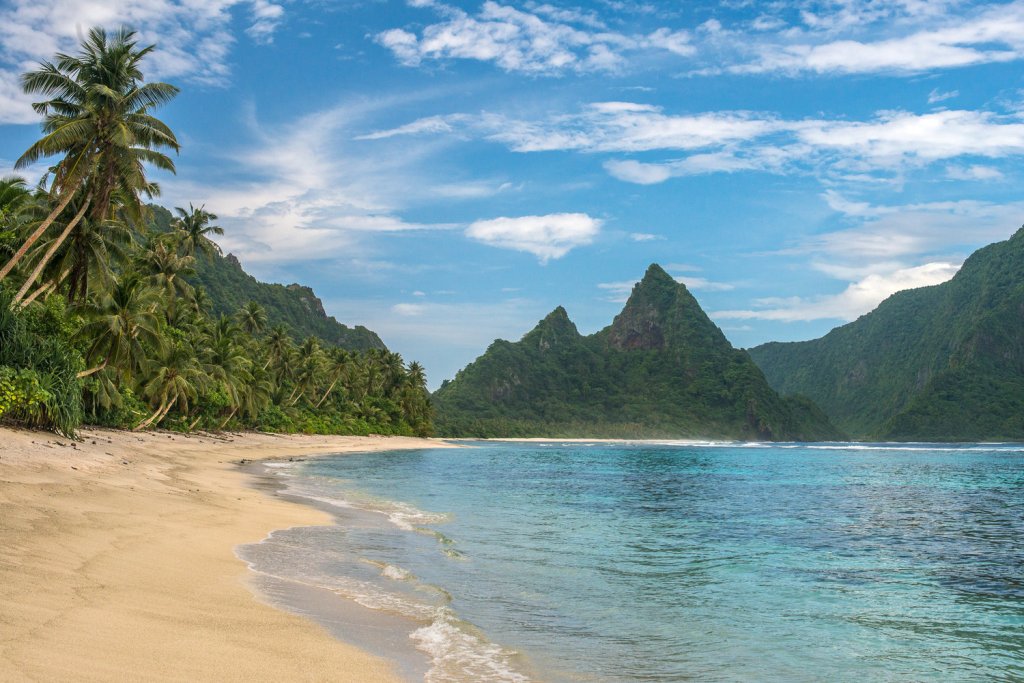
  2. American Samoa
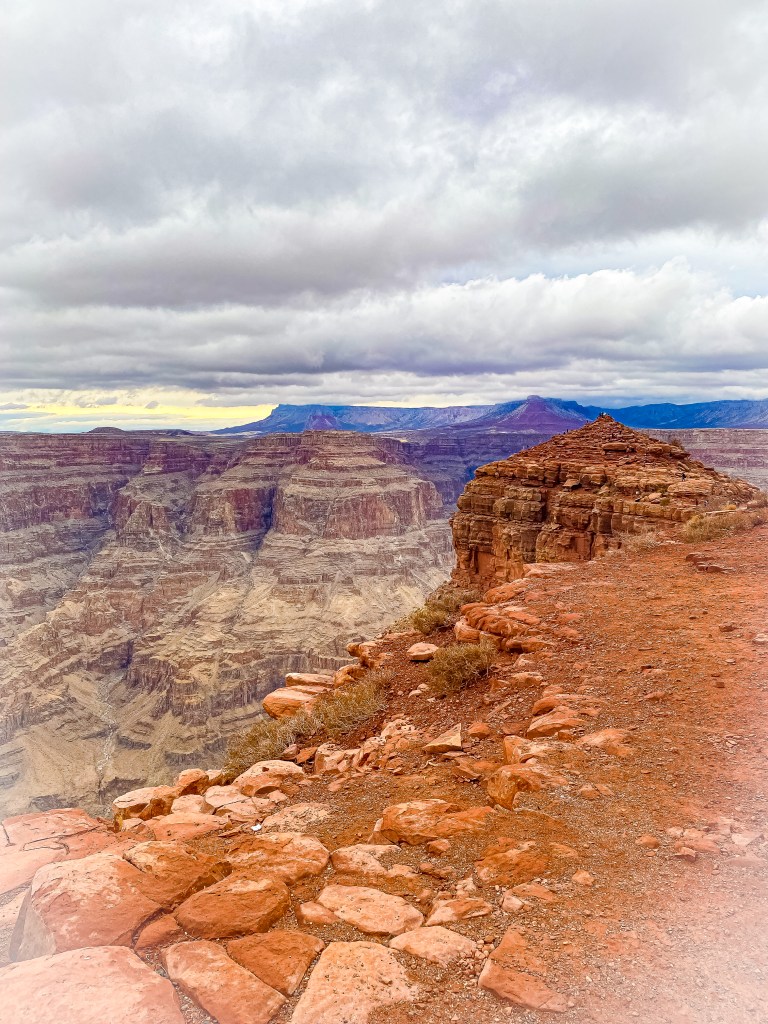
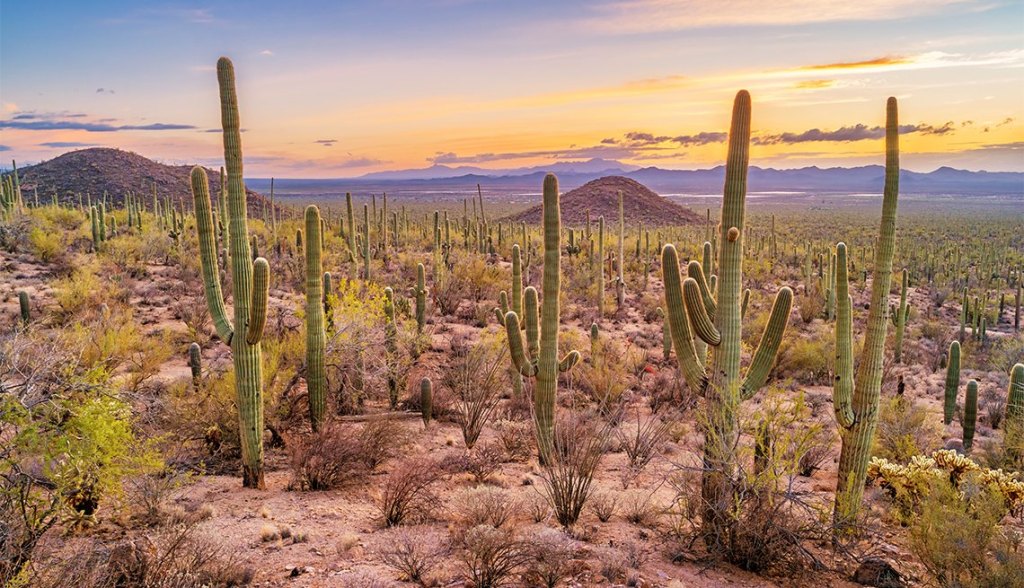
  3. Arizona
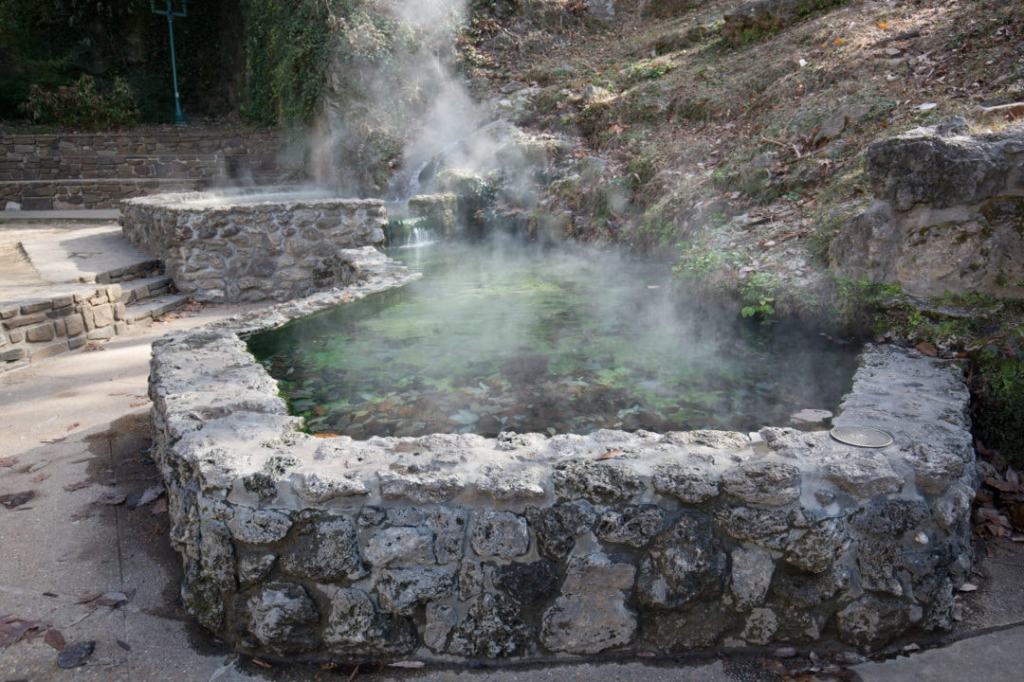
  4. Arkansas
  5. California
  6. Colorado
  7. Florida
  8. Hawaii
  9. Idaho
  10. Kentucky
  11. Indiana
  12. Maine
  13. Michigan
  14. Minnesota
  15. Missouri
  16. Montana
  17. Nevada
  18. New Mexico
  19. North Dakota
  20. North Carolina
  21. Ohio
  22. Oregon
  23. South Carolina
  24. South Dakota
  25. Tennessee
  26. Texas
  27. Utah
  28. Virgin Islands
  29. Virginia
  30. Washington
  31. West Virginia
  32. Wyoming
  33. Which National Park Will You Visit Next?
  34. Just Announced:

Alaska

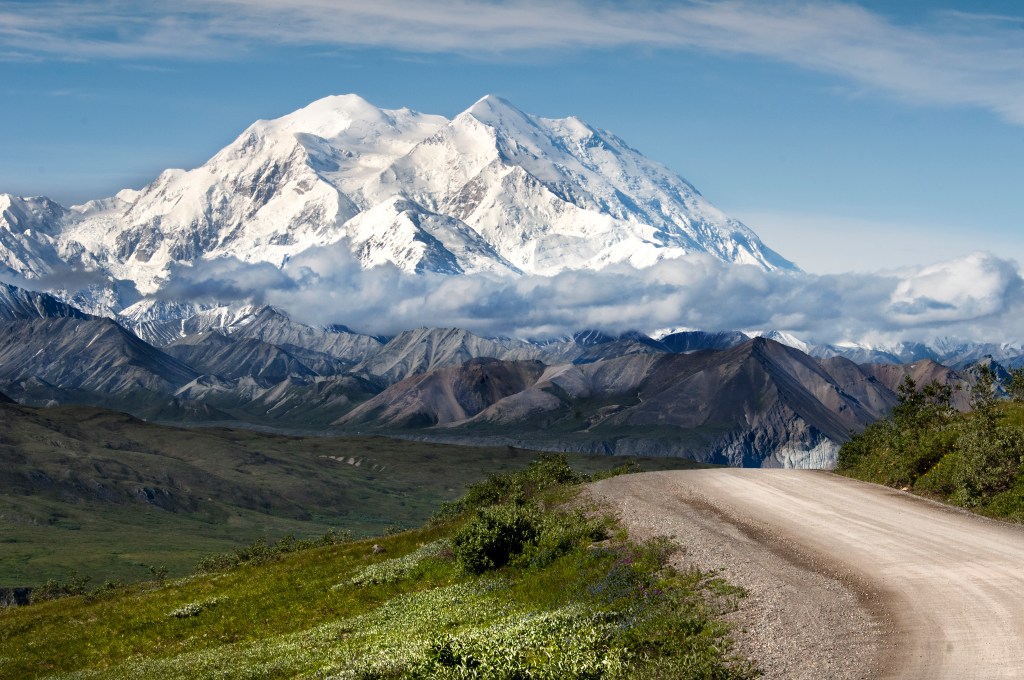
  1. Denali National Park, Alaska
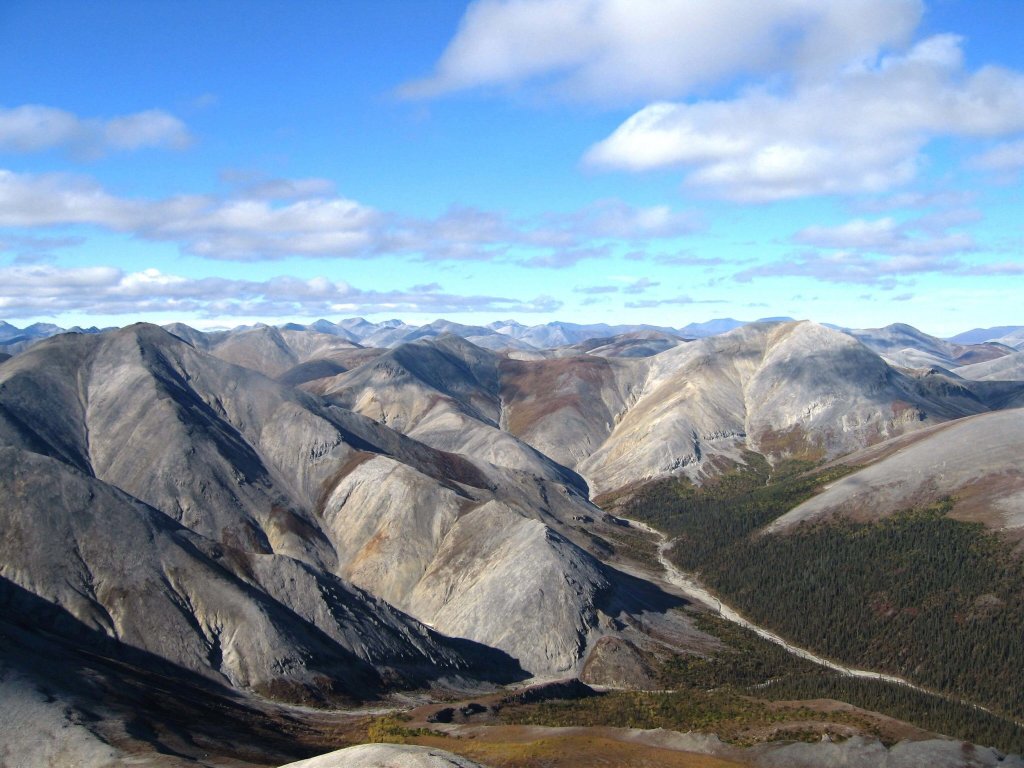
  2. Gates of the Arctic National Park, Alaska
  3. Glacier Bay National Park, Alaska
  4. Katmai National Park, Alaska
  5. Kenai Fjords National Park, Alaska
  6. Kobuk Valley National Park, Alaska
  7. Lake Clark National Park, Alaska
  8. Wrangell-St. Elias National Park, Alaska
Advertisements

American Samoa

  1. National Park of American Samoa, American Samoa

Arizona

  1. Grand Canyon National Park, Arizona
  2. Petrified Forest National Park, Arizona
  3. Saguaro National Park, Arizona

Arkansas

  1. Hot Springs National Park, Arkansas
Advertisements

California

  1. Channel Islands National Park, California
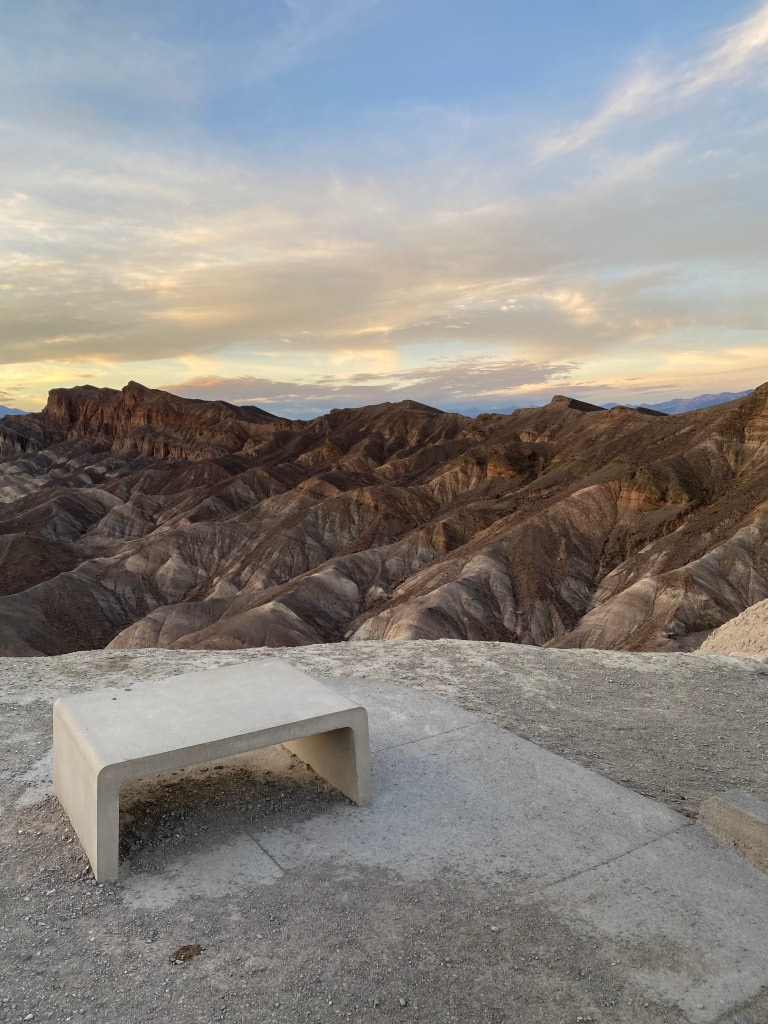
  2. Death Valley National Park, California and Nevada
  3. Joshua Tree National Park, California
  4. Kings Canyon National Park, California
  5. Lassen Volcanic National Park, California
  6. Pinnacles National Park, California
  7. Redwood National Park, California
  8. Sequoia National Park, California
  9. Yosemite National Park, California

Colorado

  1. Black Canyon of the Gunnison National Park, Colorado
  2. Great Sand Dunes National Park, Colorado
  3. Mesa Verde National Park, Colorado
  4. Rocky Mountain National Park, Colorado
Advertisements

Florida

  1. Biscayne National Park, Florida
  2. Dry Tortugas National Park, Florida
  3. Everglades National Park, Florida

Hawaii

  1. Haleakala National Park, Hawaii
  2. Hawai’i Volcanoes National Park, Hawaii
Advertisements

Idaho

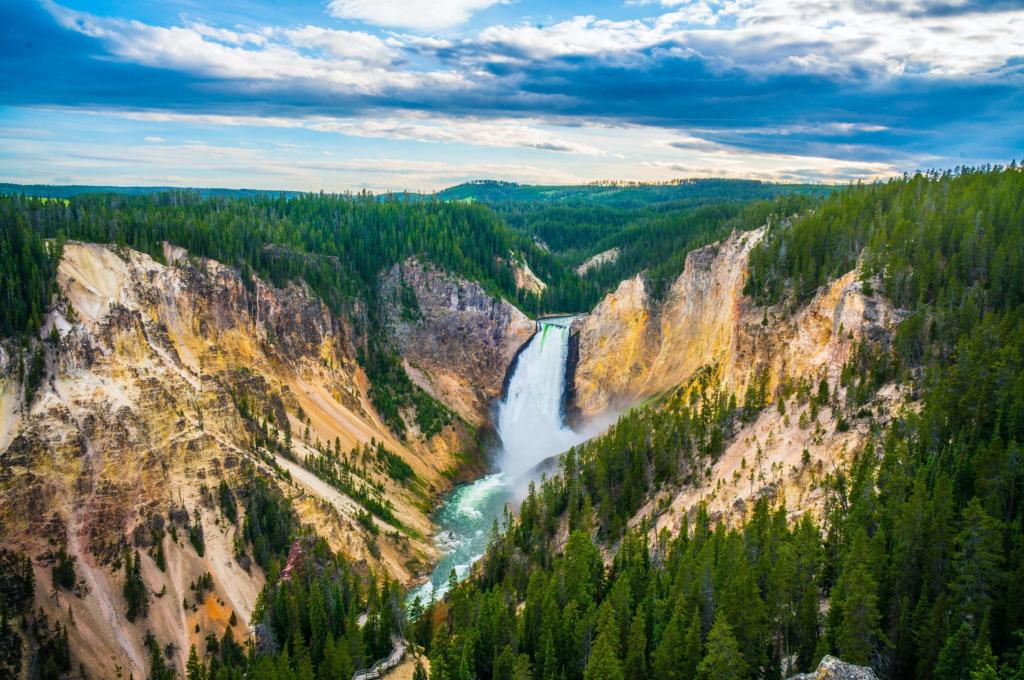
  1. Yellowstone National Park, Idaho, Montana, and Wyoming

Kentucky

  1. Mammoth Cave National Park, Kentucky

Indiana

  1. Indiana Dunes National Park, Indiana

Maine

  1. Acadia National Park, Maine
Advertisements

Michigan

  1. Isle Royale National Park, Michigan

Minnesota

  1. Voyageurs National Park, Minnesota

Missouri

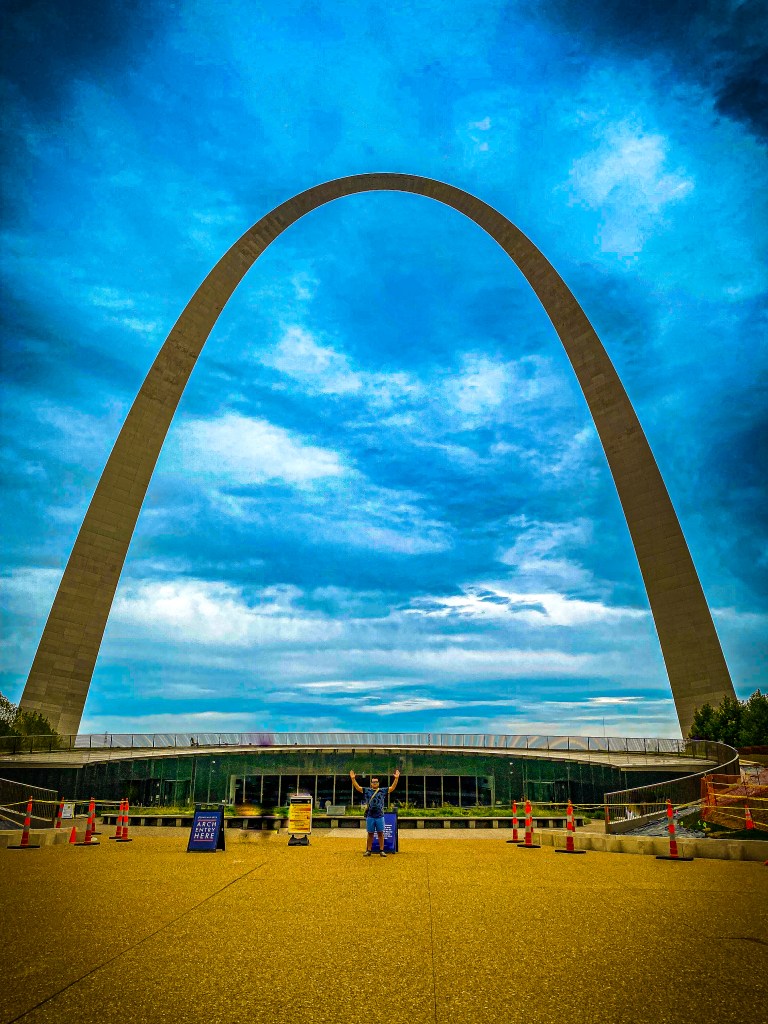
  1. Gateway Arch National Park, Missouri
Advertisements

Montana

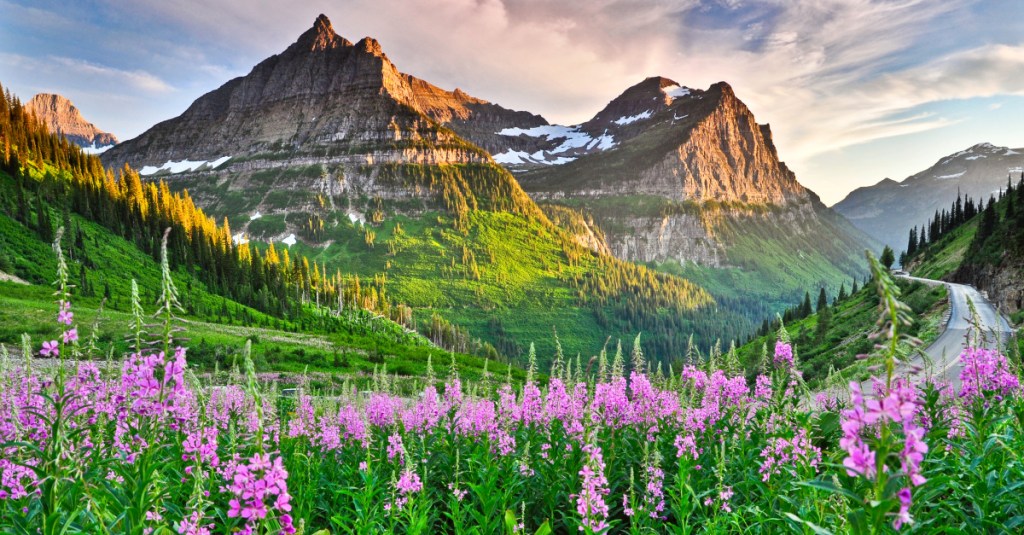
  1. Glacier National Park, Montana
  2. Yellowstone National Park, Idaho, Montana, and Wyoming

Nevada

  1. Death Valley National Park, California and Nevada
  2. Great Basin National Park, Nevada
Advertisements

New Mexico

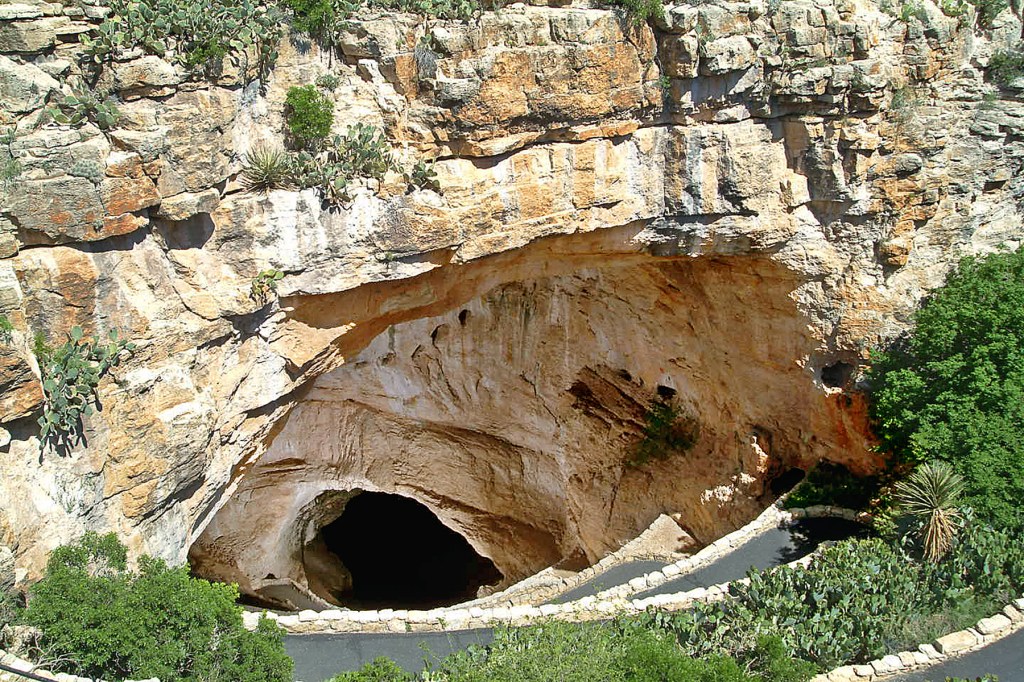
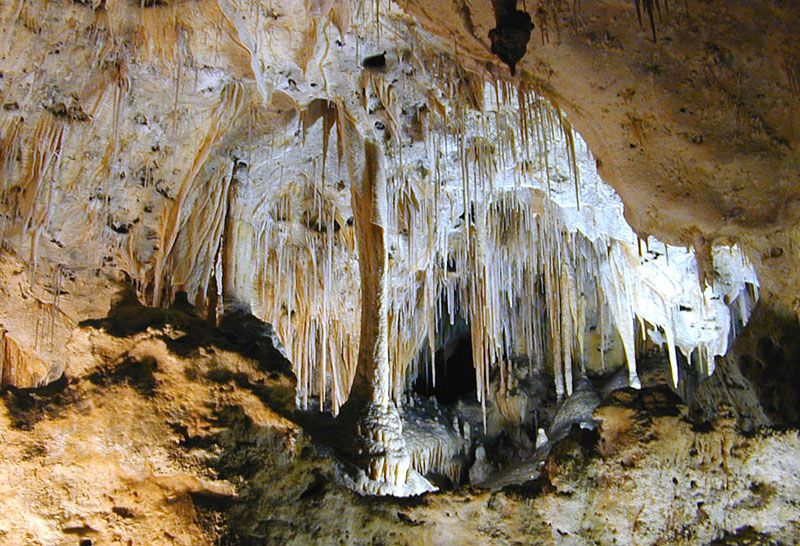
  1. Carlsbad Caverns National Park, New Mexico
  2. White Sands National Park, New Mexico

North Dakota

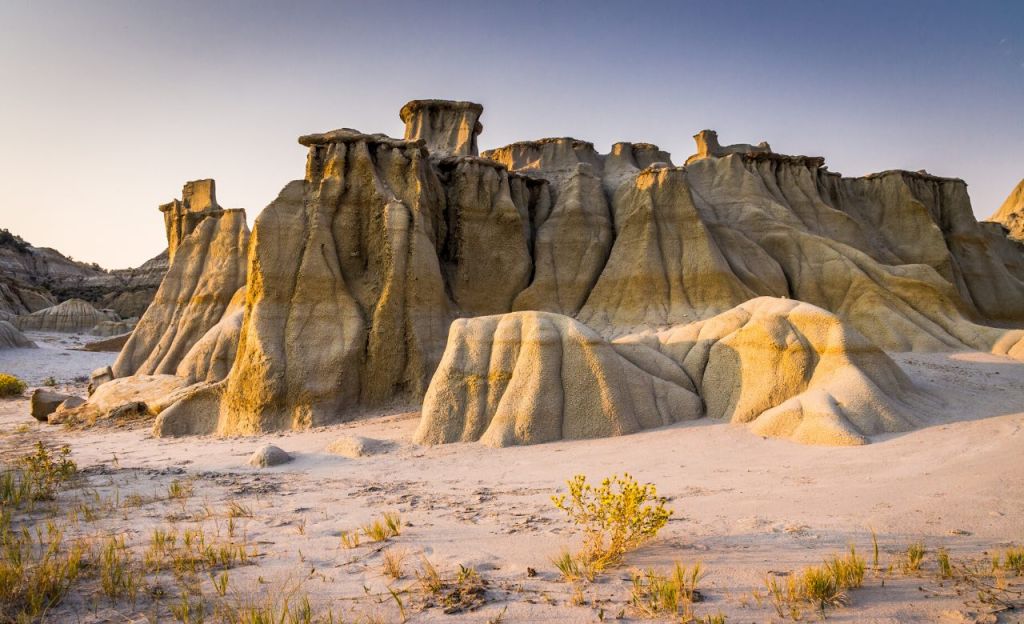
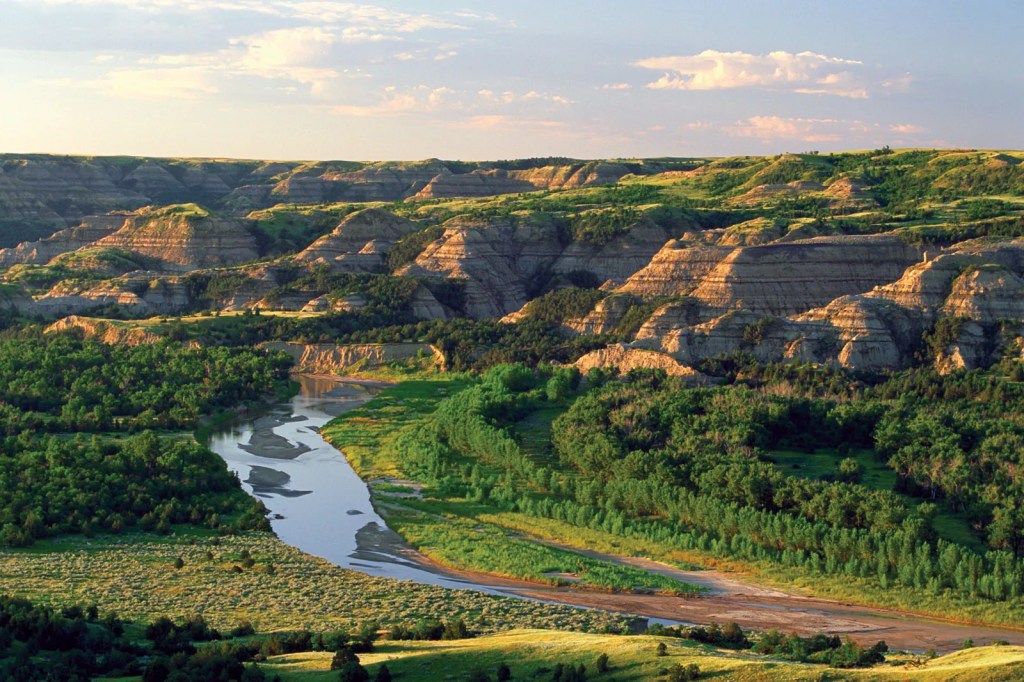
  1. Theodore Roosevelt National Park, North Dakota

North Carolina

  1. Great Smoky Mountains National Park, North Carolina and Tennessee
Advertisements

Ohio

  1. Cuyahoga Valley National Park, Ohio

Oregon

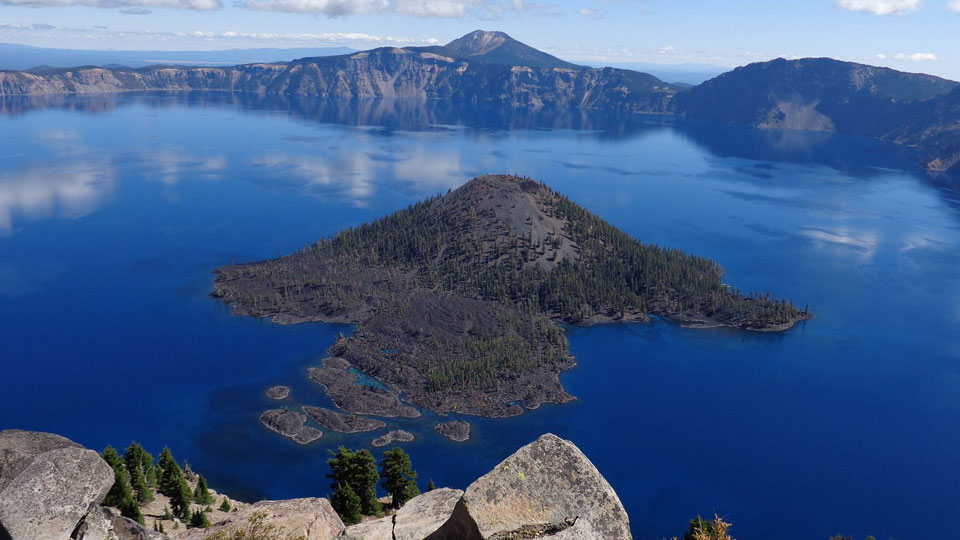
  1. Crater Lake National Park, Oregon

South Carolina

  1. Congaree National Park, South Carolina

South Dakota

  1. Badlands National Park, South Dakota
  2. Wind Cave National Park, South Dakota
Advertisements

Tennessee

  1. Great Smoky Mountains National Park, North Carolina and Tennessee

Texas

  1. Big Bend National Park, Texas
  2. Guadalupe Mountains National Park, Texas

Utah

  1. Arches National Park, Utah
  2. Bryce Canyon National Park, Utah
  3. Canyonlands National Park, Utah
  4. Capitol Reef National Park, Utah
  5. Zion National Park, Utah
Advertisements

Virgin Islands

  1. Virgin Islands National Park, Virgin Islands

Virginia

  1. Shenandoah National Park, Virginia

Washington

  1. Mount Rainier National Park, Washington
  2. North Cascades National Park, Washington
  3. Olympic National Park, Washington
Advertisements

West Virginia

  1. New River Gorge National Park, West Virginia

Wyoming

  1. Grand Teton National Park, Wyoming
  2. Yellowstone National Park, Idaho, Montana, and Wyoming
Advertisements

Which National Park Will You Visit Next?

We thank you so much for going on this virtual National Park adventure with us. Which state has the most interesting parks to you?

We’d love to hear which national park you’ll visit next – comment below or connect with us on social media @noplacelike.gone

Subscribe for more blogs like this one:

<img alt="Matt with
Matt with
No Place Like Gone

Hey! I’m the man behind the magic – A.K.A. the camera and blog. I’m also a purveyor of craft beer, grill master, and chief RV driver.

Just Announced:

We have merchandise now! Everything from stickers, water bottles, RV pillows, blankets, and plenty of clothing options (t-shirts, shorts, yoga pants, sports bras, hoodies, and more!)
You can click the above green hyperlink, any of the below images, or copy and paste the link below into a new browser window. Any of these will get you to our new merch store – and we know you’ll find something awesome!

Here’s the official link: https://noplacelikegone.creator-spring.com/

Advertisements
Categories
Lifestyle travel

RV Lifestyle: Pros and Cons

We’ve been living the RV lifestyle full-time for close to a year now. We sold the house, the cars, virtually all material possessions; all in pursuit of a lifestyle full of travel and endless adventure. Do we sound crazy for doing this? Of course. But we aren’t the only ones running away from the traditional norms of society. Plenty of people are hopping on the bandwagon (or RV-wagon), especially after COVID and in light of the current housing market trends.

Time to read:

7–10 minutes
Advertisements

Please consider joining the gone community by subscribing below & following us on social media. It’s 100% free, and well worth the price of admission. We’ll update you with the newest RV lifestyle stories, tips and tricks, mental wellness tips, and so much more. DMs are always open to chat, and we’ll answer any questions you have about this lifestyle – it doesn’t have to be scary! We also promise not to spam your inbox with junk – we don’t care for that either.

Advertisements

The [Pros] of the RV Lifestyle


Advertisements
  1. RVs are much more affordable than housing. Did you know the median home price in America is $428,700? Compared to $20,000 for a lower-end travel trailer that you can pull with most trucks or SUVs – that’s wild!
  2. Monthly rates at most RV parks or campgrounds can easily be cheaper than the average mortgage. Most monthly rates are around $800 (or even less). This rate includes your lot rent, water, power, and waste in most cases.
  3. You are mobile! With a motorhome, RV, or camper, you can take off on the open road anytime you’d like. You aren’t anchored to any specific location like you are in a house. If you’re tired of your surroundings or want to seek out better weather (looking at you snow birds) then you can put the pedal to the metal and chase the sunshine.
  4. Taxes and insurance are MUCH cheaper on a RV as compared to a home. In 2020, the average single-family home taxes in America were close to $3,700. This is also combined with paying home insurance, which is close to $1,800 per year on average. We’re talking about $5,000 per year (or more) in taxes and fees for an average home. RVs and campers have the advantage of being tremendously less expensive in this category.
  5. If you enjoy privacy, you can have more of it – all of the time! You won’t have to deal with nosey neighbors. We all know how this can go … Instead, camp out on BLM land or on a sprawling 500 acre farm with Harvest Hosts and you’ll enjoy the freedom to roam.
  6. Keep your mind sharp: imagine a world where your surroundings can be different every week. That’s how we currently live – your life continues to feel shaken up and exciting because you can travel freely. I personally, got bored in the same old town doing the same old things after 26 years.
  7. Story telling … release your inner storyteller by sharing stories about your travels. We’ve found ourselves stopping to pause when telling others stories about our epic adventures when we realize we’re talking about reality – punch me! Experience life, rather than being the one hearing about others experiencing life.
  8. Create a flexible schedule that allows for travel, experience new things, and work a lot less. We find ourselves working a whole lot less than full-time right now, because we have built a lifestyle focused on experiences instead of a paycheck.
  9. Travel with man’s best friend, Fido! Your pets can come along on your adventures when you live in a motorhome or camper. No longer will you have to leave them back home and get someone to dog sit for the weekend. They get to come along with you now!
  10. Unlimited adventure is outside of your window. No, literally. When we wake up in the morning, we get to sit outside while we work with our internet hotspot. Working custom hours, choosing adventure more often, and chasing a lifestyle of freedom is a feeling you’ll come back to; no more sitting at an office cubicle, that’s for sure.
  11. Chase a new career or passion like blogging, photography, or recording podcast episodes. Creativity is amplified by travel. Can you imagine trying to write blogs about the same hometown you live in every day? The content just doesn’t scale like it can when you travel.
  12. Being out in nature will improve your mental health and regulate your body’s chemicals. Do you want a happier, healthier life? You can find this by connecting with the great outdoors. Traveling allows you to consistently sit outside at new places, breathe fresh air, plan hikes and nature-based activities, and more. Build an active lifestyle!
Advertisements

The [Cons] of Livin’ in a Van Down by the River (RV Lifestyle)


Advertisements
  1. RVs do not hold their value, as they are a depreciating asset (anything with wheels and motors is typically depreciating) The majority of homes will increase in value an average 3-4% per year, at a minimum they hold their current value.
  2. The majority of RVs and campers are not built for all four seasons. This means that you will definitely notice hot summers and cold winters in a home on wheels – and it can be rough. However, there are RVs that are specifically made for all four seasons – Airstream is a great example of these.
  3. RVs just aren’t built with the quality a home is. There are not nearly as many code regulations and inspectors focused on the build of RVs or campers. In a traditional home there is usually a city planning committee, plan examiners, codes that must be followed, and code inspectors that help hold a standard of quality.
  4. You’ll get a TON more life out of a home. Sticks and bricks homes are built in a completely different way than most of your run-of-the-mill campers. Homes can last 100 years (some historic places have lasted longer!) compared to an RV which will deteriorate within 15-20 years – if you’re lucky.
  5. Maintenance is an ongoing disaster with a RV. Part-timers put close to 3,500 miles per year on their rig while full-timers drive closer to 14,000 miles per year. Because of the constant driving and banging around, you’ll expect a lot maintenance repairs – tires, brakes, axles.
  6. Community is very hard to build while constantly traveling. We can speak first hand about this, we find ourselves feeling a little lonely sometimes while on the road. You’ll live a mostly digital lifestyle in an RV – where you interact with others on social media, blogs, and other online communities.
  7. Finding regular health care services can be difficult while on the road, especially if traveling consistently. You’ll have to do in depth research on new cities to find available health care while you are there, and they can be weeks out when scheduling an appointment to see you.
  8. Privacy can be seriously lacking when you stay next to others at certain RV parks. You’ll hear barking dogs, noisy neighbors banging around, and the couple next to you fighting while they try to back in. This can feel pretty reminciedt of life in a college frat dorm.
  9. Complex budgeting can be a monthly hassle. We try to budget weekly, (at a minimum definitely once a month) so that we can stay on top of our spending and monthly budget. It will fluctuate month-to-month A LOT – especially if you are traveling frequently, so expect to spend a few hours here a month planning.
Advertisements

Speaking of budgets, we have a RV Life Budget sheet that is an example budget we’ve used before, and we give you a template where you can make your own next to example budget.

Enter your email below to sign up for updates to our blog, then you’ll be able to download the RV Life Budget sheet below.

Advertisements

Just Announced: We have camping & outdoor merchandise now!

We custom created our lines with the outdoors in mind. We carry everything from stickers, water bottles, RV pillows, to blankets. And there’s plenty of clothing options too – t-shirts, shorts, yoga pants, sports bras, hoodies, socks. All of our merch is perfect for the RV lifestyle that we live and breathe.

You can click the above hyperlink, any of the below images, or copy and paste the link below into a new browser window to shop (we try to make this thing as easy as possible.) Any of these will get you to our new merch store – and we hope you’ll find something to fit your fancy while you’re there! (If you don’t, shoot us a DM and let us know what you’d like to see us add to the list.)

Here’s the shop link: https://noplacelikegone.creator-spring.com/

Advertisements

Thanks for taking the time to read our blog today. We hope you got plenty of useful tidbits and feel more confident about trying out this insane RV lifestyle (or more confident in your decision not to – ha!). If you want to keep the conversation going – shoot us a DM:

Please consider joining the gone community by subscribing below & following us on social media. It’s 100% free, and well worth the price of admission. We’ll update you with the newest RV lifestyle stories, tips and tricks, mental wellness tips, and so much more. DMs are always open to chat, and we’ll answer any questions you have about this lifestyle – it doesn’t have to be scary! We also promise not to spam your inbox with junk – we don’t care for that either.

<img alt="Matt with
Matt with
No Place Like Gone

Hey! I’m the man behind the magic – A.K.A. the camera and blog. I’m also a purveyor of craft beer, grill master, and chief RV driver.

Here’s similar reads if you’re interested about the RV lifestyle:

Categories
Adventure camping Products

RV Niceties, Necessities, & Accessories

Time to Read:

9–14 minutes

If you’ve ever bought a RV (brand new or new-to-you) then you know that not everything comes included – especially RV niceties. Expect to be searching Google for RV accessories near me a lot! Even brand new models need customizing to fit your liking. It’s similar to buying a house or renting an apartment, you’ve got to make it feel like YOUR home. Even if you LOVE everything about your RV there are a few additional things you’ll need to purchase before you hit the road.

Join the gone [community] by subscribing today:


Amazon has taken our shopping habits and injected them with steroids. We can buy literally anything from the comfort of our own homes. The Amazon fairies make it so simple to click on the app and start shopping; their engineers know the algorithm and know exactly what you want. There’s plenty of things recommended by the algorithm to buy for your RV; these range from accessories, necessities, RV niceties, and doo-dads. But with millions of options, what do you actually need? Glad you asked, here’s some of our favorite Amazon buys for RV life.

Advertisements

RV Niceties, Necessities, & Accessories on the Amazon Shopping List

Here’s the link to the Amazon wishlist that I’ll be referencing throughout this blog if you’d like to see it for yourself. You can easily purchase through this link (nope, we won’t get paid if you do), or you can click any individual item below as you’re reading to add it to your Amazon cart. Let’s jump into the RV niceties!


RV Necessities:

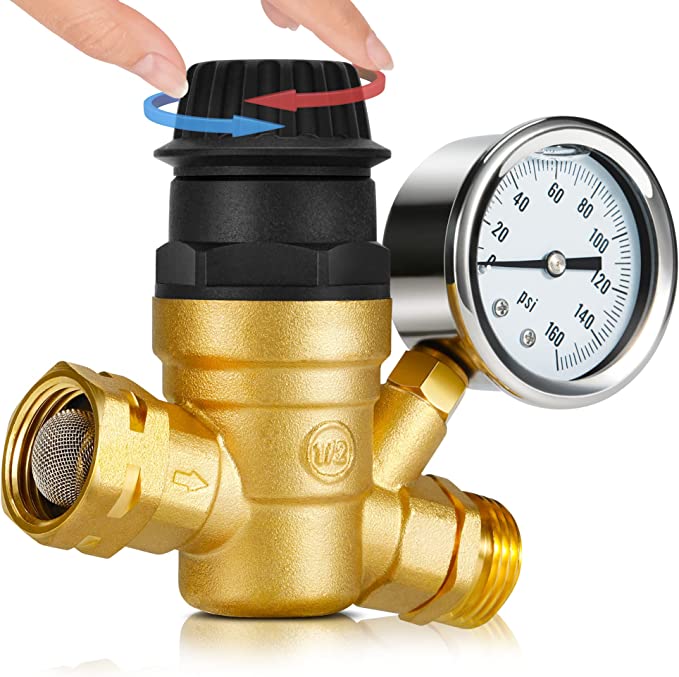
A water pressure regulator is a must have RV accessory to guarantee your water piping is safe.

Water Pressure Regulator: This bad boy is a must. Occasionally when camping, you will find campgrounds that have extremely high water pressure (we’ve seen 100+ psi). This is way too high for an RV. High pressure is a death sentence for your cheaper plastic and PVC piping in your RV. It is recommended to have your water pressure around 40-50 psi. A water pressure regulator reduces the pressure down to a level that is safe for your camper.

Advertisements
Don't fry your RV's electrical circuit - use this surge protector to help!

Electrical Surge Protector: Another must-have. You can not safely hook up your camper straight to shore power. Shore power (or power pedestal, or electric box) is the in-ground power that you connect your RV to at the campground, these typically have both 30amp and 50amp hookups. If for any reason the power pedestal was to fail, that current will travel directly into your home on wheels and fry some serious bacon. Let’s not do that … okay?

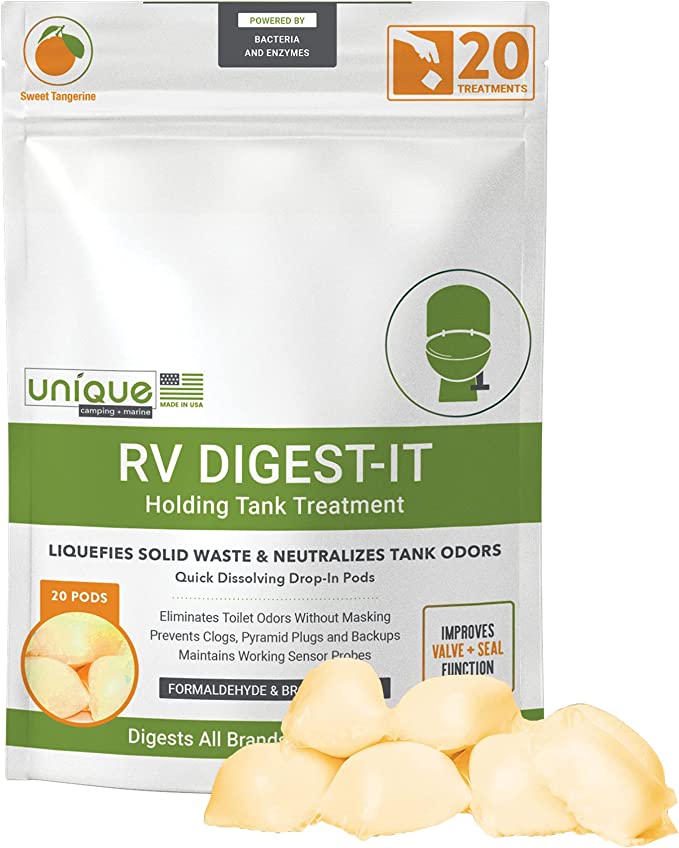
Holding tank cleaning pods help remove gunk from your black tank so that it continues to drain properly.

Unique RV Digest-It Holding Tank Treatment: RVs go hand-in-hand with poop jokes, and for good reason. If you aren’t properly treating your black tank, you will have a (brown) mess on your hands – pun intended.

Scared of having your own holding tank mishap? Don’t worry, you aren’t the only one. We have heard plenty of horror stories of people going to dump and the unfortunate things that occur at the dump station including the dreaded sewer shower. Unique’s products are literally the $h**t! pun intended.

Advertisements

They make everything liquid so you don’t have to worry about clogs, poop pyramids, or issues at that dump station. All you have to do is drop a pod in with some water each time after you use the dump station. Unique works its magic and you don’t have to worry.

This is a 10/10 product and works the best out of several tank treatment products we’ve tried – seriously buy some TODAY. We don’t have any affiliation with them but we would happily be a brand ambassador for them!

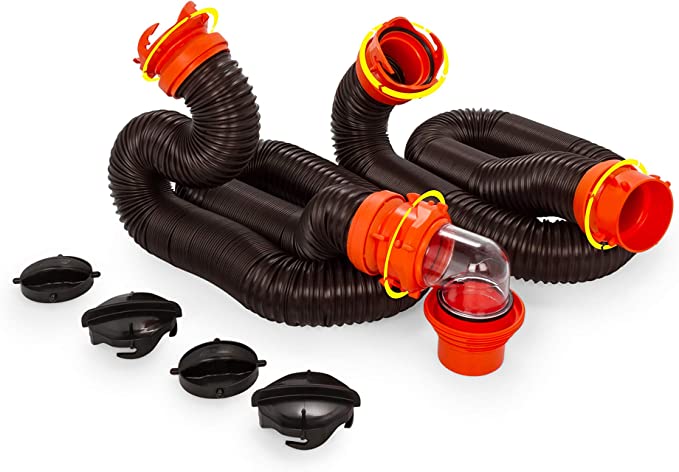
You'll need a good set of sewer hoses to dump your RV waste out.

Sewer Hose Kit: Camco makes a LOT of great products for RVs. Make sure you keep them in mind when browsing parts because they are a reputable brand. I am in no way affiliated with them, but maybe one day they’ll hit me up too. Opting for a kit with a clear elbow will making dumping MUCH easier, allowing you to see if there are any issues and when your tank is empty. Be sure to get a second hose – sometimes the ground sewer connection is far away and sometimes your first hose may get punctured and unusable – a backup is always a good idea.

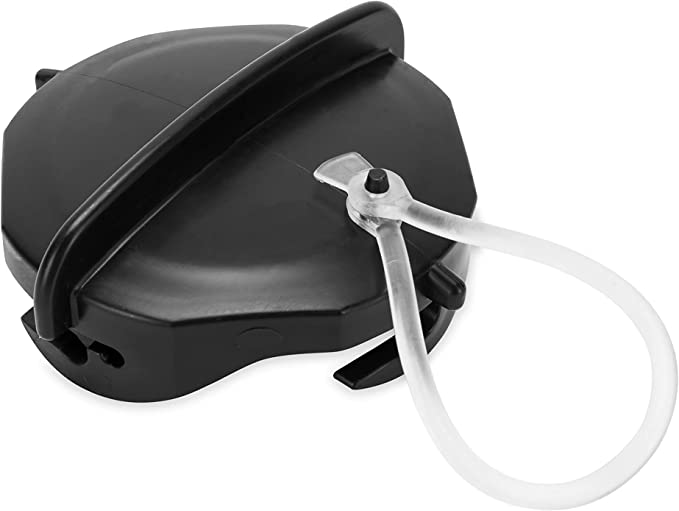
This sewer hose cap is part of RV niceties because you'll likely lose a cap at some point.

RV Sewer Hose Caps: You MUST have an extra one or two of these handy. If you’re in a class C like us, or any other rig with low clearance, it’s inevitable that you’ll hit a bump and crack or lose your cap in the process. It’s also possible that you lose one at the dump station.

You just never know; so, grab an extra for less than $10 and be prepared. Before we bought this one with the included tether, we lost our cap in a parking lot. We hopped out to grab it and before we could, we watched as someone krrrrunccched our cap with their car tires … lol, RV life.

Advertisements

RV Accessories:

Stay cooled off with a USB-powered ceiling fan that mounts anywhere in your rig.

Portable Ceiling Fans: These are a life saver, especially in spring and summer. Which is probably when you want to be camping anyway, right?! So, just go ahead and order two or three right now. You can’t go wrong with these fans as they can make it feel much cooler when temperatures outside begin to climb. This brand is USB powered which is an added bonus for times when you may be running off of house power and are conserving energy – no need to crank that noisy generator! This is one of our favorite RV accessories for the summer!

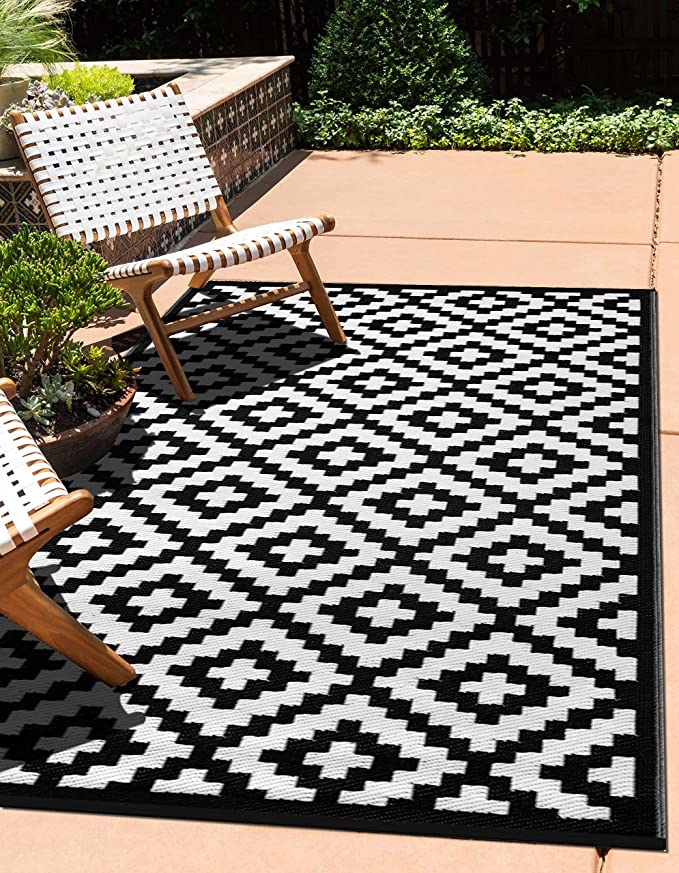
Getting a rug is a great RV nicety because you'll track less dirt in from now on!

Outside Patio Rugs: Do you want to track all kinds of dirt, sand, and mud into your RV? Well you won’t have to if you have a nice outdoor rug. These will help you keep the outdoors outdoors and dramatically cut down on the amount of dirt getting tracked into your RV. They will also help keep your campsite clean for those of you that like to walk barefoot outside.

This is the one we recommend because it’s the one (even the same pattern) that we use! It’s survived almost a year on the road and is showing minimal signs of use. They also make cool ones with LED lights made into the perimeter of them if you’re feeling fancy.

Advertisements
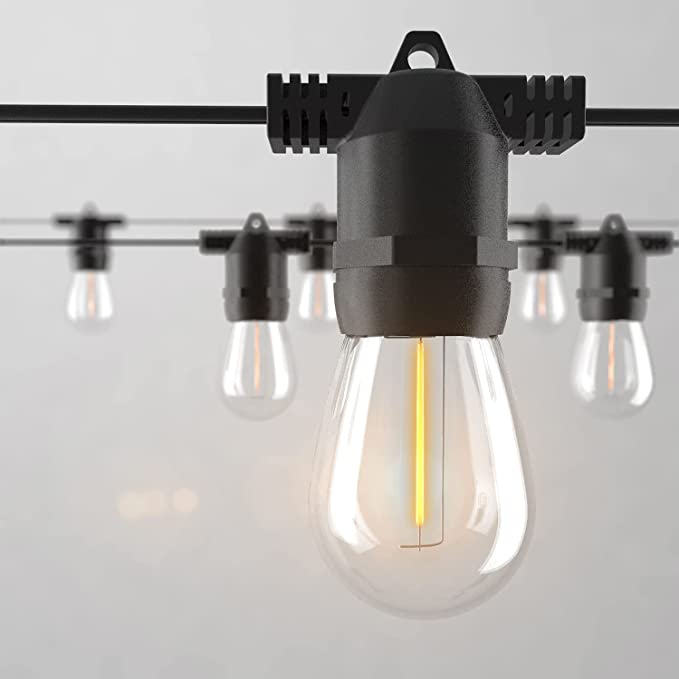
Want your campsite to look like a landing strip? Get these outdoor string lights as a RV necessity.

Outdoor String Lights: Want your campsite to be a shining star in the night sky? Well you can with these string lights! Not only do the Edison style bulbs look awesome, but they also are outdoor and weather-rated. String these between trees at the campsite, along the ground, or from your awning to illuminate your space.

Just be sure to turn them off when you go to bed so you don’t keep anyone up with your lights. And believe me, the campground police will not be happy with you if you leave your lights on all night shining in your neighbor’s window. If you want to make sure won’t forget to turn them off, consider using a Christmas light timer like this one.

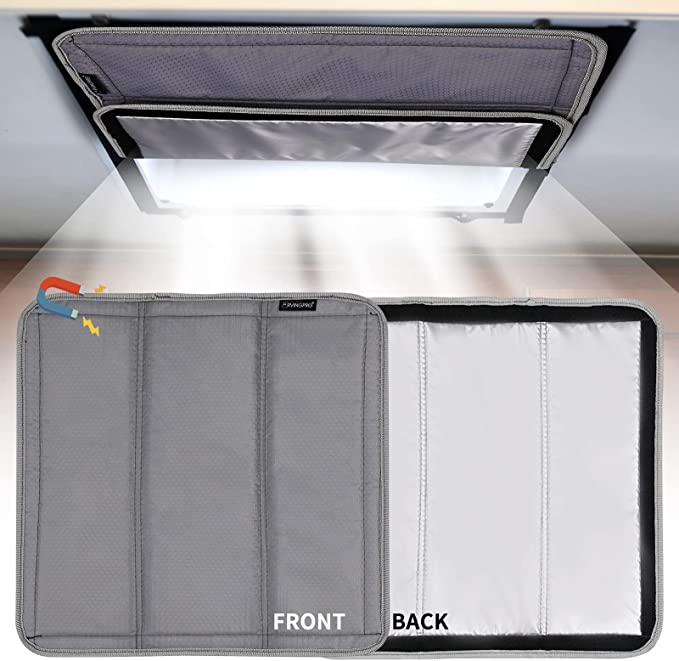
Keep the sun (and heat) out with vent covers that attach by velcro.

RV Vent Shades: These are great for keeping the heat out of your roof vents. In the spring and summer temperatures outside soar and you’ll feel it getting warmer inside your RV too. Block out the sun and heat coming in from your roof vents with these. They attach with velcro so they are removable and foldable if you want partial light. They are also reflective and come in a variety of colors. Grab one for each of your roof vents (we have three!) – you can’t go wrong with these RV accessories.

Advertisements
Keep your home on wheels from rolling away with wheel chocks, an RV necessity.

Wheel Chocks: You place these under your wheels when you get parked in a new camp site so that you don’t roll away – literally. You can also use a brick, a block of wood, or a freakin’ rock if you really wanted to. PLEASE please be sure to use your chocks if you’re parked on ANY type of incline – but they’re always a good idea regardless.

X-scissor jacks keep you from rolling away on bigger travel trailers.

X-scissor jacks: For you peeps with fifth wheels and travel trailers, you’ve probably got two wheels on each side of your trailer, or maybe even three. With a scissor jack, you can anchor two neighboring tires to each other which will not allow them to roll you away. Wowzers!

Advertisements

RV Niceties:

Hydra hide gloves are a RV nicety that keep you from blowing the bank on disposable gloves.

Hydra Hide Gloves: Why do I recommend these bad boys? Because, they will keep your hands clean from any potential “brown problems” while also allowing you to get a good grip on your connections at the dump station. Some people like to use disposable gloves, like the doctor’s office uses, but you literally throw away money that way. Piling up disposable gloves in the trash is not good for the environment, is costly, and they are prone to tearing – ew. We highly recommend getting these affordable RV niceties.

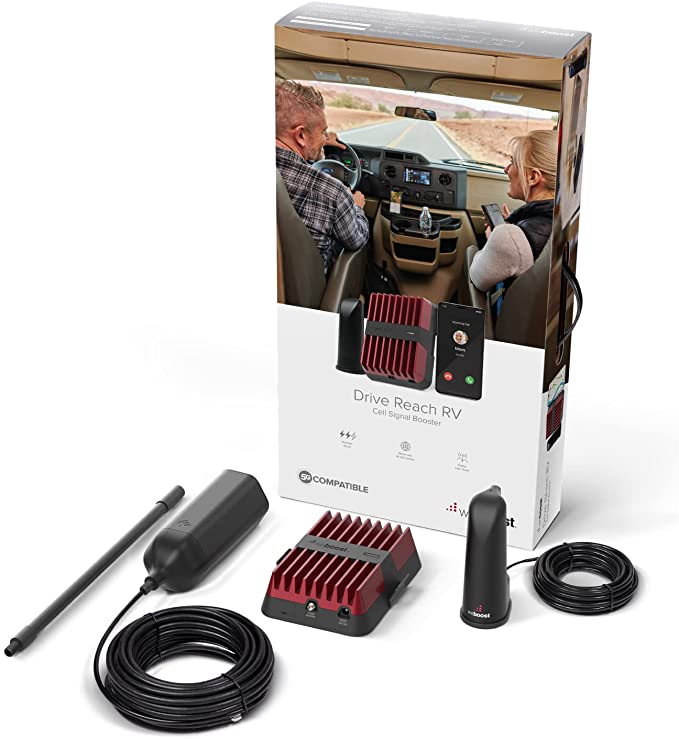
With this RV nicety, you'll be able to get enhanced signal due to it being a cell phone signal amplifier.

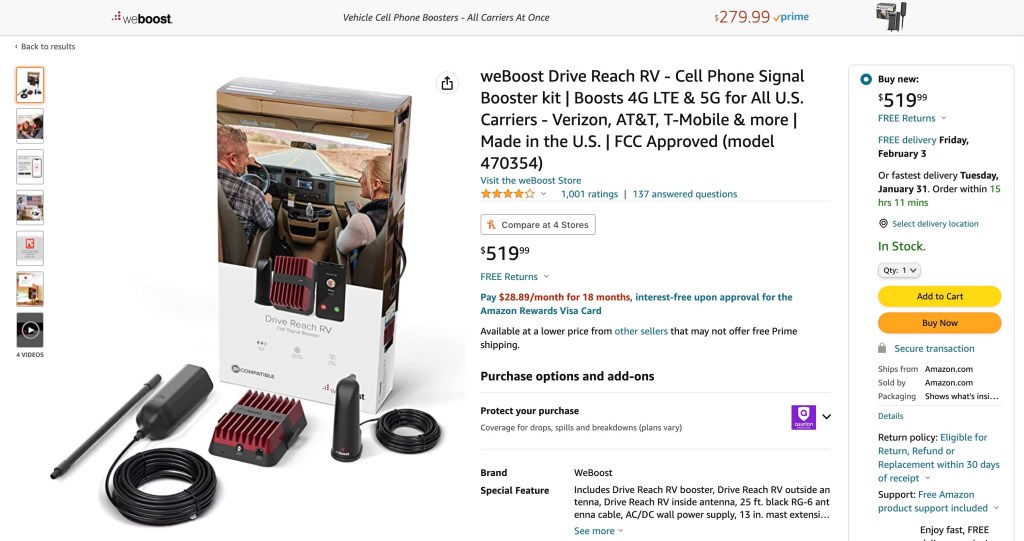
Weboost for RV: Have you ever been camping and had no cell signal?Welcome to the club, most RVers have. Having no cell signal is a very “typical” camping experience – especially when staying in state or national parks. These parks can be extremely remote – protected lands don’t have cell phone towers on them. This baby is expensive, but it’s worth it. A Weboost takes what little amount of signal there may be available in the airwaves, converts it, and them amplifies it back out to your devices to be a usable signal. We have had great luck getting signal in remote places with zero bars up to 3 bars or so. Worth it!

Advertisements
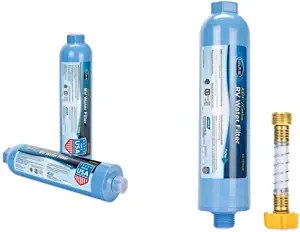
Water filters allow you to have a good drinking source at the campsite.

RV Water Filter: This is almost a necessity, but you don’t technicallyyyyy require one. Most of all, these filters ensure the water coming into your RV is clean and safe – you never know who was camping in the space before you. Hopefully it wasn’t the guy using the city water connection to flush his tanks, yum brownwater backwash. I understand that some people think all water is water, and they’re allowed to feel that way, but I don’t.


Doo-dads & RV Niceties

RV nicety that allows you to hang just about anything on a wall.

Stick-on Wall Hooks: These might seem dumb at first, but you’ll thank me later. These little hooks peel and stick on just about any surface and can hold decor, baskets, fans, lights, etc. We’ve used about 20 throughout our RV and they are easily removed without causing damage. Imagine what you can hang with these RV niceties.

Advertisements
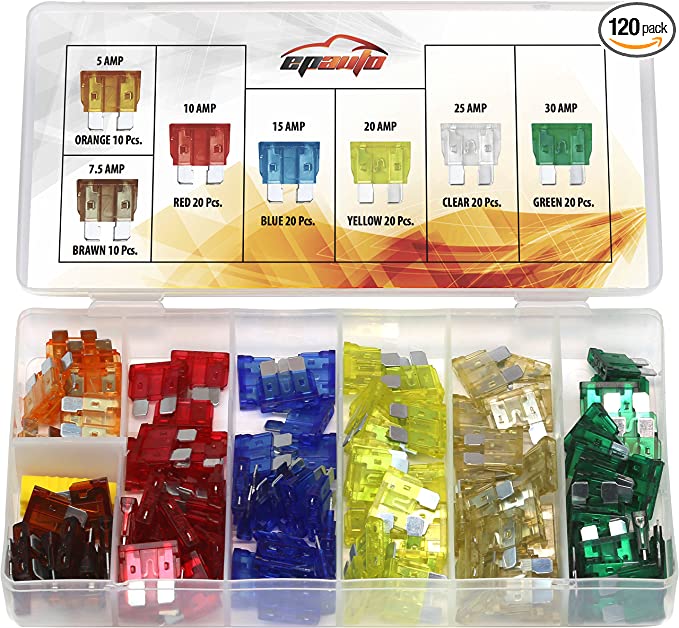
Fuses are a must when an electrical item quits working, check the fuse panel!

Fuse Assortment: RVs have complex electrical systems that include fuses and breakers. RVs have traditional house-style breakers, but they also have car-style breakers aka fuses. You never know when a 10 amp fuse will blow. Sometimes a fix is as simple as swamping out a fuse for your lights or water pump.

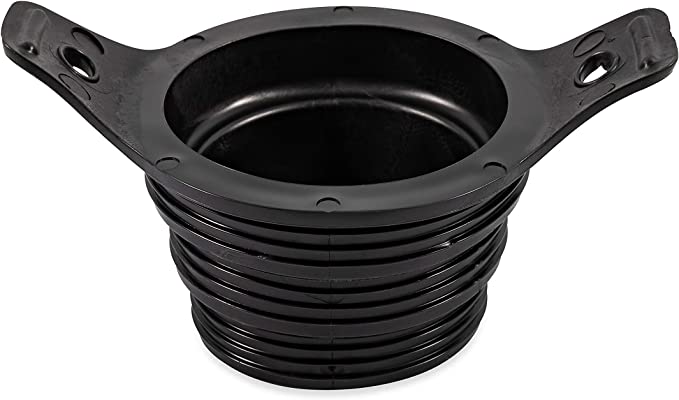
This sewer adapter allows you to make the connection from your waste hose to any ground connection.

Sewer Hose Seal: You can place this little doo-dad down into the ground sewer connection before you hook up. Then, you place your elbow or waste connection inside this fitting. Basically, it is a cone shape that tapers down so that you guarantee your sewer hose will fit any ground connection and will stay secure. Not all ground connections are universal, this allows you to adapt to multiple sizes.

Level blocks help to even out your rig even in the most sloped spots.

Leveling Blocks: These are must-have RV accessories. There’s a billion different colors and sizes of these things, but what matters is that you get a ton of them. We have 40 blocks total for when parked on major inclines. Since our RV doesn’t have a leveling system or jack stands we rely heavily on these. Those with leveling systems or stabilizing jacks will not require nearly as many.

Advertisements
Cabinet rods are on the RV niceties list because they can keep your items from unexpectingly falling out.

Cabinet Tension Rods: After you drive down a windy road to a campsite, park, and open your cabinet doors – what happens? Everything falls out in an avalanche because it was shaken up during the drive. These tension rods can be inserted into smaller (medicine-sized cabinets) to hold everything in place from falling out. They also make large sizes for bigger cabinets.


BONUS Section!

Want to see a few bonus RV niceties for your rig? Keep reading!

Other Camping & Unique RV Accessories:

Storage bins function as a wonderful RV accessory no matter where you use them.

Clear Storage Bins: You’ll learn that keeping a small fridge clean is quite a task. Organizing the fridge is the best start, so grab some clear storage bins on Amazon with this link or at your local TJ Maxx. These also go great in cabinets and other small spaces.

You can dry dishes on this rack over top of a sink.

Dish Drying Rack: In such a small place, it’s hard to find a place to dry your dishes. After washing, plop them down on this drying rack suspended over your sink to dry.

Advertisements
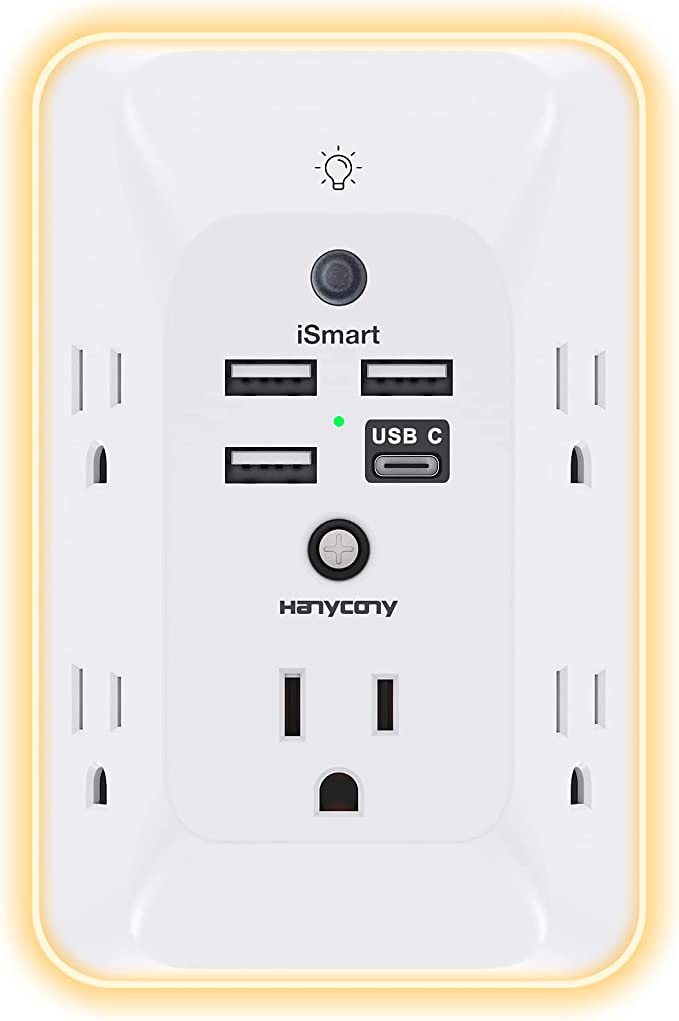
This RV accessory is a must have because of its ability to turn one outlet into many!

Extension Cord: You’ll need extra outlets, there’s not nearly enough within your small space. You’ll need to charge phones, laptops, video game consoles, cameras, etc.

An outlet extender with five traditional house plugs, 3 USB plugs, a USB type-C plug, and a light.

Outlet Extender: These things are quite handy … they basically take your two normal outlets and convert them into 5 outlets + USB + LED light on there.

Advertisements

What Did We Miss?

Did we miss your favorite RV accessories, doo-dad or thing-a-ma-bob? If it didn’t make the list, please write our PR team and complain. Kidding, please don’t do that. I am the PR team. What other tips and tricks do you have? Please drop a comment below so we can talk about it!

Follow for blog updates:

Advertisements

Let’s chat on social media:

Advertisements

Here’s similar reads to keep you informed with our content:

Categories
Adventure Lifestyle travel

Adventure Awaits

Estimated time to read:

6–9 minutes

The average American spends close to 90,000 hours in their lifetime working to make a living. Whether it’s a job that you love, hate, or could care less about, you’re working just like the rest of us.

But, who said you had to spend your life doing things that you don’t enjoy? Even if you went to trade school to get a certification or college to get a degree – you aren’t stuck doing that specific thing forever.

Instead, spend your life searching for adventure. Adventure is a little different for everyone, but there are proven ways to find the adventure that is uniquely yours.

Start your adventure today by joining the [gone] community! We’ll send you travel hacks, money tips, lifestyle advice, and so much more.

You can ask us any questions about van life, traveling the US, or just chat with us on social media:

Advertisements
Adventure is waiting for you with open arms.
You must find adventure – it’s out there waiting, undiscovered.

For me, I had a moment about a year ago when I just couldn’t handle the stress anymore. It felt like I was stuck in a rut and like I wasn’t moving anywhere. I wasn’t happy with my life, I was sinking down into depression, and I needed a way out. So, I began searching for adventure. “What do I love doing? And if I could find it, “why did I love doing it?” These are questions that kept me up late at night.


Me standing on a tree stump searching for adventure.
Me searching for adventure, from a tree stump.

Fast forward to where I am now, about a year later, and I’m feeling like the best version of myself. I went through a near death experience a few months ago, but that won’t stop me. I have things to accomplish, and I’m searching for adventure everywhere I go.

Advertisements

Along the way, I’ve discovered that I really enjoy writing. I actually started out with trying to write a self-help book – and that adventure lead to me wanting to begin this blog as we traveled the U.S. I took a hiatus from my day job because I needed to regroup and recover in many areas of my life. But even so, I worked vigilantly to create this blog & update our social media – passion projects that I discovered I really enjoy.

Our latest on Instagram:

A year ago, we knew that a change of pace could do us both good. Our instagram feeds were flooded with van-lifers and full-time RV travelers. You know the type, perfectly curated photos set in incredibly impossible locations – the stuff of dreams. We thought these people were crazy (guess we are now too), but there was something that continued to draw us both in – adventure. My girlfriend and I are both nature lovers, needed a change of scenery, and didn’t want to feel stuck with our careers or our day-to-day life. We wanted to create a new life, and that began with our plan to travel the United States.

Advertisements

We put down our fears and sold the house, both cars, and almost every material possession we owned. Knick-knacks – nixed. Extra clothes in the closet – donated. Christmas junk – gone. Lawn equipment – don’t need it without a house, huh? We were crazy enough to do that, and it was one of the scariest times of our lives. But, because of pushing through that fear, I’ve had the most exciting and exhilarating times of my life. It has been an adventure, daily.

We’ve traveled from South Carolina (where I’m originally from) down to Florida (where my girlfriend is originally from,) all the way across the country to California (where we are now). We’ve seen 15 states in about 10 months. We’ve really only slowed down recently because California is so ginormous!

Advertisements

We knew that things weren’t making us happy. They never did, even when society told us everywhere that they could (Thanks, capitalism). By saving money on useless things we used to buy, we were then able to invest that money back into ourselves. We reallocated our money towards therapy, books to inspire us, a RV, travel expenses, and investing in our future. That’s how important you are, I am, and we all are.


I want to ask you to analyze where you are in life right now. Think about your career, the city you live in, your living situation (house, apartment, etc.,) you relationships, your health, your community. The key here is to make sure you write all of this down – it can be on paper or even on your iPhone’s Notes app. Take this seriously, because you need to evaluate where you are in life so that you can make a plan for YOUR future adventure.

Who said you can’t chase your dreams? The wildest thing in life is that life is a choose-your-own-adventure type of experience – and everyone’s is different. During your lifetime, you can do just about anything – but you have to define what it is that you actually want to do.

Advertisements
Me beginning the adventure of this blog.
Me almost two years ago starting this blog.

Do you want to become a YouTube video creator? Let’s say video games are your thing; you can make videos and game walkthroughs. Do it! Start your adventure today, and don’t quit. Part of the secret to success in life is that you have to invest enough time to let things flourish – don’t give up on your first try.

If you plant corn, you expect corn to grow – not pumpkins. So plant the corn and be hopeful about its future growth. Because of drought, pests, and/or bad weather, it’s possible that the corn may not grow well this year. Your harvest may be lacking now but next year will be better. If you keep watering the seeds, fertilizing the soil, and caring for your crop, you’ll eventually reap exactly what you’ve sown – corn.

Want to subscribe to blog updates? We won’t send you any spam – just the newest things we’re writing about!

Advertisements

Allow yourself to think heavily on what adventure(s) you want to pursue. If you don’t have any idea what this could be, think about what you are good at, what you find yourself excited about doing – or, better yet, try something new. Try writing, taking pictures, a new job, coaching youth sports, cooking your grandma’s recipes, or maybe even getting your hands dirty landscaping. I’ve really been enjoying exploring nature photography, as well as writing (of course.)

The main point here is to try a little of everything until you discover what you really enjoy. It may be that something you never even considered – you’ll have to think outside of the box. To be honest though, the goal is less about finding what you enjoy and more about the adventure along the way of trying something new.

Advertisements

I don’t make a lot of money (yet) writing this blog. But every week I still sit down to write. That’s because I enjoy doing this, and want to share my thoughts with others. I want to change the way society sees things, lifestyles, and travel which is why I’m fulled by passion.

As this blog continues to grow, and that could take YEARS, it’ll evolve and take on new shapes. Along the way, I will get better and better at it, and people will begin to notice it online. The goal isn’t to make a lot of money writing, the goal is to see what becomes of the blog – to enjoy the adventure. These things take time. But since this is a passion of mine, it doesn’t matter how much time will pass for me, I’ll enjoy the journey along the way.

It’s important to note that you’ll have bills to pay as an adult, and adventure seeking won’t always pay those bills right away. It may take searching for a while and a lot of learning to discover how you can make a living doing something you are passionate about. So, you’ll probably have to work some jobs in the mean time that you align with but know that they won’t be forever. This is okay and is all a part of the adventure along the way.

Keep searching for your next adventure, and you will find it.

Advertisements

You’ve made it to the end, thank you so much for joining me on this adventure! I hope that I have encouraged you to chase your own adventure soon. You can become what you want to be, but you’ll have to work hard, and keep your face up to the sun.

Please sign up for blog updates, it’s completely free – no strings attached. We will only deliver our content to your inbox – no spam.

You can chat with us directly on social media – DMs are open! We’d love to hear about the adventures you’re chasing.

Advertisements
Categories
Finance travel

Extreme Cheapskates: How to Save TONS of Money While Camping

Time to read:

7–11 minutes

Since our blog, “Quick Money Hacks” (link below), did so well, I am back again with even more insane hacks to save you money while camping.

Before we get started:

Please subscribe to stay in the know:

(We hate spam too & promise not to bombard your inbox!)

Advertisements

Without Further Ado … How to Save Money While Camping:

1. Recyle Your Dryer Sheets

You can use dryer sheets more than once. Pop them bad boys into the dryer for a load of clothes as normal. When your laundry is done and the sheet is dry replace it in the box to reuse next time! You can easily get three or four loads of great smelling laundry from the same sheet this way.

2. Save on You Energy Bill

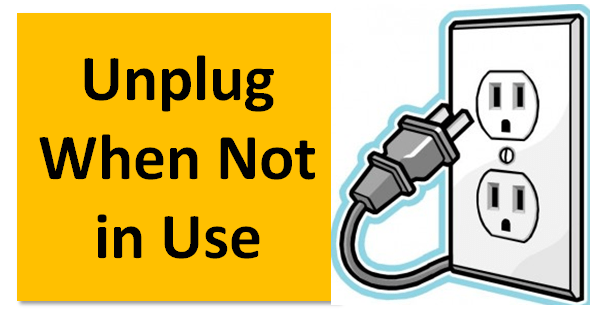
When you leave on vacation, or for a weekend escape, unplug all of your small appliances like your Alexa, TVs, alarm clocks, and anything else you can reach! Don’t pay for that “phantom” energy.

3. A Gourmet Date

Next time you go on a date with a potential cutie pie, make sure to split the meal & the check. This saves a TON of money!

Advertisements

4. Stock Up on Sauces & Utensils

Next time you are at a local restaurant or order takeout, make sure to get extra napkins, utensils, and sauce packs in your bag to take home. Why buy this stuff at the grocery store when they are giving it away for free?

5. Old Fashion

If you have found yourself gaining weight and those old pants do not fit you anymore, don’t worry about buying a new pair. Instead, leave them unbuttoned & just use a shoe string to hold them onto your waist! No need to zip the zipper or button them up, or to waste money on the newest fashion trends!

6. It’s Raining Cats and Dogs!

Is your car looking a little dirty? Time for a wash? Check your local weather channel for the next time it will rain. When it does, run out there and wash your car with the assistance of Mother Nature! No garden hose required. This also applies for your pets, or yourself for that matter.

Advertisements

7. Got Junk?

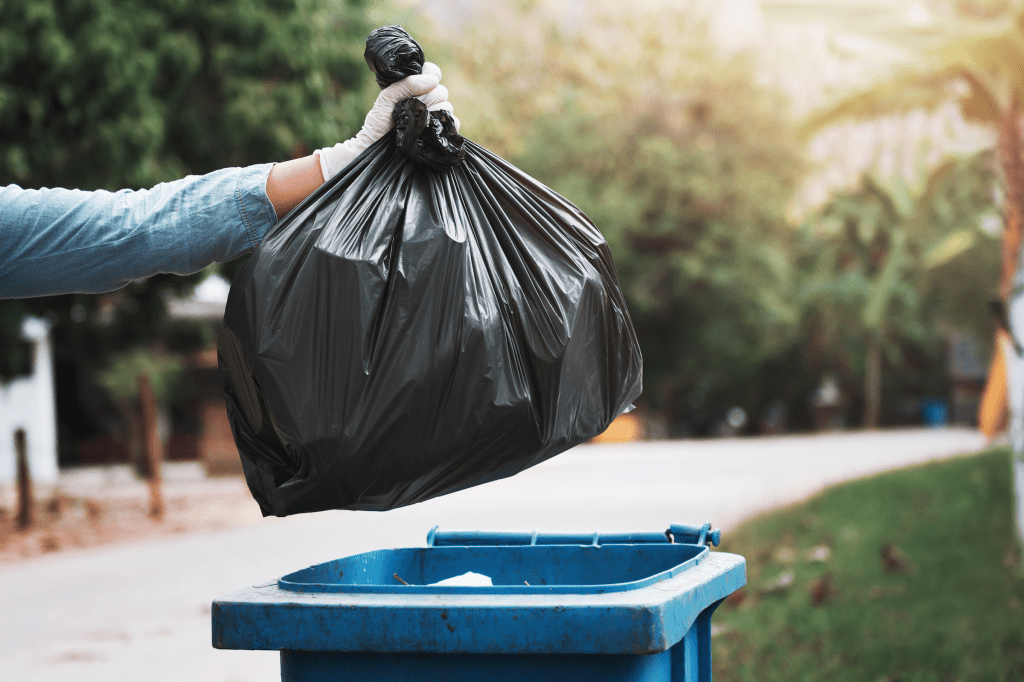
You don’t need to buy trash bags – EVER. Instead, save grocery bags when you go shopping and use them for all of your trash needs! They’ll fit the majority of your small bathroom, & office trash cans. For the kitchen & larger bins, use these mini-bags to take trash out in smaller portions – this will keep your trash can from piling up too.

8. Re-wear Clothing

You can rewear the same outfit at least 3 times before you truly need to wash it. Especially if you aren’t sweating or doing any intense work! Jeans & thicker materials can go even longer.

9. Movie Popcorn

Advertisements

I’ll admit that I stole this one from a story Rachel Cruze of the Ramsey Show told, but it’s brilliant. Order a bag of popcorn from the movie theatre and enjoy your movie! When you leave, fold up the popcorn bag and put it in your pocket. Next time you see a movie, bring the used popcorn bag, pop it open, & get that free refill at the concessions. This hack allows you to only pay for that over-priced movie popcorn once with unlimited refills!

10. Restroom Etiquette

The rules for the bathroom goes as follows: if it’s yellow, let it mellow. If it’s brown, flush it down. This saves thousands on your water costs.

11. Ziplock Baggies

Don’t keep buying these bad boys. After you use one, rinse it out in the sink and let it air dry. Next time you need to store your favorite snack it’ll be clean like a brand new bag.

Advertisements

12. Interior Designer

Visit a couple of your local hardware stores and request free paint samples in a multitude of colors from each. Take the samples home and use them to paint your walls a new, lively rainbow – for FREE! Who said HGTV has all the tricks? Stay tuned in here.

13. Spooky Season

Right after Halloween, during the first two weeks of November is when they mark down all of the candy that didn’t sell. Stock up on all of your favorites at 50% off – or more. You can then use the leftover Halloween candy for Christmas stockings! The same concept applies for Valentines’ Day chocolates & Easter baskets.

14. Water Isn’t $3 a Bottle

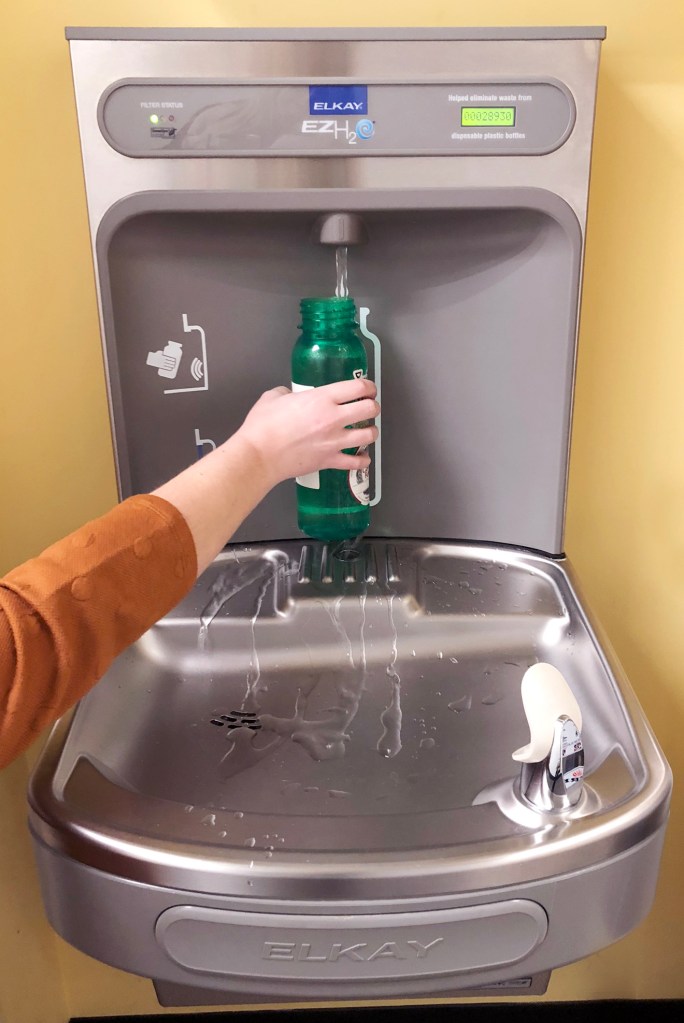
After you have a nice Aquafina or Dasani bottled water bottle, refill it with tap water as much as you want instead of buying a fresh bottle. This works even better at a public place like school or work, where you don’t have to pay for the water yourself – FREE refills.

Advertisements

15. Hang Paper Towels Up for Later

Why keep buying those pesky paper squares if you can re-use them again later? Hang paper towels up to dry & then re-use them – you can easily get three of four uses out of paper towels before they begin to tear.

16. Wash Your Clothes in the Campground Shower

You can skip the laundromat after camping by just washing your stuff in the bath-house shower before you leave. Better yet, take a shower with some of the clothes on and you’ve slayed two birds with one stone.

Advertisements

17. Store Campground Water to Drink Later

You will have a water hook-up spigot at almost every RV campsite. If not, there’s definitely a water fill-up somewhere near the dump station. Make sure to fill up a few gallons of water in your left over water jugs & bottles for later. This saves you a few million dollars every week.

18. Free Coffee While Traveling

Stop into a local hotel to get some free coffee in the lobby. When you enter, you should see it sitting right out in the breakfast area. Just walk in, grab a cup, add sugar the way you like it, and head off. If they ask, you’re in room 301.

19. Who Uses Trash Bags, Man?

Advertisements

Next time you’re at the local dog park or see doggy relief stations, make sure to snatch up a few bags. You can use these for your dog later, as a food storage bag to put things in and tie closed, or as miniature trash bags – for FREE.

20. Try Carpool Trash Service

We’re pitching a new idea here – carpool trash service. Consider this a new service where you can drop off your trash and bags at your neighbor’s doorstep and they’ll take care of it bringing it to the dumpster for you. They have to go at some point anyway, so might as well save yourself the extra steps & effort.

21. Share the Warmth

Is it cold outside and you find yourself needing some warmth while camping? Check which of your neighbors left some firewood stacked outside and grab a few logs. This will help you stay warm, and they won’t mind – sharing is caring!

22. Luck o’ the Irish – FREE drinks

Did the neighbor leave out their cooler? Check what’s on tap – it might be a tasty new cider or a banger of an IPA. You never know. They won’t notice a few bottles missing & you’re getting to try out new beers you may have never had.

Advertisements

23. Be the Campground DJ

How much did you pay for your last concert ticket? Probably close to $200 per person, right? Why should you make everyone pay that much when you can become the campground DJ? Break out the bluetooth speaker, blare your music at full volume, and save your neighbors the concert ticket fees.

24. Puppy Play Day

We just had this happen to us at a campground and loved it. When you leave for the day to go sight-seeing, driving through the city, or doing a local hike, make sure you leave your camper windows wide open back at the park. Fido needs the fresh air and will also provide a free alarm system for your neighbors. This works best when your dog is a constant barker – keeping your neighbors safe by barking and keeping an eye out for danger.

25. Family Showers!

Have everyone wear bathing suits and shower together as a family so that you can save money. Why shower four separate times when you can do it all in one? Let’s preserve the environment & save some water for the fishes, man.

Advertisements

26. More FREE Water

When you’re out hiking and see a running source of water like a creek or river, plop your bottle down in there to refill it. If it makes you feel better, grab a Life Straw to help filter the water extra for drinking. Nature provides all that we need!

27. What’s the Wi-Fi Password?

You could buy an expensive Starlink for $699 or a T-Mobile Inseego Hotspot for $399 to get internet while on the road. But why do that? Surely someone at the campground has a network without a password – hack in & surf the web for FREE.

28. It’s On the House

It’s always beer-30 when you can find a great ale in the neighbor’s cooler like we mentioned above. But we’re not savages – be sure to recycle. Once you drink their beer, take back the bottle and leave it for them. I’m sure they care about the environment too, and in places like California, you can get them 5 cents back per bottle – win-win for everyone!

29. Make Your Own Path

Advertisements

Why follow the sidewalk to walk all the way around your campsite and the neighbor’s to get to the bathroom or shower house? By walking straight through their campsite, you can save on steps. Going through their campsite will also allow you to scope out their stuff for potential sharing opportunities.

30. Clearance Sale!

Amazon has frequent sales on outdoor furniture, but why pay for anything? It’s always on clearance over at your neighbor’s campsite. Eye something you fancy that they have – like that zero gravity chair? Bring something you have & swap out. Trading your $5 bag chair is a great way to upgrade and it can’t be stealing if you leave something behind for them to enjoy – it’s a fair trade.

Advertisements

APRIL FOOL’S DAY!

If you’ve gotten this far, we want to personally thank you for your time & hope this brought a smile to your face & a chuckle to your heart. It’s April Fool’s Day after all. If we made you laugh would you consider SHARING this blog with a friend? Use the buttons below or copy the link provided!

Copy this link: https://atomic-temporary-195534999.wpcomstaging.com/extreme-cheapskates/

For even more (real) camping & travel content, follow us on social media here:


We do write (actual) quality content too – here’s some recents posts to check out:

Categories
Adventure Finance travel

Nomad Jobs: Get Paid While Traveling

The kids are back at it again, living in the van down by the river without a care in the world. “What the heck do they do for money?” you might ask. The answer is different for everyone. Some nomad jobs include camp hosts at campgrounds, have customer service jobs, work as insurance agents, or if you’re of the new-fangled age of kids, you can work remote freelancing. That’s what we’re going to focus on in this blog today! As always, I’d like to thank you for your time today. You’re in good hands!

Estimated time to read:

13–19 minutes

Real Quick …

Before we jump in, I’d like to remind you of the fact that money will not buy you happiness. Even nomad jobs can not produce happiness. It is merely a currency that allows us to exchange for products or services. Money really just is a tool – and it’s up to you to decide whether you want to have good, or bad, intentions with it. You tell your money what to do.

Get connected with us on social media:

Subscribe for blog updates:


– Table of Contents –

Advertisements

1. Fiverr

Plenty of people are talented in their own right, and Fiverr is the platform for them to grow and create their own business. It’s the first on the list of nomad jobs.

Fiverr is a great choice for nomad jobs.

With Fiverr, you can search for just about any computer-type task that can be done. These range from: trip planning, video editing, graphic design, accounting, etc. You pay a basic fee for a service, enter your requirements and criteria, talk to the seller, and then they’ll return a finished product to you quick! Don’t forget to be nice and tip well.

As a seller you can work as much (or as little) as you’d like and Fiverr allows you the flexibility to work when you want to. With their huge categories of jobs available currently to work, feel free to jump in and start earning a commission today!

Fiverr categories for work.

2. UpWork

Upwork is number #2 of nomad jobs.

Are you looking for another alternative to the above Fiverr? Introducing UpWork! We recommend this one as well because there are plenty of other jobs available.

Advertisements

You can create a seller account to sell your services to others as a 1099 contract employee, and work when you want to. The only “boss” you have is UpWork’s guidelines, and a different client to work for every time.


3. Start a Blog!

Plenty of digital nomads nowadays have a blog, course, YouTube channel, or something similar. It’s basically the work of the digital world – teaching others how to do very specific or niche skills.

I have seen quite a few of them to claim to make into the $10k-$30k per MONTH range. I obviously can’t back this one up with evidence as we aren’t a blog that huge (yet?), lol.

Regardless, if you are creative and love sharing your thoughts with the world, a blog should be as second nature as journaling is to most people.


4. Become a Freelancer Writer

You can write about anything, especially if you’ve got a knack for any given niche genre. If you know how to write, and have knowledge to share with others, this is the sign for you!

There are people who make a living reviewing video games and news, others who write scientific research papers, and the occasional blog-writer (that’s us!)

You can write about pretty much anything, as knowledge goes for a pretty penny when sold to the right mind.

Advertisements

5. Become a Bookkeeper

It’s easy to go online and get certified as a bookkeeper in little time at all!

Plenty of businesses are thriving yet need someone to help manage their numbers. That’s where you come in. Get certified, take invoices and expenses and help them know their numbers.

Websites like National Association of Certified Public Bookkeepers (NACPB) offer plenty of options for educational materials, exams, and getting you certified to help businesses in no time. You can save $50 right now and then the certification bundle becomes $449.

*We are by no way affiliated with the NACPB, we just want to help provide you guys with the most resources that we can.


6. Be a Virtual Assistant From Anywhere!

This is one dear to my heart because it’s what my girlfriend currently does. She’s been helping multiple business owners get crucial tasks done while we’ve been on the road.

Advertisements

A personal (or virtual) assistant would traditionally book flights, plan events, get in contact with bill companies, hunt down clients for payment, and many, many other daily tasks. Here’s a website listing statistics and more information.

This is a very practical job, because everyone from CEOs to small-business owners need help handling billing, taxes, conferences planned, and so many other routine tasks.


7. Sell Handmade Products (Etsy, Farmer Markets, Facebook Marketplace)

Do you have a knack for creating knick-knacks? Can you sew, paint, carve wood, make jewelry, or anything else creative? Of course you can – and we won’t settle for anyone saying that they have no talents or skills. Everyone knows how to do something. Everyone has something that excites you. Maybe you like how things tick, maybe you really like people, or possibly you are great at organization.

Combine your passion with some crafting skills, then you’ve got a solid business model for markets like Etsy.

With Etsy, you can get super creative products from a small business and makers. Plus you are supporting a single person or merchant most of the time, and not a corporate shill seeking profit. I kind of like the feel of that personally.


8. Become an Educational Tutor

Not every student learns in the same way. Some are auditory learners, some are hands-on and learn by doing, and others need to hear information in a different way than their teachers will present it. That’s where you can come in as a tutor!

If you’re good at any subject, or even have the credentials of a teacher already, you can start helping students today! The Tutor website seems to be a great resource for this.

There’s potential for tutoring in any subject: math, science, English, Spanish, music, and plenty others. Get started helping kids grow smarter now!

Advertisements

9. Learn Graphic Design

Have you dabbled with Adobe Photoshop creating memes in the past? How about self-learning how to use a platform like Canva for social media graphics? Regardless, the world is your oyster in this category.

If you have an eye for logos, creating graphics, flyers, social media posts, or virtually anything else, you’ll thrive here. It really is a build-your-own adventure sandbox software. You can design flyers for a business, wedding invitations, social media posts, logo designs, and anything else you can possibly think of. Canva is amazing – I’m not paid by them to say that, we just use them for everything design-wise.

There’s always something that a business needs to look good in this marketing driven world of today.


10. Online Marketing

It’s no surprise that businesses are easier than ever to start with the rise of the internet. Basically, anyone can pop up a shop with platforms like Shopify and get started selling a product right away.

Advertisements

A core thing you need with any business is an audience, and a brand worthy of them telling their friends about. You have to be eye-catching, humorous, a great product, and also stand on good morals.

A marketing agent is someone who comes in and focuses on developing your brand, colors and schemes, designs, and more. They help make your product look better and better, and bring it to new heights, and eyes.


Is Van Life as Glorious as Instagram Lets You Believe?

Could you imagine living on the road as a digital nomad? Do you want to see different states, countries, and parts of the world? Are you bored of the sameness: sitting at the same desk, driving the same route to work, talking with the same people, doing the same old routines?

I know that I was, and that’s when we set out on this adventure. We’ve lived in 15 different states over the last 10 months. Literally. We sold our house, cars, and live full-time in a Class C motorhome. It sounds CRAZY! But, that’s the life that we have chosen to live. As awesome as this all sounds, we want you to see the realities of this life as well!


11. Social Media Assistant

If you would have asked me before writing this blog if I believed that being a social media assistant was a real job, I would have been baffled. But, here we are.

Yes, there are literally people whose entire jobs are to schedule posts, engage with comments, share their content on the internet, and run customer service fronts. Now hows that for making the list of nomad jobs?

I’m personally amazed at some of these jobs on the list as they’re all unique in their own way, but this one has me chomping at the bit. Now don’t get me wrong, I’m not saying that this work is easy, or bad. I just want to snatch this job for a huge company like Skittles or something. Sponsor me!


12. Website Designer

It’s no question that with the rise of the internet, websites are more important than ever. To get your name or business out there, you have to have an online presence. Eventually, brick and mortar stores limit you nowadays. Not to mention that the majority of people look up a business online to see their Google reviews before considering a visit.

The internet helps you quickly connect to anyone, anywhere, in the world. The better your website is designed, the more people will be likely to find it and stay engaged with its contents. Don’t skimp too much on this front, as you want a great product.

Find a great web developer right now on Fiverr to get started. You can actually learn a website builder like WordPress or Wix to help jumpstart your career in web development. To become great at it though, you definitely need to learn C++ and web coding at a later point.

Advertisements

13. App Developer

It’s no question that with the rise of the internet that website designers and app developers are more important than ever.

Apple offers plenty of resources from software development kits, digital textbooks to learn from, video explanations, and more. Although, some of these require a small yearly fee to get involved in their programs.

Every great app starts with a great app developer. Learn today, or commission someone on UpWork to help you turn your brilliant idea into reality. You never know what’s waiting for ya!


14. Get Paid to Walk Dogs

We’ve all seen that one person walking down the street. They’re walking six different dogs, and you are left perplexed by this. Most likely, they are probably walking dogs for a living, literally!

Yep, you heard me right. You can get paid to board dogs, babysit them for the day, and even walk them with apps like Rover. For what its worth, the name Rover is incredible.

Next time you find yourself planning a vacation trip or have to work and can’t plan to be around your doggos for a while, you can hop on the app and schedule someone to help you watch them.

This functions similar in the way that AirBnB works, where you open the app, find a local dog sitter and see their reviews, then contact them. Usually, when you go to drop off you will be able to meet the people and chat with them about all of their policies and vet (hah – good joke) if you want to use them!


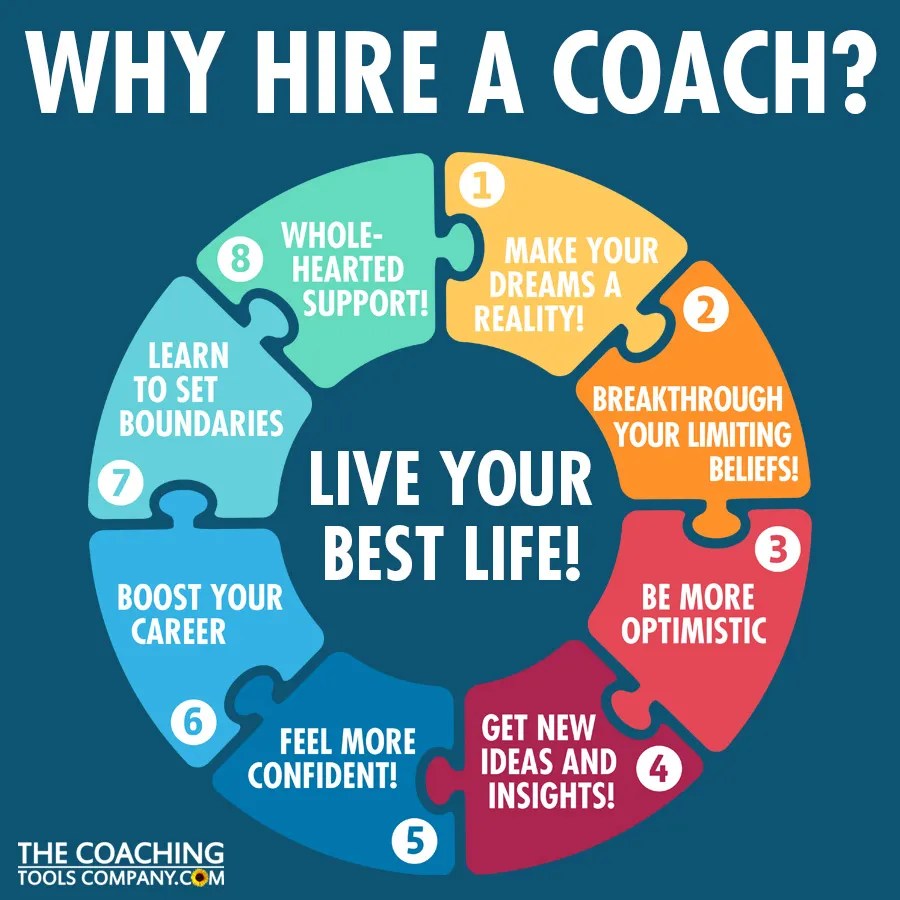
15. Life or Career Coaching

It goes without being said that not everyone has ended up in a great spot in their current life. Sometimes we need help and we might turn to a friend, family member, pastor, or even advisor/counselor.

Advertisements

There exists plenty of certifications online if you’d like to get them as well, that offer to train you in the ways of helping people and their largest life decisions. The one I found online by the Certified Life Coach Institute claims to be $995 for the initial course and certification.

There is a lot of grey area in places like this, because you don’t technically need any kind of degree or training to be a “coach”. But it really gets down to the brass tax when you see the experience the coach possesses, which is much more important.


16. Create Online Courses

I know a fantastic woman who has various years of experience and certifications in dog behavior and psychology. Not only does she offer consulting one-on-one to help teach dog owners, but she decided to launch a course.

By viewing her course here online, you can get the majority of the educational information and what she teaches, but at a lower rate and at your own pace. It’s not personalized for you like the one-on-one opportunities are, but that’s kind of the point with the course is to learn the general skills for your pup at a cheaper price point.

Desiree uses a very wholistic method of training – not strength and dominance.

Teaching a course is always a great way to help others learn a new subject or skill they didn’t have before. Udemy is a great resource for courses online, and I’d also recommend SkillShare (who is giving a free month trial RIGHT now).


17. Edit Videos like a Pro with Final Cut Pro

Everyone needs video edited for social media – specifically YouTube and TikTok nowadays. Whether it’s an individual person who doesn’t have the time to string together all of their travel vlogs, or a company needing to edit together promo videos. Oh, and if it wasn’t implied – yes, some people are making money from their videos!

Advertisements

You can get started for free editing videos by using iMovie on Apple products. There’s also HitFilm which is free but has optional upgrades.

Once you get into the upper echelon, the majority of people use Sony Vegas, Final Cut Pro, or Premiere Pro as they are the top of the line softwares jam packed with movie-quality features.


18. Uber or Lyft Driving

Did you know you can become an Uber or Lyft driver even without owning a car? Let’s say you are a digital nomad like us, wandering across the USA, and you only have a motorhome (which is not fit for driving around city streets picking people up – trust me). Uber will let you rent a car through a partner company like Hertz for as low as $260/week. That’s discounted well below how much it costs to rent a car normally – usually double that number.

In larger areas like LA, Atlanta, New York City, you can rent just about any car that you want. Feel like driving people around in Mercedes-Benz luxury? How about saving the environment with an EV like a Tesla Model 3? You can get them all as a rental car, and make sure your passengers are safe, sound, and happy!

Another great thing about Uber and Lyft is that you get to pick when you’d like to work. Feeling sick today? Call out and sit home! Want to pick up three shifts tonight? Hop on the app and get going in your car! They make it seamless to transition from work-mode to chill-mode.


19. Uber Eats, GrubHub, PostMates

The barrier for entry here is low, as you just need a car, a phone, and some gas money (that’s the most expensive part). When you swipe one of these apps on, you can start driving to a store to pick up food for a customer.

You don’t have to cook the food, pick the order, shop for groceries, or anything. Usually, you arrive at the restaurant or store and go to the delivery pickup counter where the order should be ready for you.

This works on base pay plus tips, so treat your customers well to make BIG MONEY!

Advertisements

20. Instacart, Shipt, DoorDash

Feel like delivering groceries and other quick convenience store runs? You can often deliver prescription medicines from CVS, Walgreens, and other big box stores directly to a customer.

There’s plenty of people wanting grocery delivery straight to their door. They place their order on the app, you go shop it, and you get paid to hand deliver it to their door.

Me over here grinding at my third job once upon a time.

These apps make it so easy to hop on and do a few deliveries, then shut off the phone and take a break at any time. Your pay is heavily dependent on tips the majority of the time, because base delivery pay is usually not the best here.


Budgeting is Also Very Important

Although we’ve equipped you with plenty of ideas to work and make money, the fact still stands that you need to know how to handle your money. We have a sample RV-life budget with actual numbers, not made up, within this read below.


Thanks for Giving Us [Your Time]

We know how valuable your time is, and that’s why we don’t want to waste a second of it. We want to help you build a quality life which begins with deciding how you want to live. By finding new ways to make money, you can afford to create this new life full of your passions, goals, and dreams. We aren’t here trying to sell you anything. We simply want you to be better off after every new read here on our blog. Thanks for reading today!

See you later – ciao!

Advertisements

Join the [gone] community to receive the newest blog updates about travel, money, mental health, and more.

We need friends on social media 🙂

Categories
Adventure travel

10 Tricks for the [Perfect Trip]

Estimated time to read:

<img alt="Matt with
Matt with
No Place Like Gone

Hey! I’m the man behind the magic – A.K.A. the camera and blog. I’m also a purveyor of craft beer, grill master, and chief RV driver.

[Table of Contents]

  1. [Table of Contents]
  2. First, start with the right [tools]
  3. Now that you have the tools, here’s a step-by-step guide for using them:
  4. 1. Select a Destination.
  5. 2. Search Google for Activities in the Area.
  6. 3. Make a Schedule or Calendar
  7. 4. Look for Discounts!
  8. 5. PACE Yourself. No, Really.
  9. 6. Set a Budget for Vacation
  10. I’ve Created a Realistic Budget:
  11. 7. Don’t Book the First Flight, Hotel, or Vacation Package That You See
  12. 8. Plan Your Trip Far Ahead of Time
  13. 9. Reduce Your Dining Budget
  14. 10. Bring Your Pet Along!
  15. [Make Memories]
  16. Social Media Links

Have you been pushing through grueling 60 hour work weeks at the office, struggling to keep up? Has life been keeping you busy with the new baby, endless social obligations to show up at, and constant notifications blowing up your phone? Maybe you need a break, and a road trip sounds like a nice respite. Regardless of your reasons – planning the [perfect road trip] begins with having a destination in mind. Where do you think you want to go?

Welcome to Fabulous Las Vegas, Nevada!

If you are lucky enough to be a resident in Florida or California then you are probably enjoying the ability to soak up the sun and hit the beach during this winter. Consider yourself among the lucky bums! But if you live in one of the 48 other states then you’re probably freezing right now. How about an escape to Las Vegas this winter? Maybe you just need some warmer weather – because seasonal depression definitely exists.

Yes, it’s 80 degrees almost everyday in Tampa, FL. While the rest of the country is experiencing below freezing temperatures, the people of Florida-land stay warm!
Advertisements

I’m going to let you in on the best tricks around for planning out the [perfect road trip]. Whether you’re just planning a one week vacation, or ready to take off on the cross-country road trip of your dreams (something we’ve recently done and still going strong,) you are in the right place with this blog!

Before we jump in, one last speed bump in the road – I ask that you subscribe to our email list below. It’s 100% risk-free, and if you aren’t happy with your purchase – we’ll refund all of your money. 😜

P.S.: We won’t send you any spam mail. We will only update you about the BEST experiences to have, RV life, and much more!


First, start with the right [tools]

Google Travel: This wonderful tool from our friends at Google can pretty much do it all. In addition to road trips it can search for flights, hotels, and vacation rentals; you can search for the best deals around with multiple options by using this tool. This travel tool combined with the powerful capabilities of Google Maps, will allow you to plan each piece of the puzzle for any trip. And you have the freedom to decide if you want to drive, fly, or take a cruise for your vacation.

Google Travel is 100% free, and so is Google Maps.

The only downside is that Google is using every one of us as a product to market out to other companies. It’s no surprise that when you start looking at vacation packages online that you will soon start seeing advertisements popping up all over your Facebook and Instagram feeds from travel companies. That’s how their tools remain to be the great price of “free.”

Here’s a video tutorial for how to use Google Flights within Google Travel by Insider Tech.
Advertisements

RV Trip Wizard: This is OUR go-to. We use this in combination with Google to search for and plan out each leg of our roadtrip route. Of course, we are full-time RVers so we are constantly driving from city to city, state to state, and staying at new campgrounds along the way. RV Trip Wizard is a wonderful tool for roadtrip planning, especially when you have a camper or motorhome. Also, it has a solution for all of those low bridges, narrow city streets, and dirt roads – it’ll route you around those based on your vehicle’s dimensions within account settings. It also alerts you when it’s time to fill up with fuel. Not only is the software powerful enough to let you plan a trip, add multiple stops, and plan out your safest route with your big rig – it can also help track your trip expenses. This financial tracker includes everything you’ll need from campground fees, fuel, maintenance costs, food and entertainment costs. Check it out today!

The interface for RV Trip Wizard might look confusing at first, but it’s not too bad once you jump in. You can see all kinds of useful information about our road trip in this screenshot.

RV Trip Wizard costs $59/year, and gives you an RV Life Pro account which will unlock access to RV Trip Wizard planning, RV Life app, and also RV GPS routing. They also have plenty of wonderful blogs on their platform for newbies. You can’t go wrong here!

Advertisements

Harvest Hosts and Boondockers Welcome: This subscription allows you to have [free] destination-stays along the way as you plan out your next road trip.

Right now, you can get 15% off a year of unlimited overnight stays at wineries, breweries, farms, and more! The Harvest Host stops may become your favorite stops along the way of your next trip. For only $85 per year, a Harvest Hosts membership will give you access to trip-planning tools, $1500 worth of Member benefits, and 3000+ overnight RV stays for a whole year. Start a membership today and see where the road takes you.

P.S.: We were able to stay on a working farm and bottle feed baby llamas with our membership – if you love animals definitely check this out!

Boondockers Welcome is a sister program to Harvest Hosts and opens up another whole world of camping opportunities. Escape the crowded and noisy campgrounds in favor of a private spot on beautiful property, a coveted city parking spot, and, if you’re lucky, a meaningful connection with a friendly host. City spots can be hard to come by when you’re parking an RV but with BW, you won’t have to sacrifice comfort as 70% of Boondockers Welcome hosts offer hookups. Branch out of your comfort zone and make new friends with Boondockers Welcome, here’s 15% off with our link – make sure to use code BWFRIENDS15 at checkout to apply the full discount.

Advertisements

Now that you have the tools, here’s a step-by-step guide for using them:

1. Select a Destination.

It’s as simple as that. Where do you want to go? For how long? Nail down these specifics so that you have an end goal in mind and parameters for your trip. Every good plan starts with direction (nice pun, lol.)


2. Search Google for Activities in the Area.

You can Google simple terms like:

And typically the best places to look for great attractions quickly are here, after a little scrolling down the search page:

The red outline sections are recommended because they will immediately show you the best rated things to do around the area that you’re traveling to. Sometimes these are free like parks or shopping, and other times they cost admission like a museum.

Look for “Tripadvisor” and “Top sights” – these are always super useful to me. Search through these two sections and links to get activity ideas and local recommendations of things to do. Now, based on how much time you will have in the area, you can make a list of things you want to do while you are there.

Advertisements

3. Make a Schedule or Calendar

Now I know – not everyone likes to plan ahead and make schedules or to-do lists. But if you do, you’ll optimize your trip because you’ll have the freedom of knowing what you’re doing – and when. Plan your time wisely, with a great balance of activities and plenty of rest. Don’t feel like you have to plan every minute, just block out times for the major events of the day and leave time for spontaneous adventures in between.

Whether you fancy old fashioned paper, or making an excel sheet, it ultimately doesn’t matter. Throw together a quick calendar like the below image so you can make the most out of the time on your trip.

I recommend something even as simple as this, or using the Calendar app on your iPhone. Whatever works for you to keep track of times and activities on your next trip is fine.

4. Look for Discounts!

Check places like Groupon that offer travel discounts to save money on activities and restaurants. Checking with a local tourist information office can also be a great resource. It only takes a little time, and often you can save big! Ask for any discounts they offer with local activities, and also what they recommend to do in the area! You never know what exciting new thing you’ll find out about.


5. PACE Yourself. No, Really.

I feel like every time you talk to someone who just got back from vacation they’re exhausted and say they need a vacation from the vacation. They’re emotionally and physically drained, and there is no way in heck that they can smoothly transition straight back into working right away. Who would ever want to go back to work anyway?

Many people try way too entirely hard to do every possible thing that they can on vacation. Of course you have to go snorkeling, dolphin watching, to the gift shops, paddle boarding, on a sunset boat ride, to a nice restaurant, to see your family in the area, to take family portraits, to the museums – you get the point. You can’t possibly do it all, and you’ll wear yourself out quickly trying to. Vacations are meant to be enjoyable and relaxing for the most part – not jam packed with too much stress!


6. Set a Budget for Vacation

This one might blow your mind away because the concept of a budget and limiting your spending on vacation may seem a little ludicrous! The truth is, if you set a budget and stick to it, then you will have a gauge for what you can afford and won’t add extra stress upon your return. The activities, tours, shopping, and restaurants quickly add up. Often times, there is way too many things to do in a short vacation timespan anyway, so it’s wise to only plan for what you have time and money for so you don’t break the bank. The money experts at Ramsey Solutions have super helpful guidance on this.

I’ve Created a Realistic Budget:

Type of ExpenseAmount ($)
RV Payment$600 ($87k purchase price, 180 months @ 3.5 APR – with 10% down payment ($8,700))
RV Insurance$100
Campgrounds$1800 (Assuming $60/night for 30 nights)
Gas + Propane$350
Groceries$700
Health Insurance$300
Internet$270 (Starlink $150/month, Verizon $65/month, T-Mobile $55/month)
Other Things$1,000/month OR SO (depends heavily on each person)
Grand Total$5,120
Sample RV-Lifestyle Budget
Advertisements

7. Don’t Book the First Flight, Hotel, or Vacation Package That You See

We all get excited to take off on the glorious vacation trip. But, don’t let your impatience ruin your chance of getting a much better deal in the long run! Check various places when you are ready to book the trip.

For us, we check between RV Trip Wizard (shows quick stay options all around your planned route), Recreation.gov (great for finding cheap Core of Engineer parks), Google (for finding campgrounds in a big city or town), and Harvest Hosts (when we plan to stay short times at breweries, farms, and unique stays).

Here’s a general search for hotels in Las Vegas, NV to help you get started with your million dollar winnings at the slots!

If you are booking flights and hotels, I’d definitely check out Hopper, Hotels.com, or Kayak. I also personally recommend Cheap Caribbean for pretty inexpensive, all inclusive vacation packages to travel to the Caribbean and other tropical places. We’ve used this platform for three separate out-of-the-country trips and loved every one of them. They do a great job helping you travel plan and stay informed about what to do next when you arrive in a foreign country.


8. Plan Your Trip Far Ahead of Time

When you plan far ahead, you have the option to book anywhere you want to be. Sometimes you can even get an “early-bird” discount. The longer you wait, the more expensive the trip will be. Not to mention that most vacations or stays end up getting booked within 6-12 months in advance most of the time.


9. Reduce Your Dining Budget

I know as a foodie myself, it’s almost impossible to resist eating out and trying new restaurants, especially while traveling. I’m not saying you can’t eat out at all, but, eating out is a great luxury. If you need to save money, then cut the dining out from your trip budget. It’s significantly cheaper to make a sandwich or pop open a can of soup at your Airbnb instead of going out for every single meal. Save money by eating at “home,” especially if this allows you to do more experiences!


10. Bring Your Pet Along!

Our pretty girl Luna, almost 2 years old!

Don’t leave Fido at home this time! The truth is, plenty of hotels and condos nowadays are willing to make accommodations for a dog companion. And no, they don’t even have to be certified as a service animal. There’s also plenty of options on Airbnb and Vrbo that allow pets. So come on, and bring your fluffy friend!

A great experience we suggest is always related to the great outdoors. Look at camping, renting a RV, and other nature-related trips. You can almost ALWAYS bring a pet along on these types of trips. This way, you don’t have to make a plan for someone to watch them, or board them for a price at a local vet.

Advertisements

[Make Memories]

The most important part of your vacation trip is to ENJOY it! After spending weeks, or even months planning, make the most of your time and make memories that will last you a life-time. There really is [no place like gone] and we’d love to see your travel pictures – tag us on social media – @noplacelike.gone. I’ve put a link button below, and also our latest posts on Instagram so you can quickly find us.

Advertisements
Categories
Adventure travel

What’s Your [Camping] Type?

There’s A LOT of options on the market for camping. You can get as simple as a tent, but if you aren’t a purist then you probably aren’t tent camping very often. For the rest of us, your options are typically between truck camper, travel trailer, fifth wheel, camper-van, motorhome, or a self-made conversion. Warning: If you’ve never RV camped before, you’ll be shocked by how small these are compared to the average home of today. Fair warning!

The different types of RVs (recreational vehicles)

We’re No Place Like Gone and we’ve been full-time living and traveling in our Class C motorhome for 9 months now, nice to meet ya! We’ve driven from the East coast to the West coast during our trip so far and have got to see 15 different states along the way! We are currently camping in the country of California. (That’s a joke – because California is HUGE and it’s literally named the Republic of California.)

Here’s the most common variety of campers and the likes:

Advertisements

Are You Ready to Hit the Road?

Before ya do, follow us on social media so that you don’t miss our next adventure. We post camping advice, hiking trails, nature photography, and stories from our travels, click below:


Truck Campers

Earthroamer SX – build shown is close to $1,045,000 (yes, $1 MILLION)

Starting off with a beauty, Earthroamer is in the upper echelon of truck campers. Priced as a luxury vehicle, they are self-contained and include all of the necessities that you need, while also including all of the things that you want. If you’re looking to go off-roading in style, while doing it self-sufficient and off-grid, this bad boy is for you.

Advertisements

Lance truck campers are at a great price point, starting as low as $25,000 brand new. They’re available for Chevy/Dodge/Ford/GM trucks whether they’re short or long-beds. They have them for select Toyotas and Nissans as well. You get the modern luxuries in a very small package, that is still just an extension of your truck.

There are PLENTY of other truck campers on the market, for every size and shape of truck. We’ve even seen plenty of people that have custom built their truck camper, if you’re a handy type of person. You do sacrifice quite a bit of space over the likes of campers and motorhomes, so I’d recommend truck campers for 1-2 people and rarely more. There’s also options of truck campers with 1,2,3 slide-outs that help gain A LOT of space and storage for these. Expect to spend a little more money on these larger-sized $50,000-$100,000.

Pros: If you already own a truck, you just need to buy the camper portion to get started. For recreational campers, you can easily detach the truck camper and leave it at home while you still commute to work like normal. Truck campers detach and can be self-contained on most surfaces, just like any other camper. This makes your truck still usable if you want to leave the camper portion behind and go explore. Otherwise, it’s small and easy enough to drive with for any adventure. No pesky backing in a trailer or motorhome. No hitching or unhitching required

Cons: Not much storage, plus you sacrifice the truck bed to live in this monster! This is a difficult space to live in full time because of the tiny space and minimal storage.


Travel Trailers

Where do I start with travel trailers … when there’s a MILLION different layouts and options available.

As a beginner, many opt to get the smallest travel trailer – and that’s reasonable. It looks scary to drive a freaking 18-wheeler- length rolling home. Most people will aim to get between a 25 and 35 foot travel trailer, especially if you have kids or any pets. Although, you can definitely exist in a much smaller space if you are willing to be minimal about your camping.

Advertisements

There’s plenty of very, very small options that are well under 20 feet as well, but I know that scares most people away when they actually see how small it is, these are things like Tabs. In this small of a vehicle, you’re sacrificing a lot over your traditional at-home living and I’ll admit that.


We personally accepted that we want a smaller space to save money, and to pair down into a more minimalistic lifestyle. We have a 26 foot Class C motorhome, don’t tow a car, and it’s been a dream for us. Camping, and life in general, really is a “choose your own adventure!”


Pros: You can pretty much pick your dream floor plan, with as many slide-outs and storage as you want. They literally have thousands of options here. Another good thing here is that if you already own a truck or large enough SUV, you’re pretty much ready to buy a trailer and take off!

Cons: If you’ve never driven a big truck or pulled a trailer, then be prepared for a learning curve. Also, backing in a travel trailer is somewhat frustrating for newbies – expect fights with your spouse (LOL). Difficulty of hitching, unhitching, setting up levels and chocks.


Fifth-Wheels

The difference between fifth-wheels and travel trailers are that the fifth wheel hitch mounts within your truck bed, and the space above is generally used for a bed or additional storage. Fifth wheels generally have much larger turn radiuses.

Fifth-wheels are pretty common nowadays, and for great reason. You combine the great size of a Class A motorhome with the ease of use of a travel trailer. Not to mention that you get to also include the space above your truck bed as additional living space, which travel trailers just can’t match. The turning radius on these bad boys is quite large too, much better than your pull-behind campers that can jack-knife (turn too hard and the trailer and hitch will crunch in on itself).

Finding a fifth-wheel for just about every price point is practical, with floor plans to appeal to everyone. Slide-outs here can almost double your living space in some cases.

Advertisements

Pros: Gain the space over your truck bed as a living quarters, compared to travel trailers losing that. Quite easy to level and balance out once un-hitched from a truck. Can get these as large as a Class A motorhome, basically 45 feet of usable floor plan PLUS slide-outs and storage underneath.

Cons: Price, usually between $50,000-$150,000.Very bulky and usually between 25 and 45 feet. Harder to drive especially for newbies if you’ve never pulled a trailer. Hitching, un-hitching, and setup is more than a smaller travel trailer or motorhome/van. You must have a special hitch to connect to your truck.


Camper-vans

These are sometimes called Class B motorhomes (see below motorhome section), although not always. Sometimes simply called vans, these things are literally a mini-van that you sleep in. You can see the yellow VW below and this thing is beautiful.

1976 Volkswagen Westfalia – man, we’d love to have one of these!

Because of the size of these, you obviously won’t get very much storage space. Not to mention living space, which is basically non-existent. You usually have the front seats to drive, bench seating that converts to a bed (or in the case of the VW you can sleep in the pop-up camper top portion), a mini-fridge, little camping range, and a few cabinets. That’s about the extent of what you get here with vans.

A huge mention here is that these will not typically include a bathroom of shower, some of the most crucial luxuries for many of us. Expect to use the campground showers and toilets!

Of course, you can spend much, much, more on the higher end Class-B motorhomes. These would be camper-van conversions such as the Airstream Interstate, Thor sanctuary, and the Storyteller Overland.

Advertisements

There’s a wide differential in prices of camper-vans, and there really is a different vehicle for everyone. They all vary widely with features, sizes, bed types, and more. If you’re considering one of these, make sure to do your extensive research and expect to pay a pretty penny. You’ll spend between $25,000-$225,000 whether you want a used little Dodge Promaster that’s been partially renovated, or a brand new ready to live in beast like the Winnebago Revel.

Pros: These are as small as your basic SUV or truck that you’re probably driving already. Picture a plumbing or construction work truck, but converted into a living space. Can be 4WD or lifted for plenty of driving clearance.

Cons: Basically zero storage – you’re living in a van, man. These rarely even can fit a shower or toilet. You’ll either have to use the camping bathrooms, or opt for a composting toilet and outdoor shower spray wand.

Advertisements

Motorhomes

Very important to note that this “class” system does not jump from A, to B, to C depending on length or price by any means. In general, Class A motorhomes are the largest and most luxurious or expensive. Class C motorhomes are a budget version of that, and in much smaller form factors. Then, you have Class B motorhomes which are heavily improved camper vans with all of your modern accessories, usually at a smaller package than both Class A and C motorhomes. I know, it’s pretty confusing, but I didn’t create this system!

Class A: The “Crème de la crème” (French, literally means cream of the cream, or translated further to mean cream of the crop, or the best of something) of motorhomes. These bad boys are usually starting at $50,000 for a VERY used model. You can expect to pay close to $250,000 for a decent motorhome here, and easily up to $1 million dollars for some of the top of the line options like Prevost.

Prevost, top of the line of motorhomes. This thing is like close to $1 million brand new.

These Class A motorhomes have all of your luxuries of a modern home, albeit in a much smaller package. They have sprawling living spaces, slide-outs to add additional space, king beds, dual-vanity sinks in the bathroom, and huge residential refrigerators (RV fridges are typically much smaller than a home/residential fridge). Expect to pay quite a pretty few pennies for these though.

Another super important thing to note is that Class A motorhomes can range from the smallest at about 22 feet, all the way up to 45 feet of living space.

Pros: More space than you should ever need. Easy setup: you pull-in, park, use your auto-levelers and hook up power, water, and waste. That’s basically it! You can tow almost any car, truck, or SUV. These things are beasts and way a ton, plus have massive diesel engines capable of pulling just about anything.

Cons: These motorhomes are huge and when you see them out, they’re usually 35-45 feet long. You’re basically driving a school bus with much more weight and features inside. Most engines here are diesel – expect HIGH fuel prices especially in these hard times. Good luck parking this thing anywhere, as its too large to fit in a lot of places.

Advertisements

Class B: These are also lumped into the “camper-van” category quite often. In reality, Class B motorhomes are larger and considerably more upscale over the traditional camper-van. Usually Class B motorhomes have a bathroom and shower, even if they’re tiny and hard to use, where as camper-vans almost always do not. The length of a Class B motorhome caps out at about 22 feet in most cases, so these are typically easy to maneuver and drive anywhere!

Pros: Very small and easy to drive, not much of a difference from your daily commuter. You can park it just about anywhere, standard parking spots are big enough. Most of these vans are available with 4WD making them beasts to go off-roading or onto a beach.

Cons: Very small space, good luck with storage, because you don’t get much. Usually your dining table/dinette converts into your bed. Although, in certain models you can definitely use the front driving seats as your dining space. Vans or Class B motorhomes are VERY expensive … usually starting at $100,000 and exceeding well above that!


Class C: This is where WE fit in! We have a Class C motorhome, and it’s a 2022 Coachmen Crosstrail XL 23XG. Yep, that’s a mouthful – why do they name these things like freaking extraterrestrial planets?

Advertisements

Class C motorhomes vary greatly between about 22 feet and 33 feet, and you can’t get much larger than that. Once you step above that threshold, you’re looking at either a travel trailer, fifth wheel camper, or a Class A motorhome because each of these have options to go much larger.

Pros: These offer a nice blend between the Class A and the Class B, which is why I’m baffled why it’s called a Class C. (I guess Class C was the third thing invented by combining the other two?) Budget friendly for the whole family, and Fido!

Cons: These cap out at about 35 feet, so if you want larger you’ll have to get a Class A or travel trailer/fifth-wheel. Very low ground clearance – expect to scrape a lot when driving. Not the most luxurious, if you want that instead: look to Class A or B.


The Others

We’ve seen just about everything on our trip over the last 9 months of full-time RV living. We’ve seen plenty of music festival-goers basically living in their vans and school buses. I spotted a Honda Element with a pop-up rooftop camper once. Plenty of SUVs like Toyota 4Runner, Subaru Outback, and others that people have slapped a rooftop camper top on. We’ve even seen a few people using “Camp mode” on their Tesla as they sleep in it at their campsite pedestal charging overnight.

“Life really is about creating your own adventure.”

-No Place Like Gone, 2023

We’ve Had Fun Today – Did You?

We can only hope that you had a blast reading our blog today. We love camping and traveling full-time so much that we have dedicated our time to help others do the same. It’s truly a lifestyle fit for just about everyone, with many, many options to suite your needs. The experience of camping is how you can live simply, see plenty of beautiful landscapes, and experience the world through your own lens.

Advertisements
<img alt=" Matt with
Matt with
No Place Like Gone

Hey! I’m the man behind the magic – AKA the camera and blog. I’m also a purveyor of craft beer, grill master, and chief RV driver. Connect with me on social media below:

Check out these related reads:

Categories
Adventure Lifestyle

Is Van Life as Glorious as Instagram Shows?

Estimated time to read:

9–13 minutes

Is van life as glorious as Instagram lets you believe? Yes, yes, it is. Case closed, stop reading here, let’s all go home!

I’m kidding – but really, every time you go on Instagram and TikTok you see them young kids livin’ their best life in a van down by the river! The worst part is that you can’t escape this content, because it’s all so appealing. Of course it sounds amazing to buy a kitted-out van, decorate it hella cute, and slap your Instagram handle on the outside. Trust me, I get it … we are currently living that life right now!

Advertisements

Before we jump in, we ask that you consider joining the [gone] community where you’ll learn about travel, van life, minimalism, mental health, and more!

Got any questions about van life? Hit us up in the DMs!


Yes, #vanlife looks AMAZING! But …

Starting out on a strong note, I hope that you like the smell of poop in the morning. When you go to pack up your campsite and leave in the morning, you’ll have to stand out by the lovely “dump station.” What’s that you might ask? Well, it’s exactly how it sounds – your RV takes a dump. You have to connect a hose to your black and grey tanks (black being toilet waste, grey being sink and shower waste). Then you pull a valve, and hear the lovely sound of water rushing through. Oh, and it smells great! Just like a wonderful sewer sanitation facility. Welcome to van life, my friend.

Shitter’s Full – clip on YouTube from National Lampoon’s Christmas Vacation.
Advertisements

Much like being a parent to a newborn, expect to have poop all over you at some point. Well, it’s not always that bad, but sometimes it can be. If your waste hose decides to throw a tantrum, expect poop on you. Did you forget to weigh down your hose connection to where it connects to the ground sewer connection? As the waste water is rushing out, the hose could jump off of the connection and hit you in the face. At any single time. Hah – what a life. Even better, if you’re camping in below freezing temperatures, you may be greeted with a “shit-sicle” – where your tanks and/or hoses are frozen solid. The joy.

Not all campsites are created equal. Camping life can often be compared to “roughing it in the woods” as the good old phrase goes. If you’re lucky enough to have a shower in your house on wheels, they’re incredibly small and difficult to use especially if you’re boondocking (no power, no extra water, no waste connection hook-ups to your rig; you are completely self-contained & self-sufficient).

Basically, you’re living primal-style out in the woods like our ancestor cavemen and cavewomen and surviving off the land. Sometimes you only end up showering once every week or two, because you’re traveling so much. And guess what, while some campgrounds have showers – not all do in the wilderness!

Occasionally, you’ll find a nicer shower to use if you pay for the very expensive RV resorts and KOAs. Honestly, most of your cheaper campsites do have a shower – albeit not very luxurious. Picture crouching low enough to fit under the midget-sized shower head, avoiding touching any of the ick of the walls, keeping an eye on that spider’s web & spider staring at you from the corner – all in an ill-lit (non-heated) “outhouse” for lack of a better term. Camp showers can be a real treat.

Advertisements

The majority of RVs, campers, and motorhomes are just made to fall apart. No, I’m not joking … it’s a pretty common thing. Many, many, MANY of the campers and motorhomes of today are built so quickly that they just simply don’t have the same quality of most houses, or even the cars of today. Even if you spend a crap-ton of money on buying a brand new rig, expect it to have problems.

This doesn’t mean buying used is necessarily the better option. The previous owner may not have taken the best care of their vehicle, or fixed the problems that it had when it came off the lot. What’s worse is if you are full-time traveling and every few weeks you’re in a new state and not able to return to your original dealership to get work done – no one wants to do “free” warranty work if they don’t have to. It’s a whole complicated process sometimes. Be prepared to get very handy yourself! An emergency fund is a MUST.

The reality is van life is not always what you see on Instagram.
Behind the scenes of #vanlife.

I’ve learned that sometimes you just have to laugh about things in life … like when your radio literally blows up and catches on fire in a 6-month old RV. It leaves you questioning the workmanship of these rigs. Oh – and since warranty work takes forever to get done with most dealerships (think at least a six week waiting list) it’s just a whole hassle and headache.

So, $2,000 later, we skipped the warranty work and opted for a high-end radio with Apple Car Play capability in place of our original toxic waste of explosion that was installed by Ford and misleadingly called “a radio.” Plus, not to mention that we are full-time traveling so we can’t easily abandon our home on wheels for it to sit in a dealership’s lot waiting for work to be done – we love the outdoors but certainly prefer our bed over sleeping on the street.

Advertisements

Van life can be expensive. Can it also be cheap and a cost effective way to live? Sure, that’s possible too. There are some options for FREE camping like boondocking on BLM land, Harvest Host (click our link here to get 15% off your membership with Harvest Hosts – they offer unique stays at wineries, farms, museums, and more!) or the good ole’ Walmart parking lot if you’re not picky.

Yes, there are ways to literally park your 1987 Chevrolet van down by the river (BLM land offers this frequently out West) and live for next to free if that’s what you want to do. Mad respect, no hate here my brother.

But, if you go the traditional route and stay at average run-of-the-mill state park campgrounds and the like, expect to pay $30-$45 per night of camping. Not too bad, right? But if you find yourself in a place like Arizona, California, or staying at KOAs and RV “resorts,” you can expect to pay more like $60-$80 per night on average. We’ve seen campgrounds charging over $120 per night for premium spots in highly sought after locations. If you’ve opted for a larger rig, expect to pay even more at every place you stay to accommodate the sheer size of your land yacht.

Camping fees alone can be expensive, not to mention that while you travel you will have to consider the cost to fill up with gas and propane as well. If you end up with a monthly payment on your rig, it can sometimes be close to a mortgage payment. Then, you’ll need insurance, of course. And let’s not forget about all of the maintenance items (remember RVs don’t typically have the highest build quality). Then factor in groceries, internet connectivity, cell phone bills, clothing, and all the other necessities you need – the dollars stack up QUICK. You need a budget!

Advertisements

Van life is truly a “choose your own adventure” experience though; and there are, literally, thousands of different ways to camp and enjoy time outdoors. Whether you’re in a tent, million-dollar Prevost, a Subaru, or a travel trailer – we’re all here to camp, just in different boxes.


♫ Let’s talk about SPACE, baby. ♫

Are you absolutely in love with the HGTV-inspired DIY project that is your house now? The sprawling 2,000 square feet? Extra bedrooms you hardly ever use? How about the reading nook, loft, great master bedroom, hot tub, backyard, and all of the other spaces that you currently have? How about that three car garage that’s stacked to the ceiling with “yard sale” items and Christmas decorations from your childhood? Well, if you’re considering RV life, say goodbye to it all.

Advertisements
A joke meme about people on HGTV.

Hey, I’m not hating – just stating facts. Your average house on wheels will not be much larger than 250 square feet. Yes, you heard me right – 2-5-0. This is probably the size of your current master bedroom if you’re an average American. Most campers are microscopic compared to our luxurious “mansions” of today. And they have to be this way in order to be safely driven down the highway and maneuver under bridges. Having a slide-out (or multiple slide-outs) can help greatly expand your living area but these come with a whole other can of worms worth of issues – and don’t expect more than 400 square feet, even with this addition.

Again, RV stands for RECREATIONAL Vehicle. RVs, motorhomes, and campers were never intended to be lived in and traveled with full-time. Sure, with the right perspective, you can live in just about anything.

While some models are insulated and more suited for forever living, they still aren’t a sticks-and-bricks home. Often campers are made with cheaper, lighter-weight materials, with the intention of decreasing your towing payload and gas mileage. Longevity is typically an afterthought, if considered at all. For example, our toilet, sink, and shower (things we use every day) are all made out of cheap plastic and have already had issues – oooohhh the luxury. Don’t just believe my opinion – here’s the same sentiment from another RV and travel blog.

Advertisements

Out of Touch with Reality – a Van Life Nightmare

Here’s another fun reality for you millennials & Gen Zs: imagine not having internet or cell phone reception. Oh. my. God. That’s possible? Yes, there are still plenty of places that you can drive to and camp that will not have a speck of signal. Wi-Fi is most certainly out of the question a lot of the time as well.

WeBoost RV cell phone booster kit with antenna.

Surely in 2023, they have something to help, right? Sorta. We’ve been in spots where even with our fancy (and expensive!) cell signal booster and Wi-Fi ranger you still can’t connect to the outside world. Sometimes it’s just you, your travel partner (if you have one), and your dog. Imagine this – no internet, no TikTok, no Instagram, no Google maps, no texting or calls. You may be (forced) to connect with the nature around you or to have to talk to your camping companions via real face-to-face human interactions. Oh, the misery.

Woman hanging her head out the window trying to talk on the phone.
Sometimes you gotta hang out the window to find that magical bar of cell signal.
Advertisements

Wrapping It Up:

Is Van Life as Glorious as Instagram Lets You Believe?

The short answer is – well, sorta. Just like anything, there is good and bad. Can it be incredibly enjoyable and look as pretty and glamorous as Instagram shows? Sometimes; but be prepared for plenty of “fun” along the way! You can’t have flowers without any rain – such is life.

My girlfriend and I standing with keys in my hand in front of our new RV.

Overall, selling my house, our cars, every piece of furniture, lawn equipment, and almost every worldly possession we had, was the best decision of our lives. This has been a meaningful stepping stone in my life, that has morphed into much, much more than just traveling the United States. We have learned how to live more simply, to appreciate the small things. We are experiencing all kinds of different cultures. We’ve eaten more than our fair share of new foods. We’ve seen some of the most incredible vistas and unique landscapes on the planet. And, we’ve grown closer together as a couple along the way – especially when the black tank sprayed its wonderful goop on us both. The memories, experiences, and joys of RV life do not have a monetary value. They’re priceless.

Would we recommend that everyone experience the world through travel like van life? Absolutely yes! Every single time. It’s worth it, even if you don’t think the lifestyle fits you – you’ll customize it to allow you to experience the world in new shades of beautiful. We hope to see you on our next adventure.

Advertisements

Join our [gone] community for updates about van life, travel, minimalism, mental health, and more:

If van life sounds awesome to you, check out these similar reads:

Here are the latest posts from our Instagram account if you’d like to follow along with our adventures: