Categories
Adventure self help

Ecopsychology: A Catchy Gen-Z Word or New Field of Science?

Nature has a unique way of making us feel refreshed and alive. Spending time in the great outdoors can have numerous benefits for our physical, mental, and emotional wellbeing. Being in nature, we are able to unplug and reconnect with a more primal & simplistic state of being. Today, we’re going to talk about Ecopsychology and some of the top benefits of spending time in nature outside. Continue reading to learn how the great outdoors can be more effective than many of your prescription medications.

Estimated time to read:

6–9 minutes

Table of Contents:

  1. What is Ecopsychology?
  2. Nature Can Do Many Things, So Let’s Explore its Benefits:
    1. Reduces Stress and Anxiety
    2. Improves Physical Health
    3. Boosts Immune System
    4. Enhances Creativity
    5. Provides Mental Clarity
  3. Wrapping Up:

What is Ecopsychology?

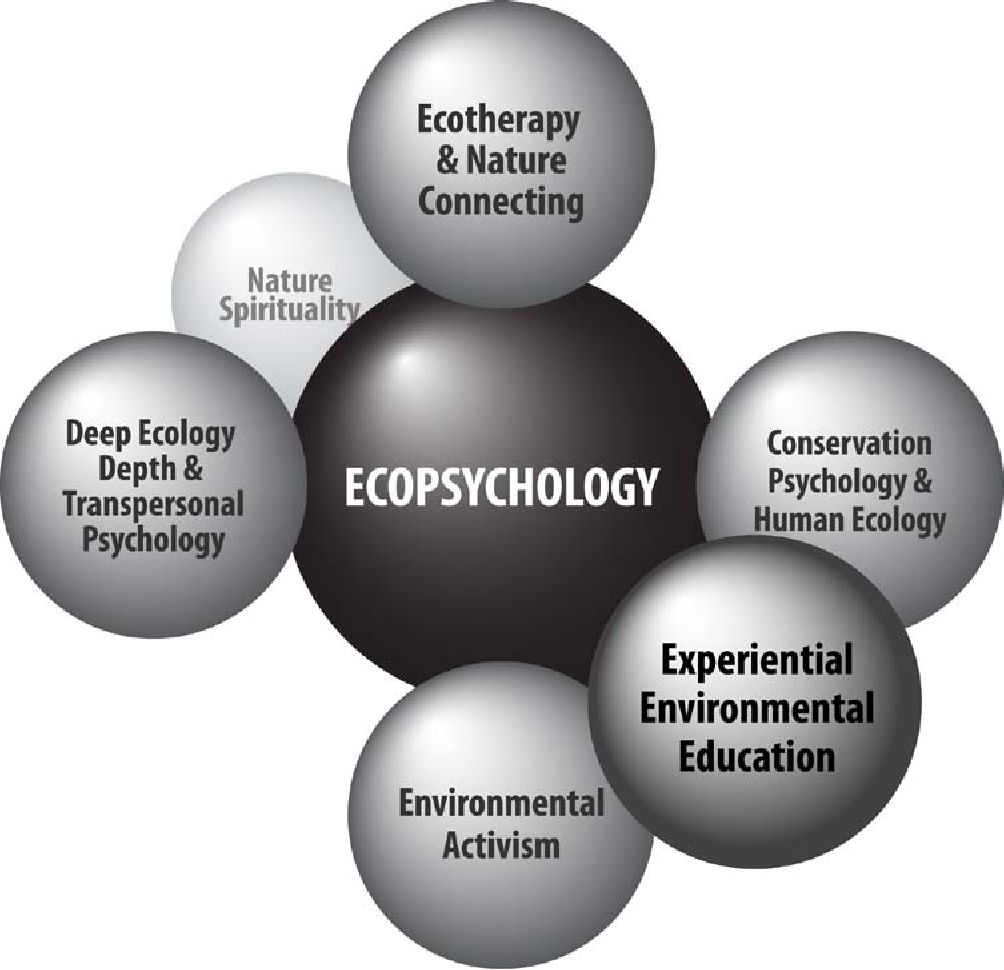
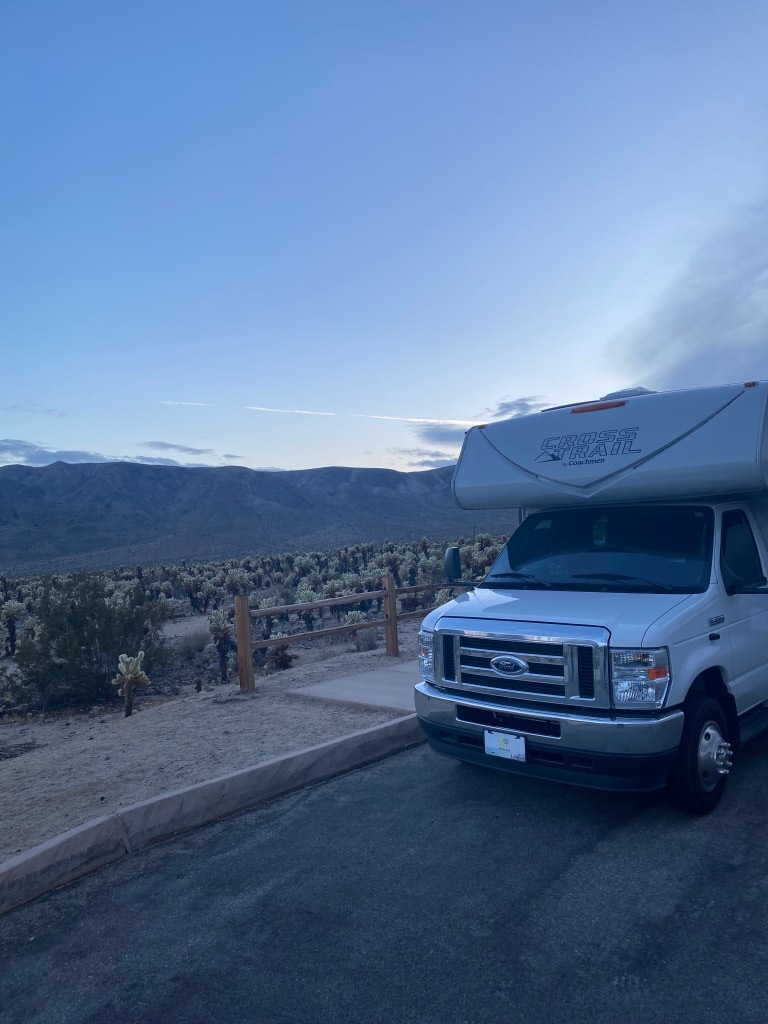
Ecopsychology is a word for “the study of nature and how it affects the human mind.” We’ve learned in the last 10+ months while full-time traveling in a RV that there’s nothing that even comes close to comparing with nature. You can take prescription meds, read self-help books, go to therapy, practice gratitude daily, etc. and then adding in time with nature will make you feel even better.

Research done by Yale University, showed that time in nature — as long as people felt safe in their environment — was an antidote for stress. Spending time outdoors can lower blood pressure and stress hormone levels, reduce nervous system arousal, enhance immune system function, increase self-esteem, reduce anxiety, and improve mood.

There’s a reason tree roots look like the nerves in the brain.

In other studies done by the American Psychological Association it was discovered that a simple stroll through a city park or a day spent hiking in the wilderness can be extremely beneficial. Their studies showed that exposure to nature was linked to improved attention, lower stress hormones, overall better mood, reduced risk of psychiatric disorders and even upticks in empathy and cooperation.

So why is this the case? What about nature encourages our mind and bodies to breathe slower, reduce anxiety, and function better holistically? Ecopsychology is a growing field that studies how nature and our environment affects our mental health, stress, mood, physical activity, oxygen levels, and more. We originally thought nature freaks were the only ones who thought this way – but numerous studies have shown that the hippies were right all along and modern science is actually on their side.


Nature Can Do Many Things, So Let’s Explore its Benefits:


Reduces Stress and Anxiety

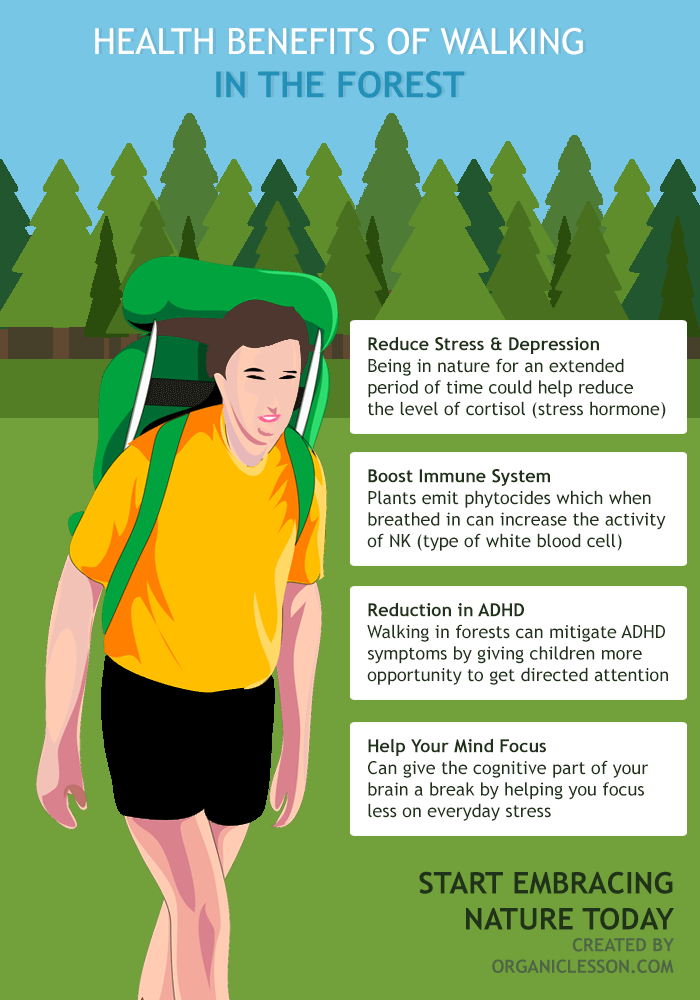
Nature has a calming effect on our minds and bodies. Being surrounded by plants, trees, and fresh air can help reduce stress and anxiety levels. Studies have shown that spending time in nature can significantly lower cortisol levels, a hormone associated with stress.

Stress is a major talking point for everyone – you hear it in the news, at work meetings, and even in casual conversations. Everyone is “so busy” and stressed. The stress may look different person to person but there’s one thing that remains consistent – stress will completly fill any space you allow it to have.

There’s many times when we get stressed from overworking, being too busy, not having enough free time, or even just not sleeping properly. Getting out into nature is a free, easy way to get out and feel better – instantly. You don’t have to call the doctor to get a prescription and wait for it to kick it, you don’t have to sit in a therapy session for an hour, you don’t have to wait another day – just grab your shoes and hit the road, Jack.

Improves Physical Health

Nature is a great place to engage in physical activity. Hiking, walking, and biking are just a few examples of outdoor activities that can improve your cardiovascular health, reduce your risk of obesity, and lower your blood pressure.

It’s well known that we all need to work out, eat healthier, have less sugar and caffeine, and many, many other things that doctors tell us at every annual visit. However, just going out on a walk is enough to help – Rome wasn’t built in a day. While you are out exploring you get to create your own adventure. Do you want to hike 1 mile or 5 miles? The world is your oyster. The key is that you are outdoors doing something, and something is better than nothing.

You’ll also notice it’s easier to not chug coffee, energy drinks, and caffeine-packed beverages when you exercise often. There’s evidence that suggests that the feeling your body gets from caffeine and sugar is similar to the feeling of anxiety or stress. With a lot of caffeine intake, your body is plunged into high stress and anxiety mode against its will, and you are left confused why you feel so jittery and hazily awake. It’s not healthy for any of us, but we do it anyway.

Did you know that walking, hiking, running, or doing any form of exercise outdoors is the healthiest way for your body to produce “natural caffeine?” There’s no drawbacks to taking a walk. Unlike grabbing a sugar filled caffeinated beverage, you won’t have a sugar crash at the end of that walk either.


Boosts Immune System

Being in nature can also help boost your immune system. Trees and plants release phytoncides, which are chemicals that help protect them from germs and insects. When we breathe in these natural chemicals, our bodies respond by increasing the number and activity of a type of white blood cell that fights infection and even cancer.
The National Library of Medicine says,

“A growing body of evidence suggests that various forms of being exposed to nature, such as living close to, frequenting or even looking at environments dominated by living material, are able to provide salutogenic effects on human health. They range from beneficial psychological to physiological outcomes such as attention restoration, improved mood, lowered anxiety and decrease in depressive symptoms, improved cardiovascular, metabolic, oncogenic, respiratory and endocrine function as well as faster healing after surgery and longer life-expectancy. Often, these benefits are attributed to indirect effects of nature exposure, such as increased physical activity, social interactions, positive mental effects and exposure to sunlight, but recent findings have also highlighted direct physiological mechanisms that are triggered by exposure to natural environments. This review focuses on direct mechanisms by which nature can affect human health, more specifically on air-borne compounds emitted by natural environments that have the potential to modulate immunological responses when inhaled, such as biogenic volatile organic compounds (BVOCs), terpenes, essential oils, charged ions, pollen, fungi and bacteria.”

Did you know that your immune system could be enhanced by being out in nature? Because studies are finding out that it absoutely can be.


Enhances Creativity

Nature has been found to enhance creativity and problem-solving abilities. In a study conducted by the University of Utah, participants who went on a nature walk prior to testing performed better on a creativity test than those who went on an urban walk.


Provides Mental Clarity

Nature can also help clear our minds and improve our focus. Stepping away from our daily routines and technology can help us recharge and refocus our thoughts.

Have you ever been sitting at work for a few hours and just felt like you can’t focus anymore? There’s too many phones ringing, emails buzzing, your boss wants to have a meeting, and the intern has 500 questions for you today. It’s all happening at once, and the reality is that our brains and bodies were not made to handle this much stimulation at once.

Stress, depression, and other mental illnesses often follow when we are subjected long term to doing something that we can’t sustain. Your mind and body both can not keep up with the constant pinging of the world – so give them a break.

By going outside in nature, you allow yourself to see the trees, plants, animals, and the simplicity of the world. We have stepped away from a simple life in exchange for our digital world of notifications. At any time, you can decide to put down your phone and walk outside. Even turn it off, so that it won’t bother you the rest of the day. We are allowed to rest, and none of us are robots – even if our employers think we are or want us to be. We have to take breaks and reconnect with ourselves.


Wrapping Up:
Spending time in nature can have numerous benefits for our physical, mental, and emotional wellbeing. Whether it’s through hiking, camping, or even just taking a walk in the park, make sure to incorporate nature into your life to reap the (many) benefits it has to offer.

We appreciate you reading this far!

We’ve been full-time living in a RV for 10+ months, follow along with our adventures by clicking the buttons below:

Our latest on Instagram posts:

Subscribe for updates to our blog (we won’t send any spam – we don’t care for that either):
Categories
camping Products

The Best Camping Grills for This Summer

Summer is quickly approaching and it’s time to be outside – cooking up the best meals on the best camping grills. Nothing beats the convenience of having a portable grill. Whether you’re cooking up some burgers, hot dogs, or even a full meal, a portable camping grill is an essential piece of equipment for any camping trip. But with so many options on the market, which one should you choose? In this blog post, we’ll take a look at some of the best camping grills.

Time to read:

3–4 minutes

Before jumping into the blog:

Please consider joining the gone community by subscribing below & following us on social media. It’s 100% free, and well worth the price of admission. We’ll update you with the newest RV lifestyle stories, tips and tricks, mental wellness tips, and so much more. DMs are always open to chat, and we’ll answer any questions you have about this lifestyle – it doesn’t have to be scary! We also promise not to spam your inbox with junk – we don’t care for that either.

Advertisements

Table of Contents:

  1. Blackstone Tailgater
  2. Weber Q120
  3. Coleman RoadTrip 285
  4. Cuisinart CGG-180T
  5. Char-Broil Grill2Go X200
  6. Which Camping Grill Sounds the Best To You?

Blackstone Tailgater

Blackstone Tailgater, one of the best camping grill options.

The Blackstone Tailgater is a versatile grill that is perfect for camping. It has a cooking surface of 512 square inches, which is large enough to cook for a large group of people. The Tailgater also features a griddle top, which means you can cook pancakes, eggs, and more.

Price: $249.97 at Camping World (as of June 2023).

Advertisements

Weber Q120

Weber Q120 is a compact, portable camping grill that is perfect for cooking the camping necessities for a few people.

The Weber Q1200 is a compact, portable grill that is perfect for solo camping. It has a cooking surface of 189 square inches, which is plenty of space for burgers, hot dogs, and a few more small items. The Q1200 also features a built-in thermometer, which makes it easy to monitor the temperature of your food.

Price: $259.00 on Amazon (as of June 2023).

Advertisements

Coleman RoadTrip 285

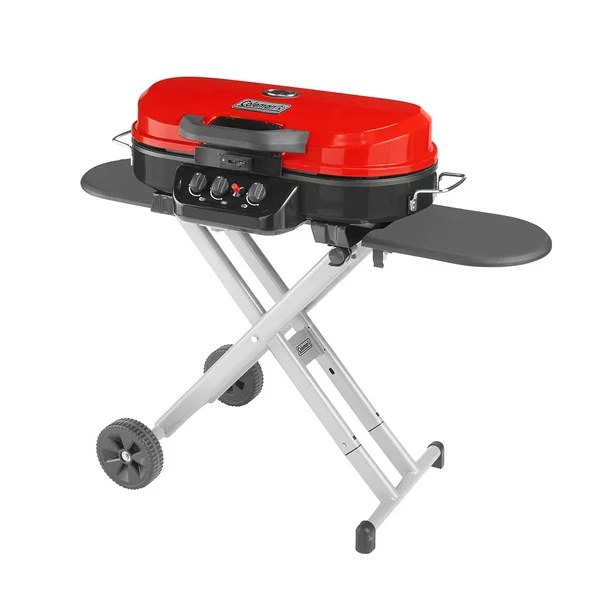
Coleman RoadTrip 285 is a versatile portable camping grill with interchangeable cooktops - allows for different types of cooking styles in a small form-factor.
Coleman RoadTrip 285 is a versatile portable camping grill with interchangeable cooktops – allows for different types of cooking styles in a small form-factor.

The Coleman RoadTrip 285 is a versatile grill that is perfect for the camper who wants flexibility. It has a cooking surface of 285 square inches, which is large enough to cook for a small group of people. The RoadTrip 285 also features interchangeable cooktops, which means you can use it as a grill, griddle, or stove.

Price: $264.99 on Amazon (as of June 2023).

Advertisements

Cuisinart CGG-180T

Cuisinart CGG-180T is a small camping grill for a few people. It's extremely portable and also the cheapest on this top camping grills list.
Cuisinart CGG-180T is a small camping grill for a few people. It’s extremely portable and also the cheapest on this top camping grills list.

The Cuisinart CGG-180T is a compact, tabletop grill. It has a cooking surface of 145 square inches, which is enough space to cook for a small group of people or a large meal for a solo camper. The CGG-180T also features a built-in thermometer, which makes it easy to monitor the temperature of your food.

Price: $108.59 on Amazon (as of June 2023).

Advertisements

Char-Broil Grill2Go X200

Char-Broil Grill2Go X200 is a rugged, portable camping grill with enough cook space for a small group of people.

The Char-Broil Grill2Go X200 is a rugged, portable grill that is built to last. It has a cooking surface of 200 square inches, which is plenty of space to cook for a small group of people. The Grill2Go X200 also features a built-in thermometer, which makes it easy to monitor the temperature of your food.

Price: $174.71 on Amazon (as of June 2023).

Advertisements

Which Camping Grill Sounds the Best To You?

Which camping grill do you like the most? Do you have a large family and need something larger like the Blackstone Tailgater? Or are you used to roughin’ it in the great outdoors and want the most rugged and tough camping grill?

No matter which portable camping grill you choose, make sure to read the manufacturer’s instructions carefully before using it. Always follow safety guidelines and make sure to keep the grill away from anything that could catch fire – tents, awnings, etc. With the right portable grill, you’ll be able to enjoy delicious meals while enjoying the great outdoors.

Advertisements

Our DMs are always open on social media if you want to connect, ask any questions about RV life, or just to bounce some ideas off us before you take off on your next trip.

Please consider joining the gone community by subscribing below & following us on social media. It’s 100% free, and well worth the price of admission. We’ll update you with the newest RV lifestyle stories, tips and tricks, mental wellness tips, and so much more. DMs are always open to chat, and we’ll answer any questions you have about this lifestyle – it doesn’t have to be scary! We also promise not to spam your inbox with junk – we don’t care for that either.

Want to continue reading? We’ve got plenty more blogs to binge read 🙂

Categories
Adventure travel

Joshua Tree National Park: A Snow Day

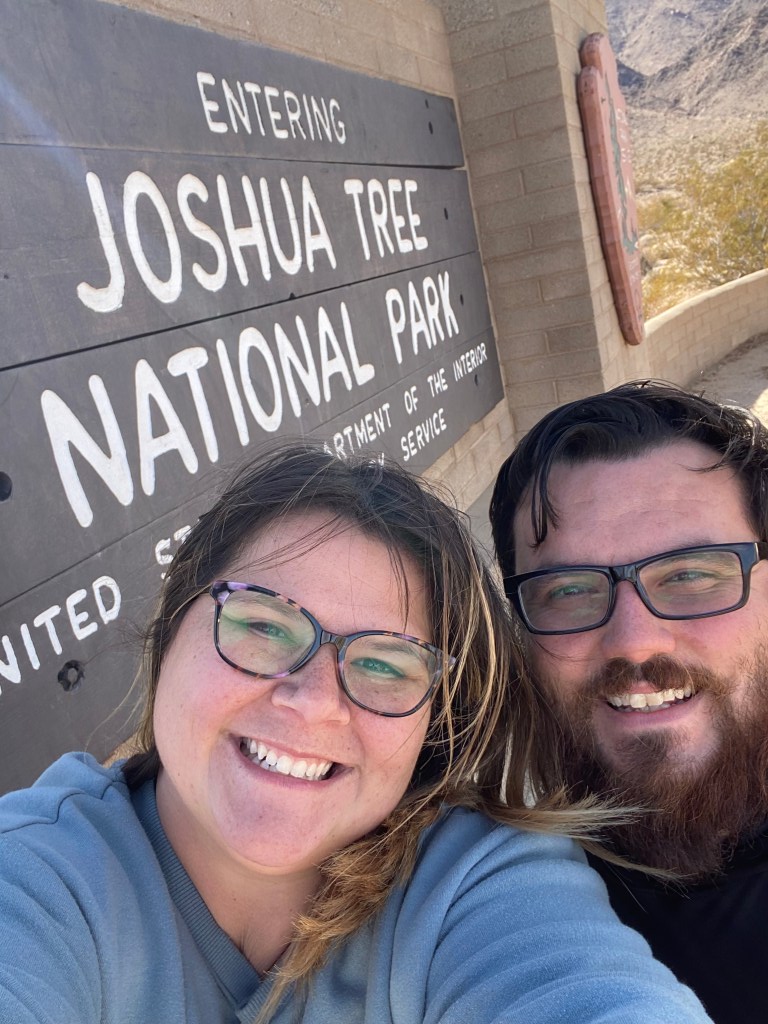
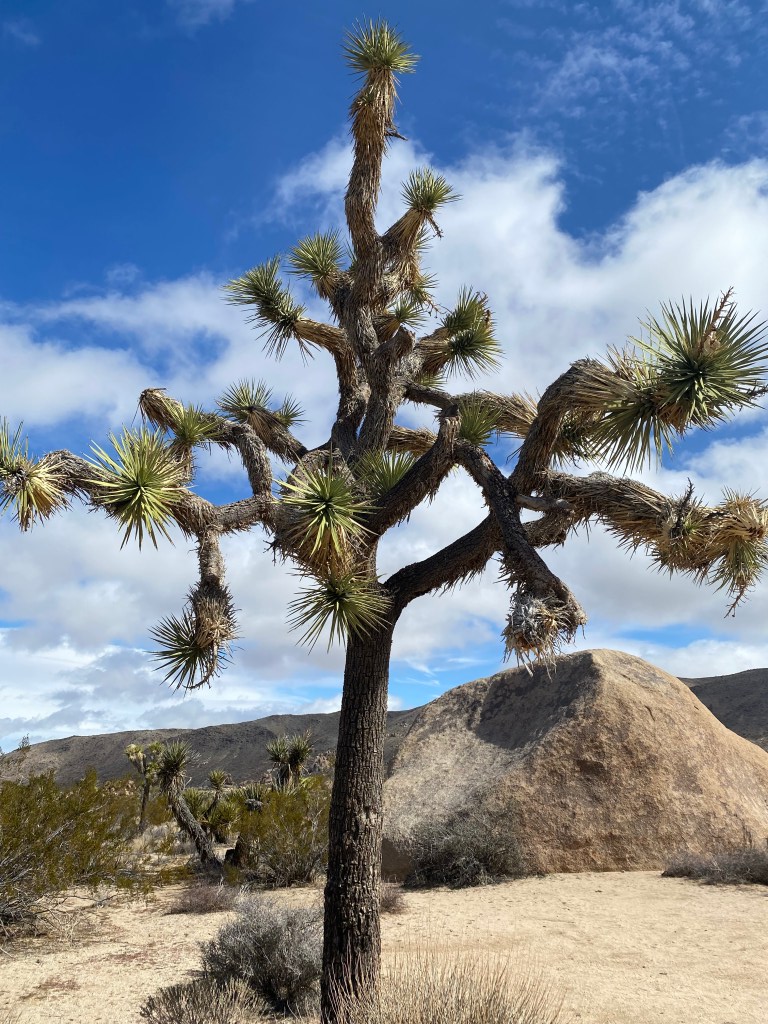
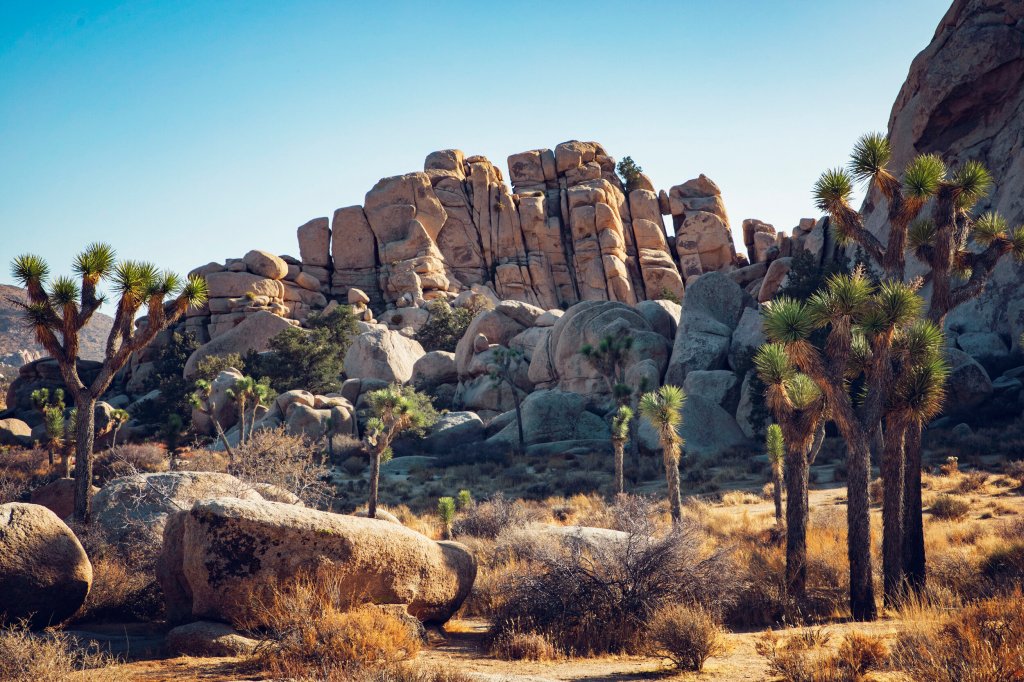
Joshua Tree National Park is located in southern California, covering an area of almost one million acres. The park is named after the unique (and eerie) Joshua tree, which is native only to the Mojave Desert and is found throughout the park. The park is a popular destination for nature lovers, hikers, rock climbers, and photographers of Joshua Trees.
Estimated time to read:

12–18 minutes

The park is divided into two distinct ecosystems: the Mojave Desert and the Colorado Desert. The Mojave Desert is characterized by its high elevation and rocky terrain, while the Colorado Desert is lower and has a more diverse landscape, including sand dunes and palm oases.

Advertisements

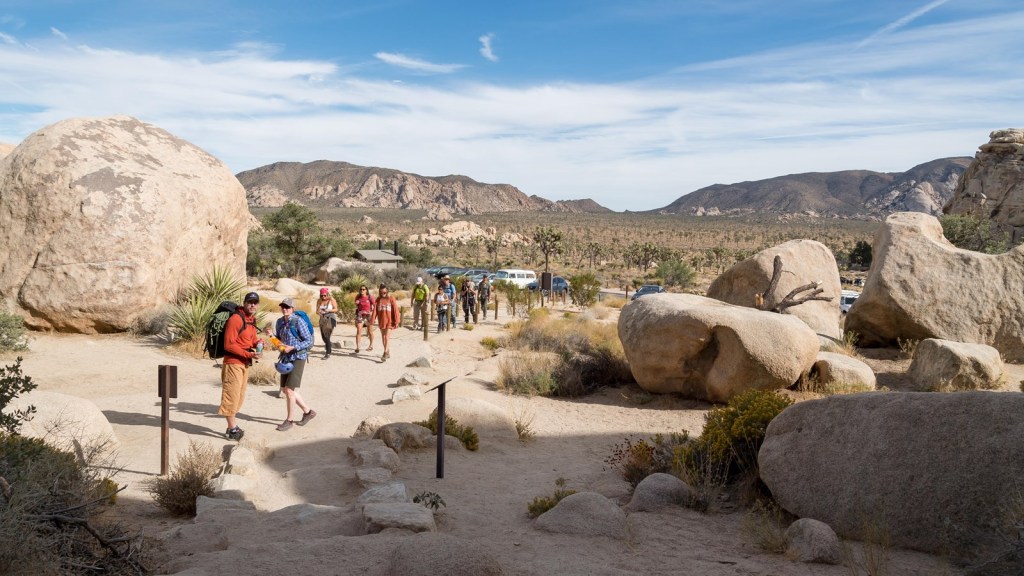
One of the most popular activities in Joshua Tree National Park is hiking. There are over 100 miles of hiking trails throughout the park, ranging from easy walks to strenuous hikes that require technical skill. Some of the most popular hikes include the Hidden Valley Trail, the Barker Dam Trail, and the Ryan Mountain Trail.

Joshua Tree National Park is also a VERY popular destination for rock climbers. The park has a whopping 8,000 climbing routes and is considered one of the best places in the world for bouldering. The park’s granite rock formations and unique geological features make it a challenging and rewarding destination for climbers of all skill levels. There are several local outfitters that will teach you to safely climb if you’re new to the sport.

In addition to hiking and rock climbing, Joshua Tree National Park offers visitors an incredible opportunity to stargaze. The park is located miles from major cities, which makes it an ideal location for viewing the night sky. Joshua Tree is a designated International Dark Sky Park and boasts some of the darkest skies in the U.S. On clear nights, visitors can even see the Milky Way.

Overall, Joshua Tree National Park is a must-visit destination for any nature enthusiast. Its unique landscape and diverse ecosystem offer visitors a truly unforgettable (and instagram worthy) experience.

Advertisements

Map of Joshua Tree:

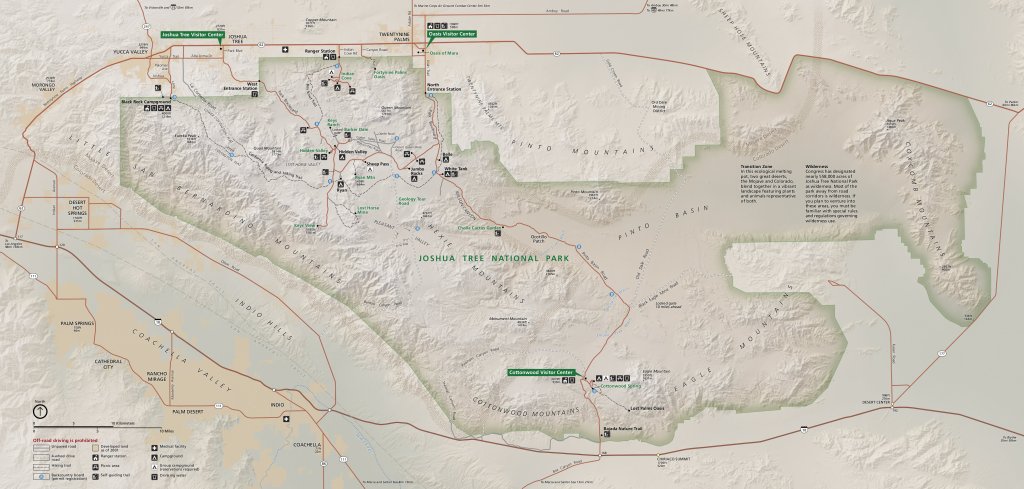
Joshua Tree National Park is the 15th-largest National Park in the United States. It’s a few thousand acres away from being a total of 800,000 acres – which is relatively small as far as National Parks go. From north to south, the park is close to one hour of driving distance but can take a little longer depending on your route planning & stops. The shortest route is along Park Boulevard, so if you stay on this road then you’ll save extra time.

Refer to the map below to plan your adventure and see the landscape. We’ve also included a downloadable PDF below to get you jumpstarted with planning your trip to the park!

A map of Joshua Tree National Park.

Download the map here:

Advertisements

We Had Bad Weather at Joshua Tree … Make Sure to Check for Alerts!

Check this link to read the most current alerts at Joshua Tree National Park. While we were there, we encountered clear skies, rain, sleet, hail, and snow all in one day. It was a brutal storm moving in, but we enjoyed our unique time at the park nonetheless!


Visitor Centers @ Joshua Tree

There are THREE visitor centers in Joshua Tree. While we were there, the Oasis Visitor Center was closed, but we checked out the other two. Joshua Tree Visitor Center is at the main entrance that the majority of people come into from the Los Angeles area. Expect this center to be packed full of clamoring tourists, while the other two are much smaller experiences for those quiet minds.

Plan your trip to the visitor centers in advance – including the hours which vary by season.


Joshua Tree Visitor Center

We checked out this visitor center on the northwestern edge of the park, and it has just about everything. They’ve got a gift shop, plenty of cool exhibits, a cactus garden (albeit sad in the snow,) a coffee shop next door, and friendly park staff. This visitor center is also right next to the town of Joshua Tree – allowing you to make a day trip to explore the unique area if you’re so inclined.

Advertisements

Cottonwood Visitor Center

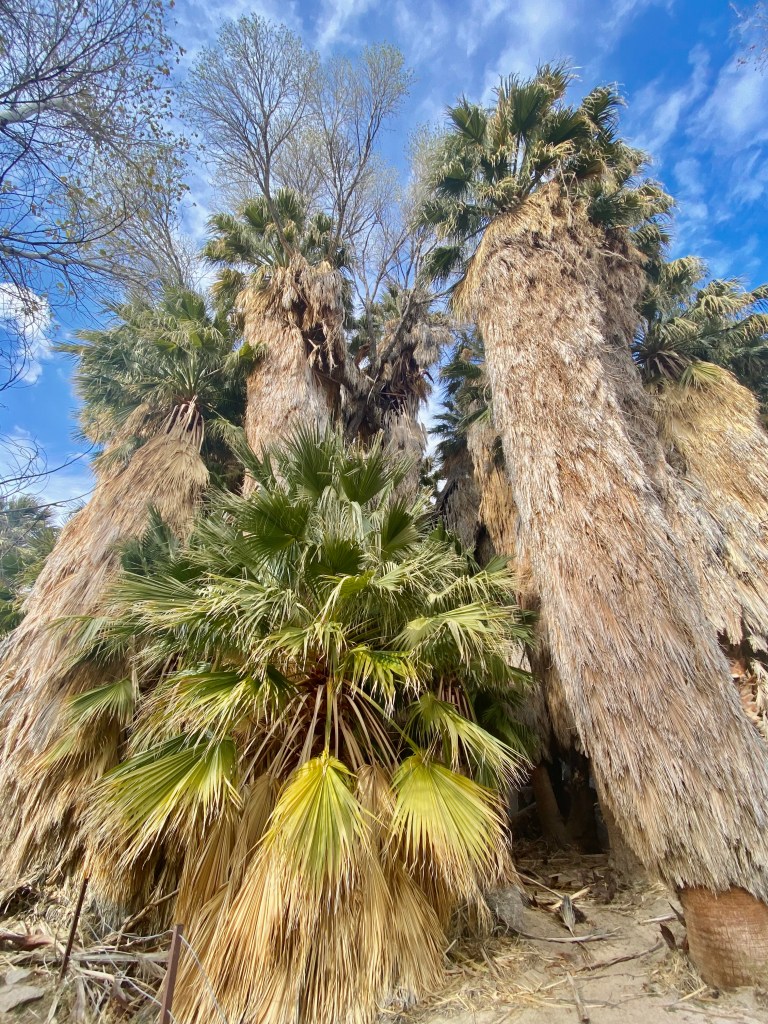
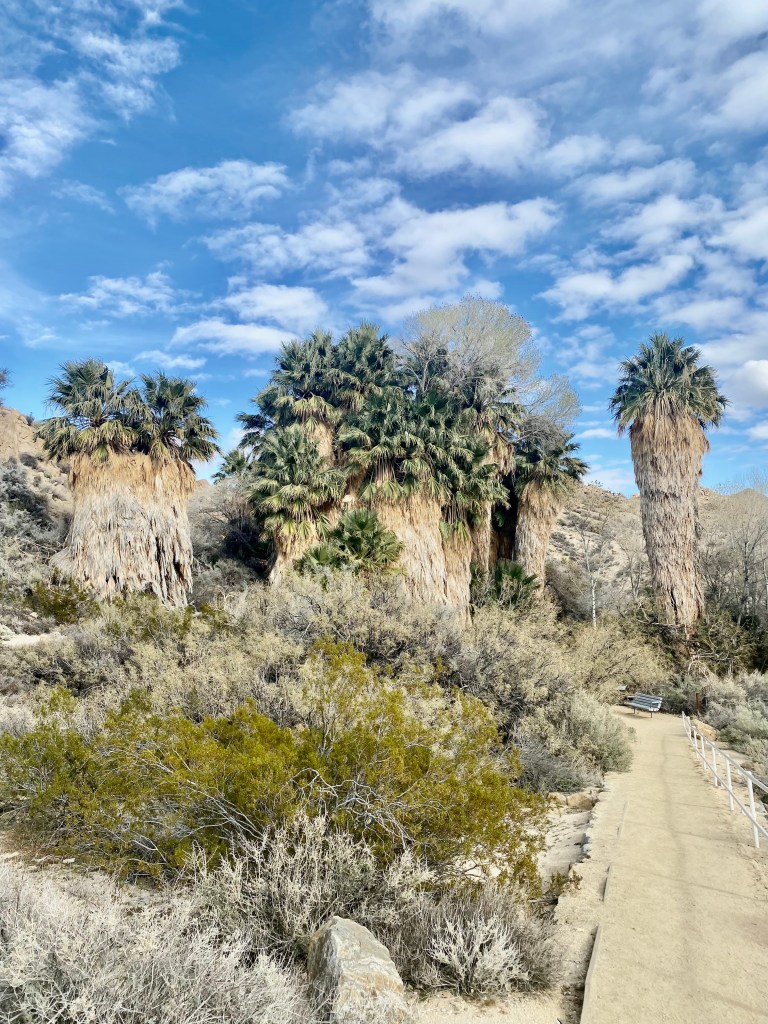
This visitor center was the first one we went to because of proximity to our campsite but it was well worth it. Of course they have the usual maps, information, and souvenirs but the best part is just around the corner. If you’re going to do any of the visitor centers, don’t miss this one for incredible views of the Cottonwood Spring, a quick walk from the nearby parking area. Here you will see larger-than-life palms, unique flora and fauna, and (if you’re lucky) the spring.

Oasis Visitor Center

This visitor center was closed when we went to the park. I checked online recently and it now says permanently closed … so expect that when you go! Regardless, this visitor center is right next to the Oasis of Mara which we heard is beautiful. Also near this area is Sky’s the Limit which is well worth the visit itself (more on that below).


– Our Campsite at Joshua Tree –

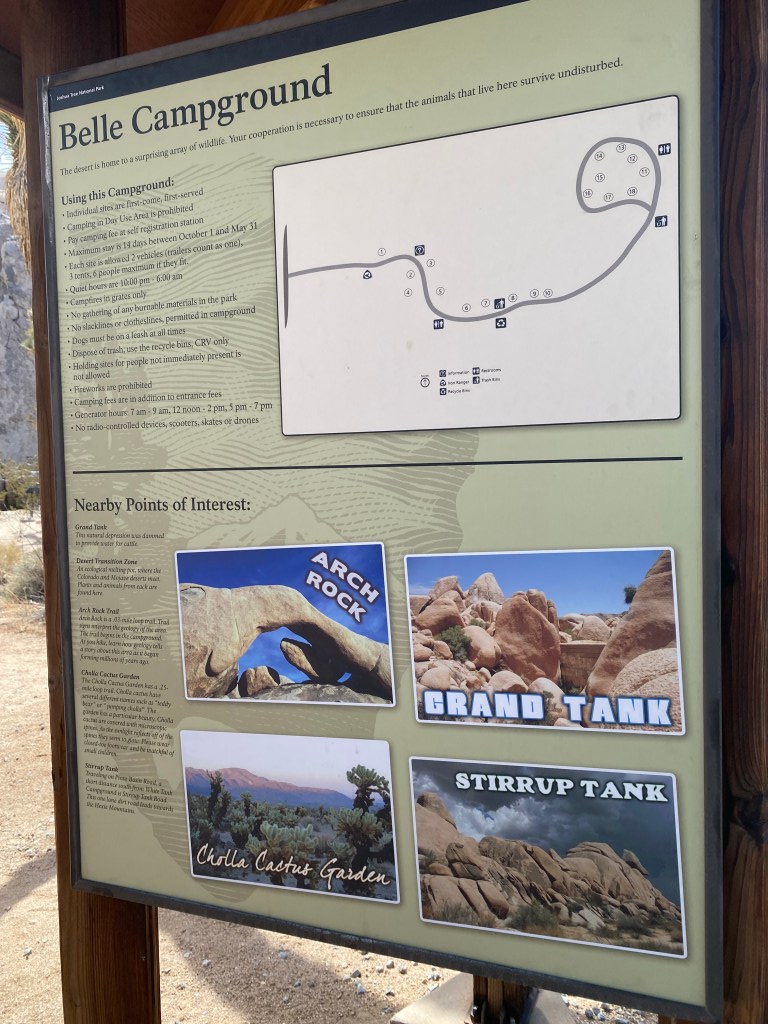
Belle Campground, #17

Belle Campground: $15/night dry camping. Pit toilets, tables, and fire grates on site. No water.

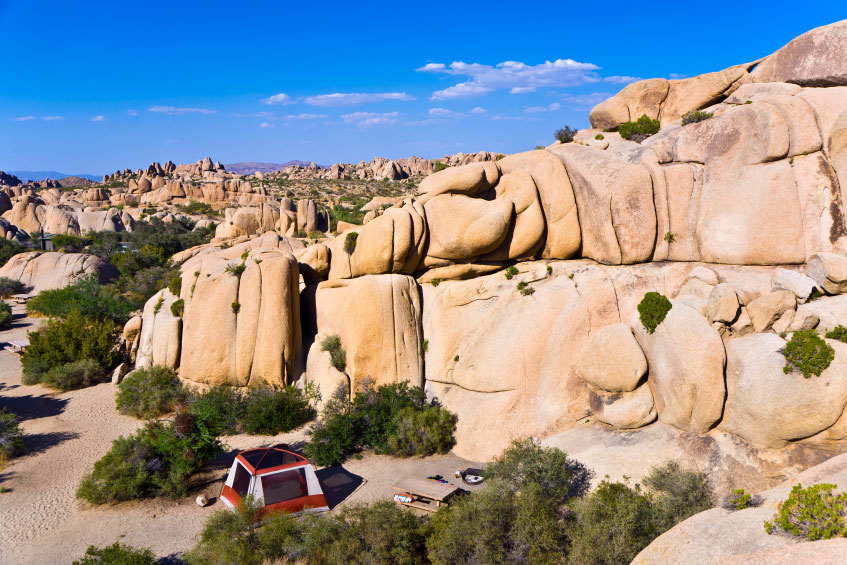
This is where we camped out, and you can see plenty of awesome pictures we took just at the campground. We originally wanted to be at Jumbo Rocks campground, but it was booked way out in advance. If your plan is to get one of these first-come, first-serve spots, make sure to get there early (before noon). Especially on the weekends!

Advertisements

– Other Camping Options at Joshua Tree National Park –

Reservations Required Camping:

Black Rock: $25/night, 99 campsites. Water, flush toilets, tables, fire grates, and a dump station.

Cottonwood: $25/night, 62 campsites. Water, flush toilets, tables, fire grates, and a dump station.

Indian Cove: $25/night, 101 campsites. Pit toilets, tables, and fire grates. No water.

Jumbo Rocks: $20/night, 124 campsites. Pit toilets, tables, and fire grates. No water.

Ryan: $20/night, 31 campsites. Pit toilets, tables, and fire grates. No water.

See the whole list of them here.

First-Come, First-Serve Camping:

Advertisements

Hidden Valley: $15/night, 44 campsites. Pit toilets, tables, and fire grates. No water.

White Tank: $15/night, 15 campsites. Pit toilets, tables, and fire grates. No water.


Places We Explored in Joshua Tree:

Sky’s the Limit

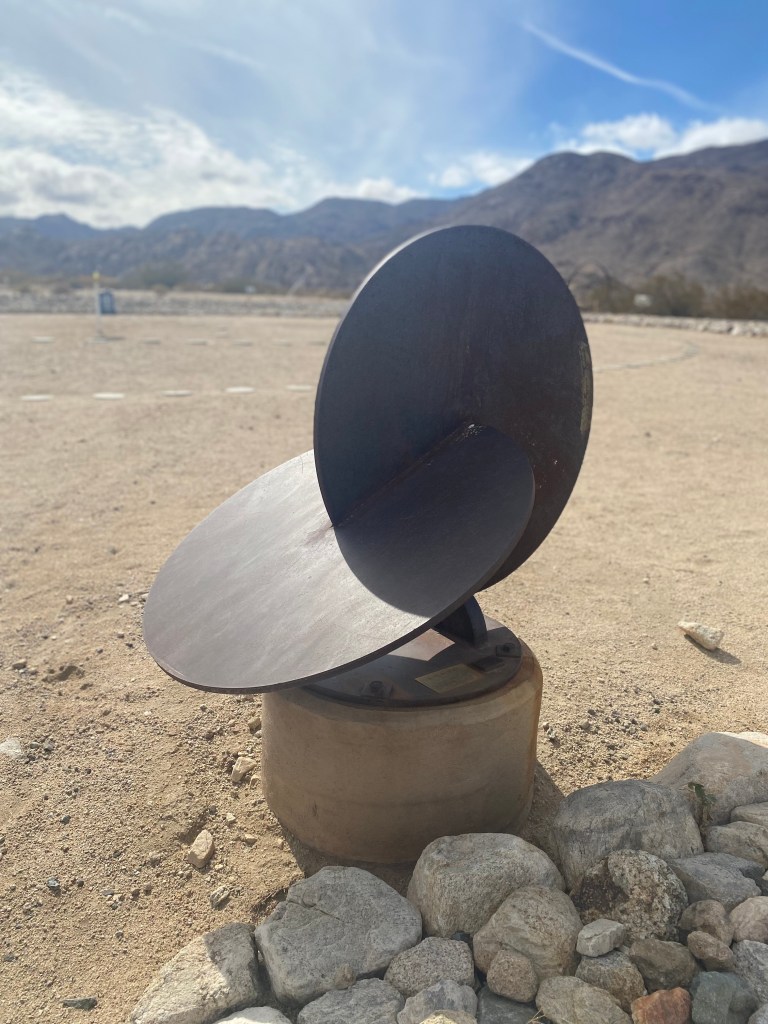
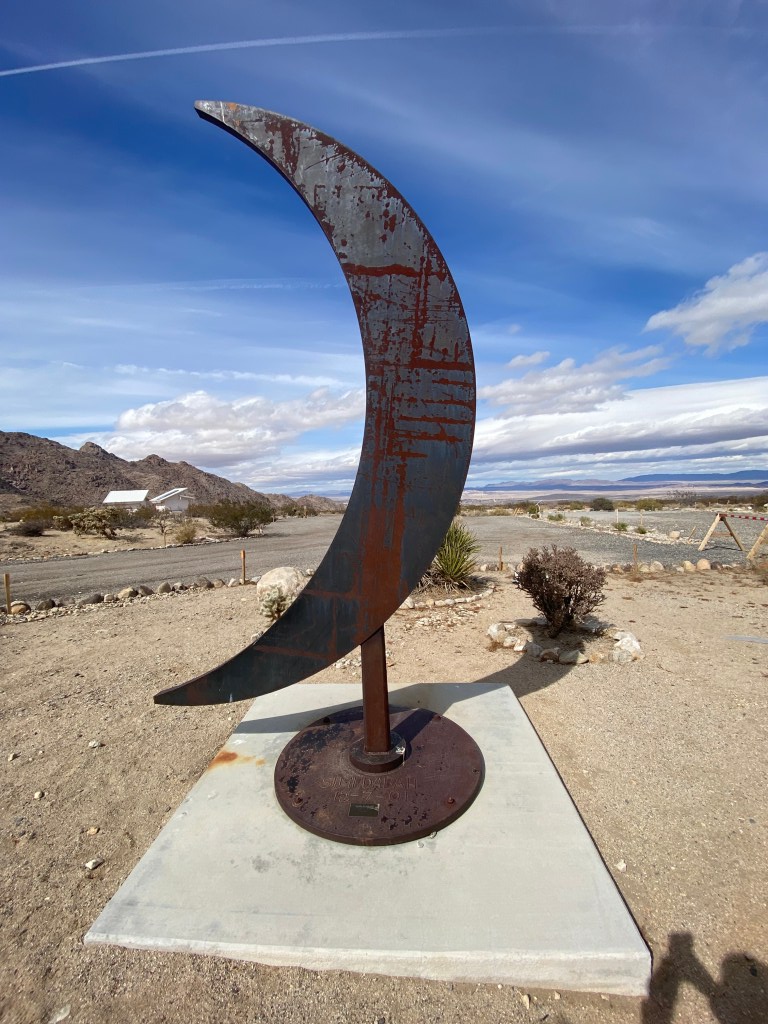
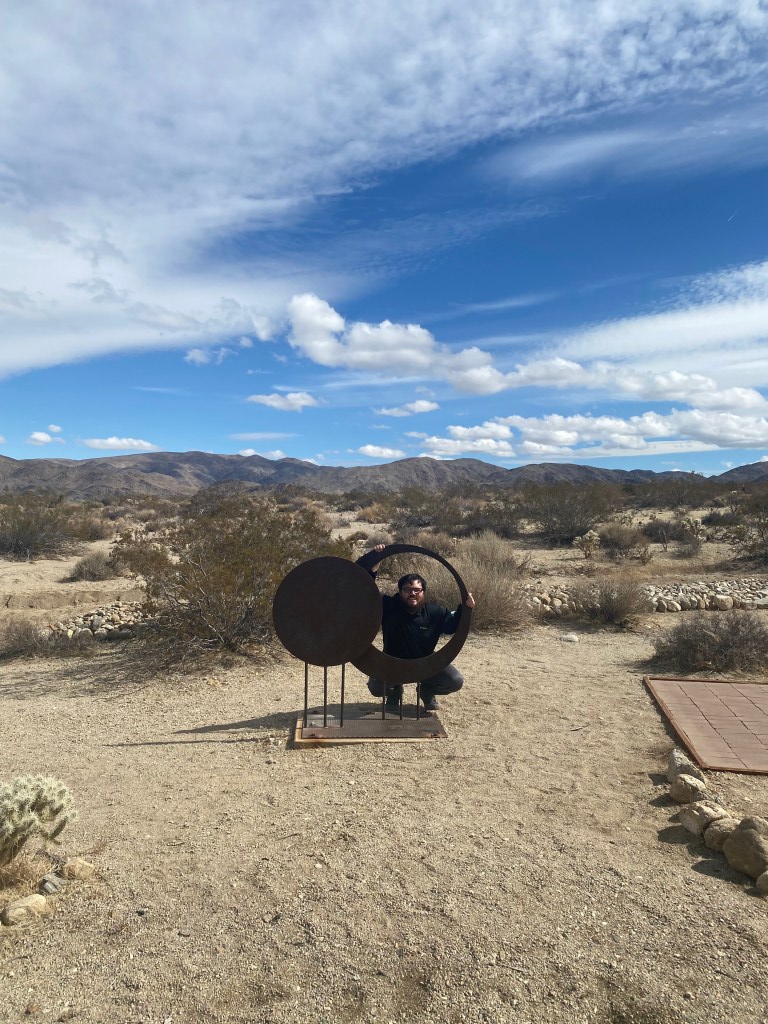
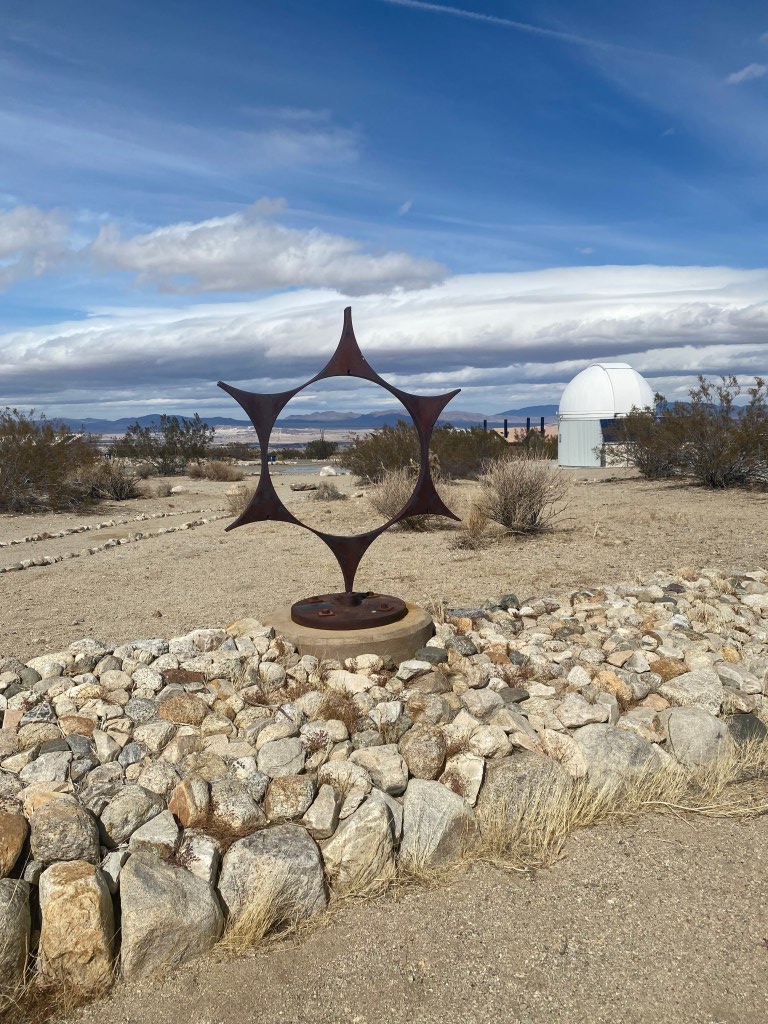
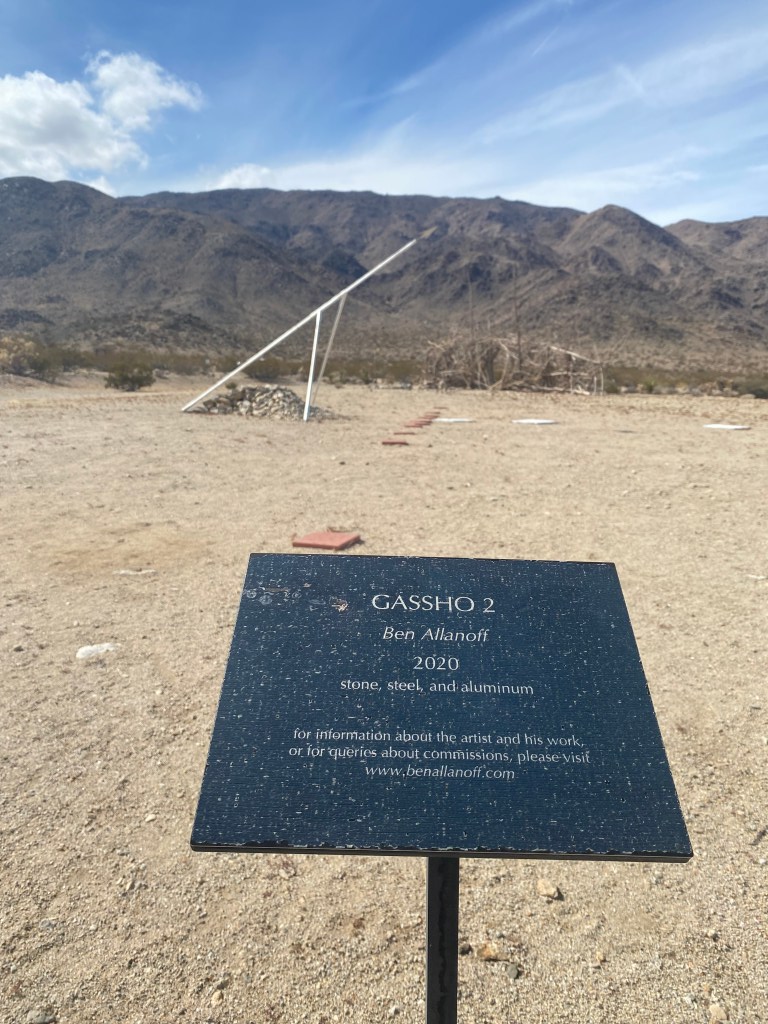
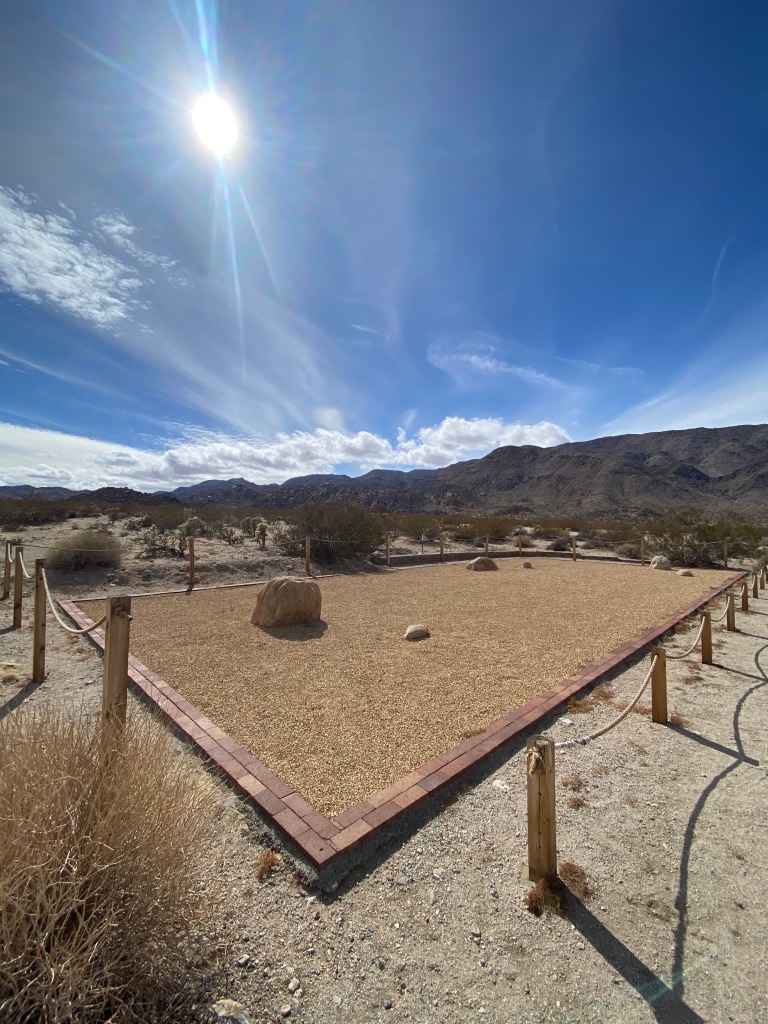
Sky’s the Limit was a nice little stray out of the way, towards the town of Twenty Nine Palms. Here, they have a meditation garden, sun clock, celestial calendar, stargazing at night, and plenty more to do with a full event calendar. Even when not staffed, we still enjoyed all of the abstract artwork made out of metal modeled after the solar system, planets, & moons.

Parking is on site and its free to enter, a quick 10 minute drive out of Joshua Tree National Park.

Advertisements

Skull Rock

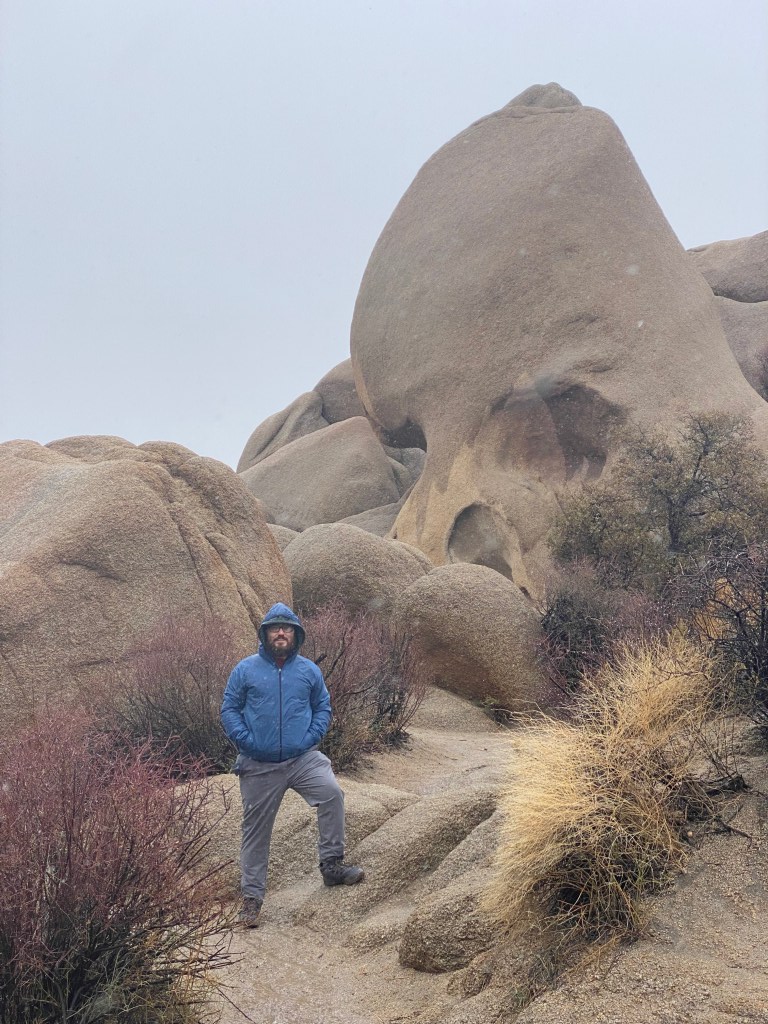
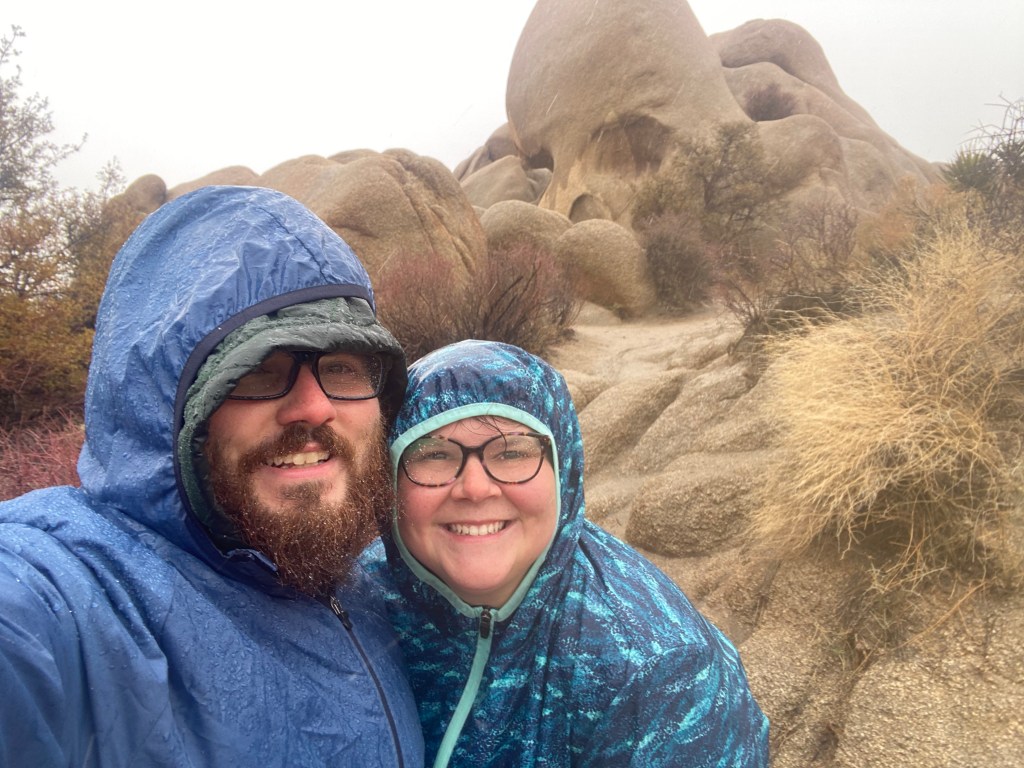
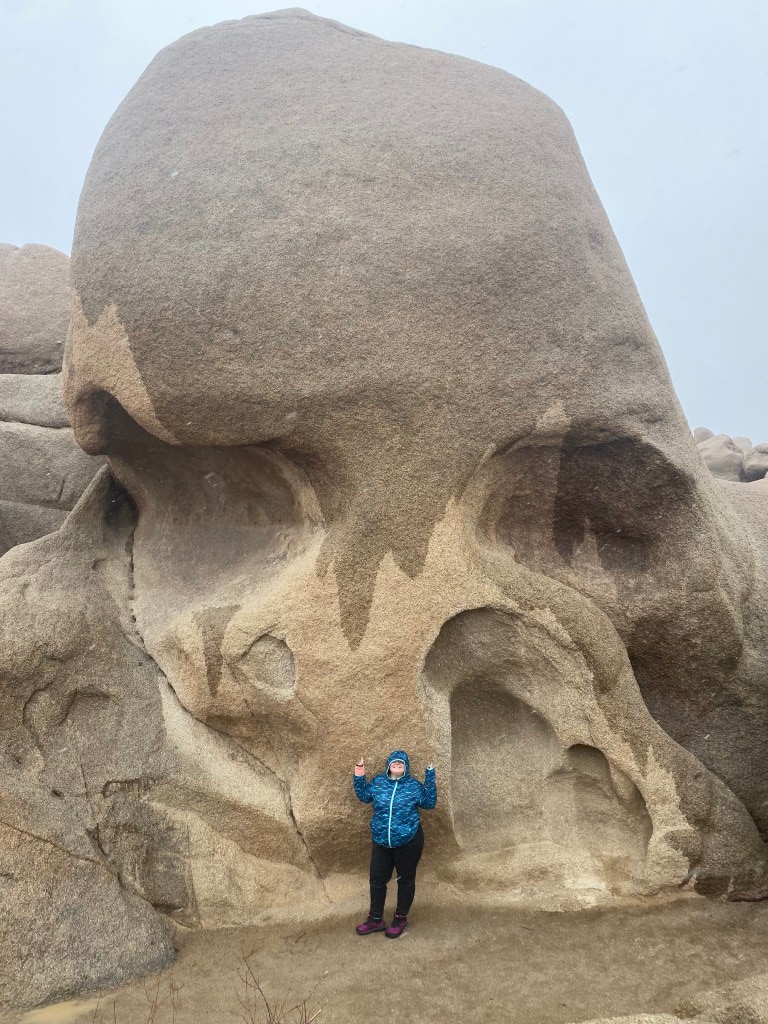
This one looks foreboding and for good reason – it’s literally in the shape of a skull (if you look from the right angle, lol.) It is literally called Skull Rock. As we were walking over to see this incredible rock formation, rain begin to fall. We even began to start to see snow flurries, how much fun!

Parking is on the side of the road right across from this, so very easy to access.


Cap Rock

Advertisements

Cap Rock is another easy walk from the parking lot. It’s pretty cool, because it literally looks like a ball cap on the edge of a rock formation. How long has it been holding onto the edge like that?

Snow started falling as we were sitting in the parking lot here. Our original plan was to head up to Key’s View to have a picnic in our RV there with a great vista all around. But, the rangers shut down the road to Key’s View because of inclement weather, so we pulled off in the nearby Cap Rock parking lot to have lunch with the snow. This detour ended up being a highlight of the day with plenty of fun picture spots.


Arch Rock

Arch Rock looks exactly like that – a natural rock-shaped arch. How incredible is it that nature allows such a beautiful thing to happen?

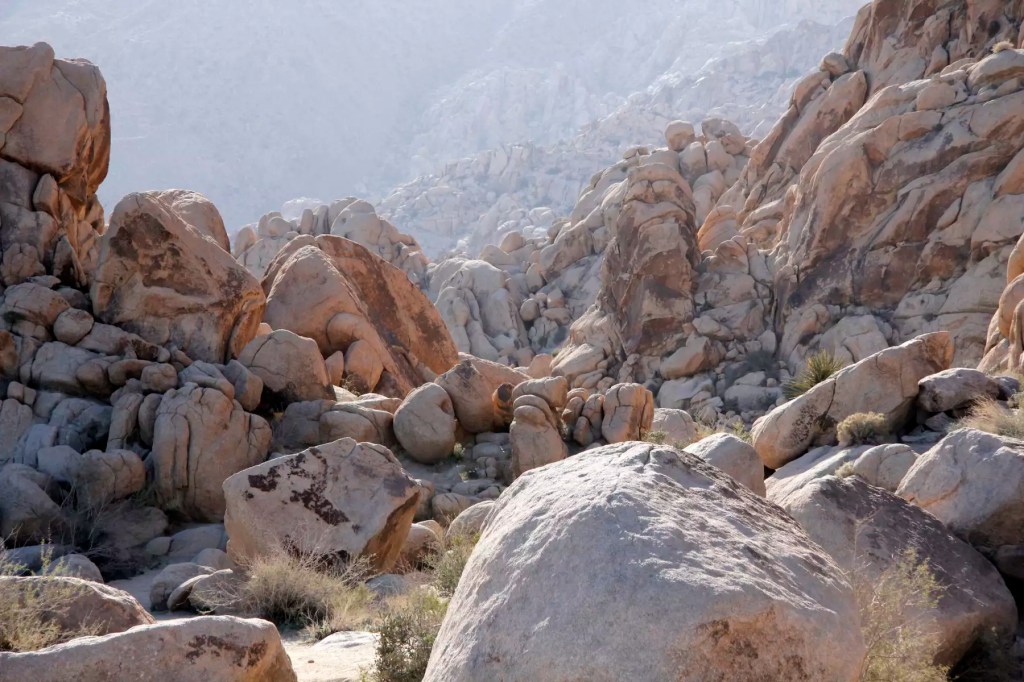
BONUS: Once you get to Arch Rock, turn to the right. The arch should be on your left now. Keep heading straight through the narrow passages of rocks (top right picture above with a caption). This is an amazing picture-worthy area. If you keep going it turns to the right and there’s even more incredible crevices and rock formations to explore.


Cottonwood Spring

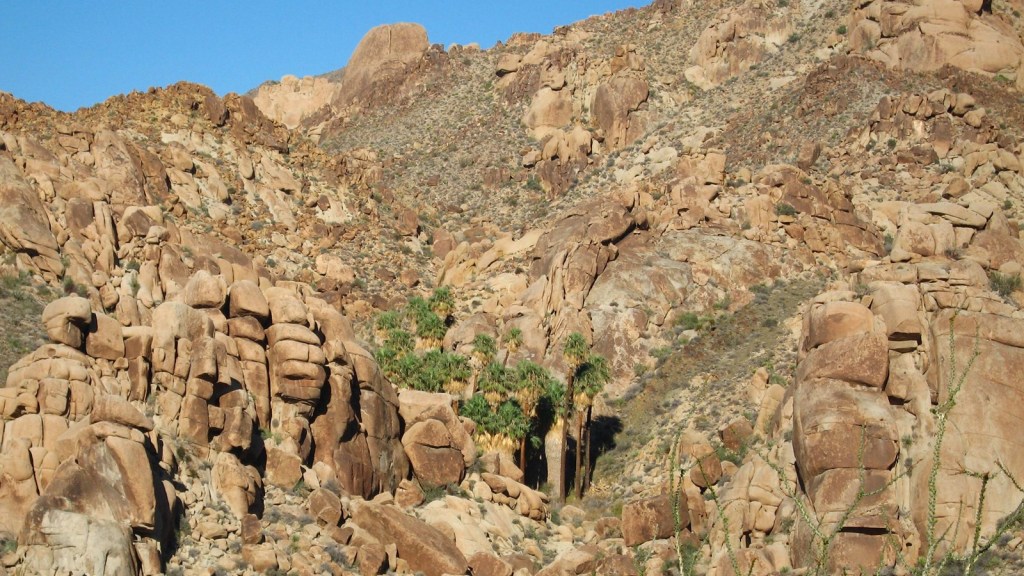
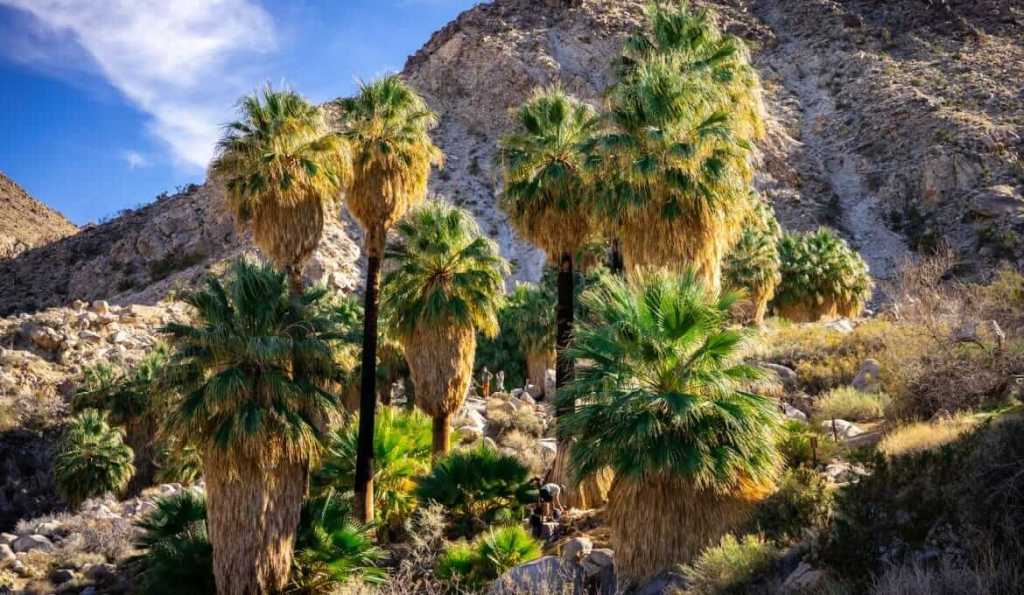
Sorry to disappoint but we didn’t actually get to see a desert oasis spring in the middle of the park. However, there is a spring underground which is indicated by the abnormally large growth of palm trees nearby. This spring feeds a few of the palm trees in this area to keep them growing happy, healthy, tall, and strong.

Advertisements

It’s a great hike to take regardless, and very easy for people of all ages – just a short walk down from the parking area. We ran into a nice elderly couple who had been hiking in the area and had a wonderful chat. Be nice to old people – you never know what you can learn!

See more about Cottonwood Spring here.


Cholla Cactus Garden

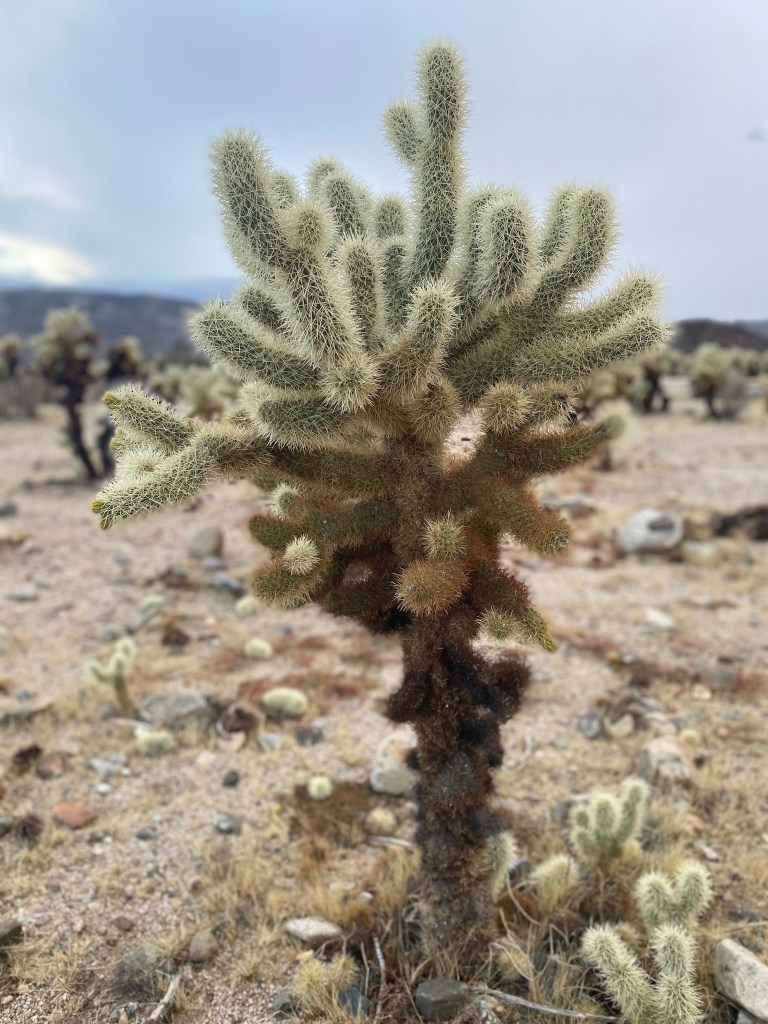
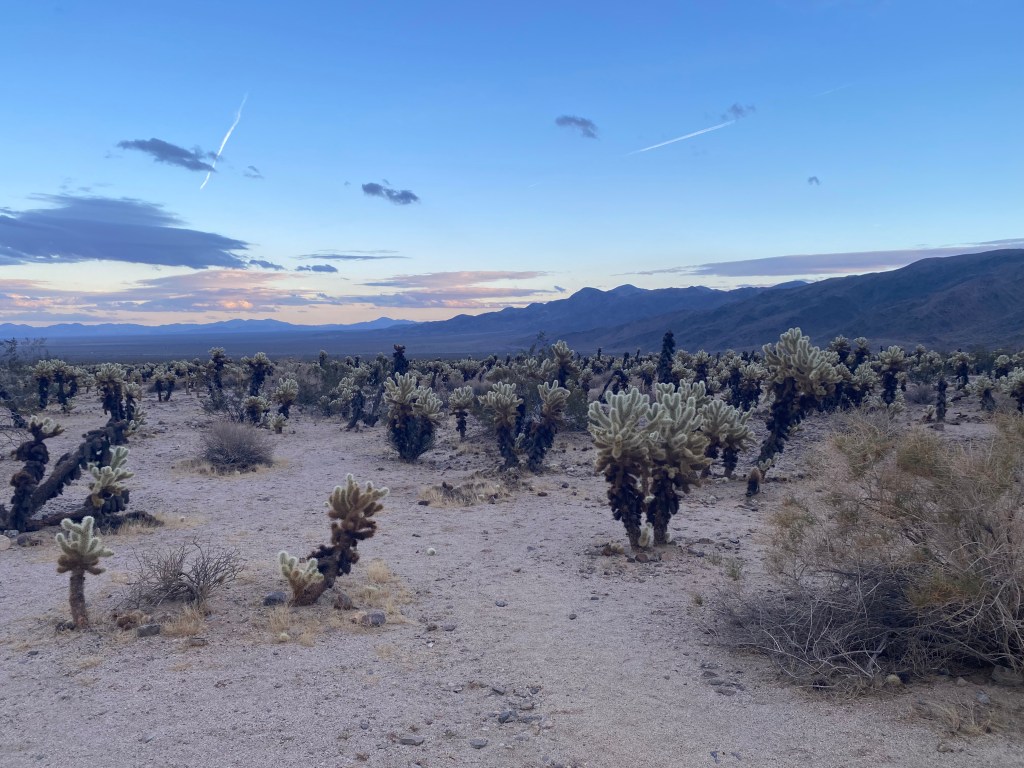
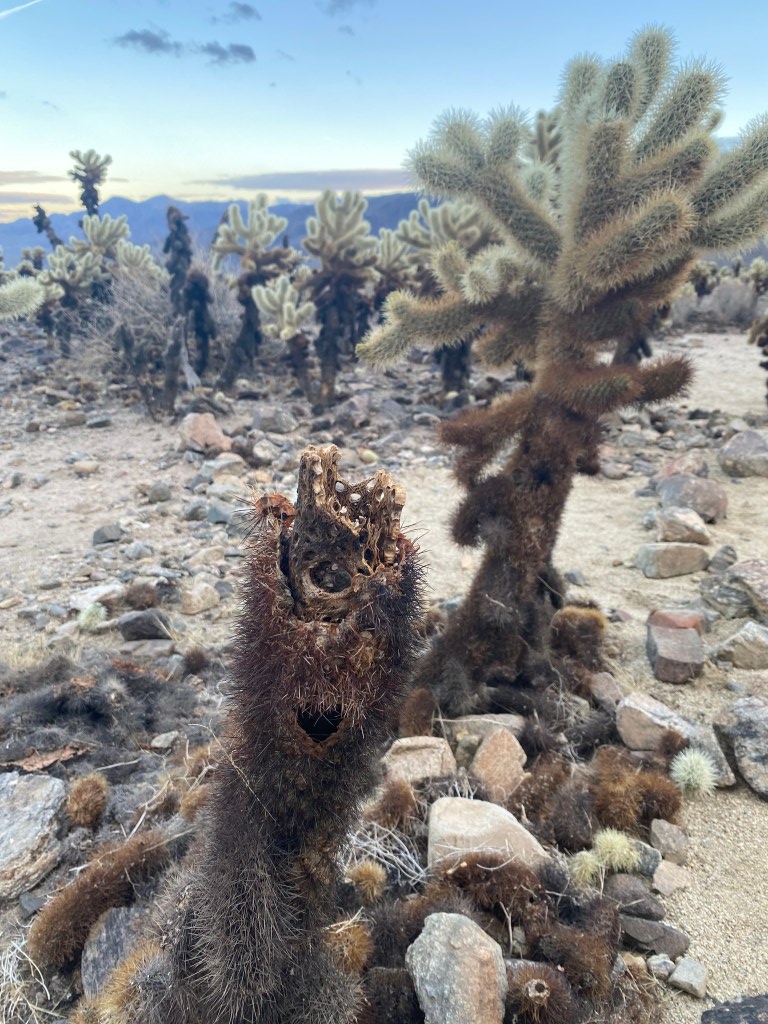
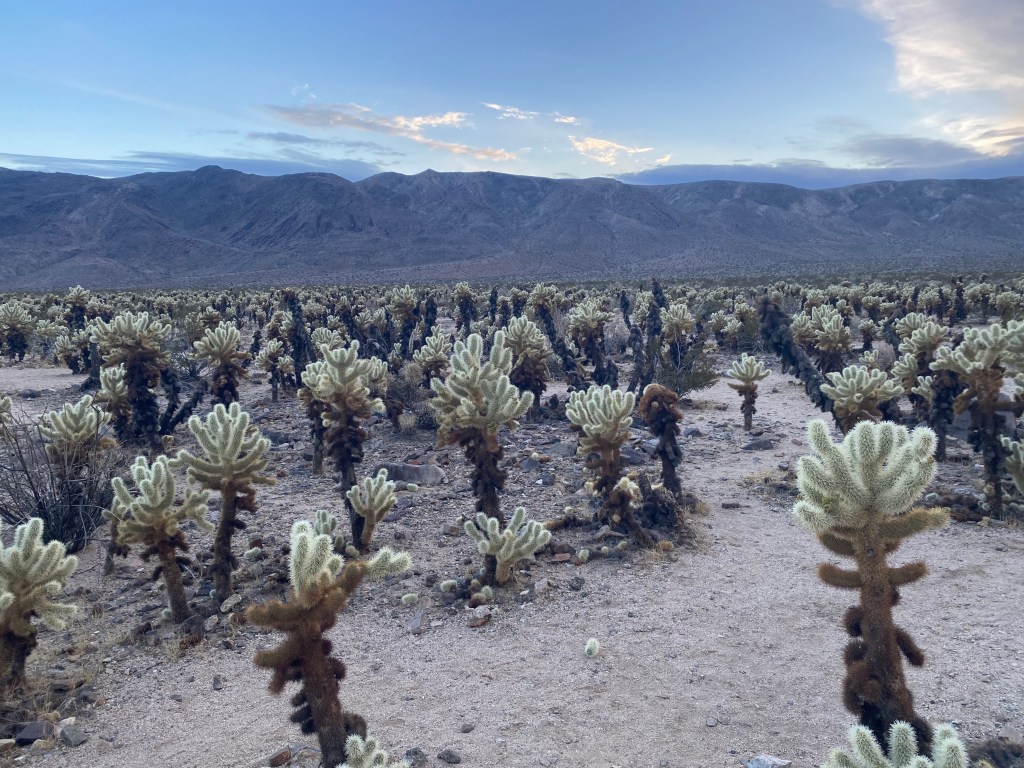
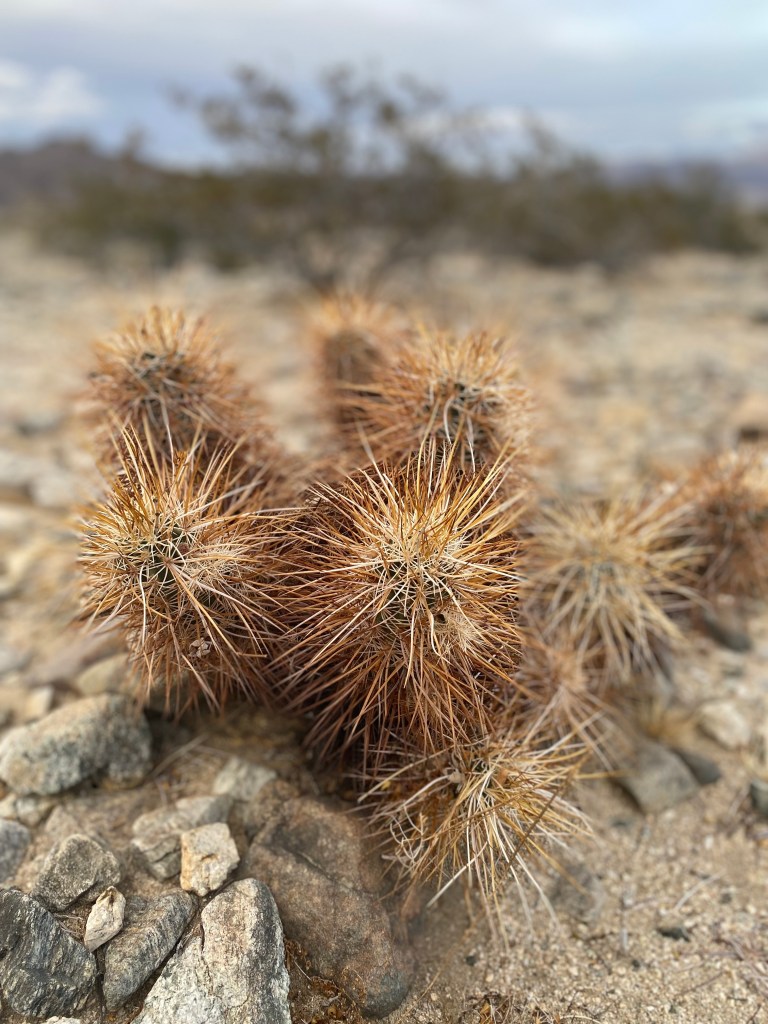
These little cactus guys are something fierce. They can grow taller than people, and when in bloom, have an incredible looking flower. Not to mention that they are super cool and hollow on the inside. Make sure you don’t miss this area when at the park because it is well worth the time. It’s such a beautiful spot with thousands of Cholla cacti situated right off the parking area. The park service has made a walking path that feels like a labyrinth that allows you to get up close. Not too close though! These guys are SHARP.

Check out more information about the Cholla cactus garden here.


Ocotillo Patch

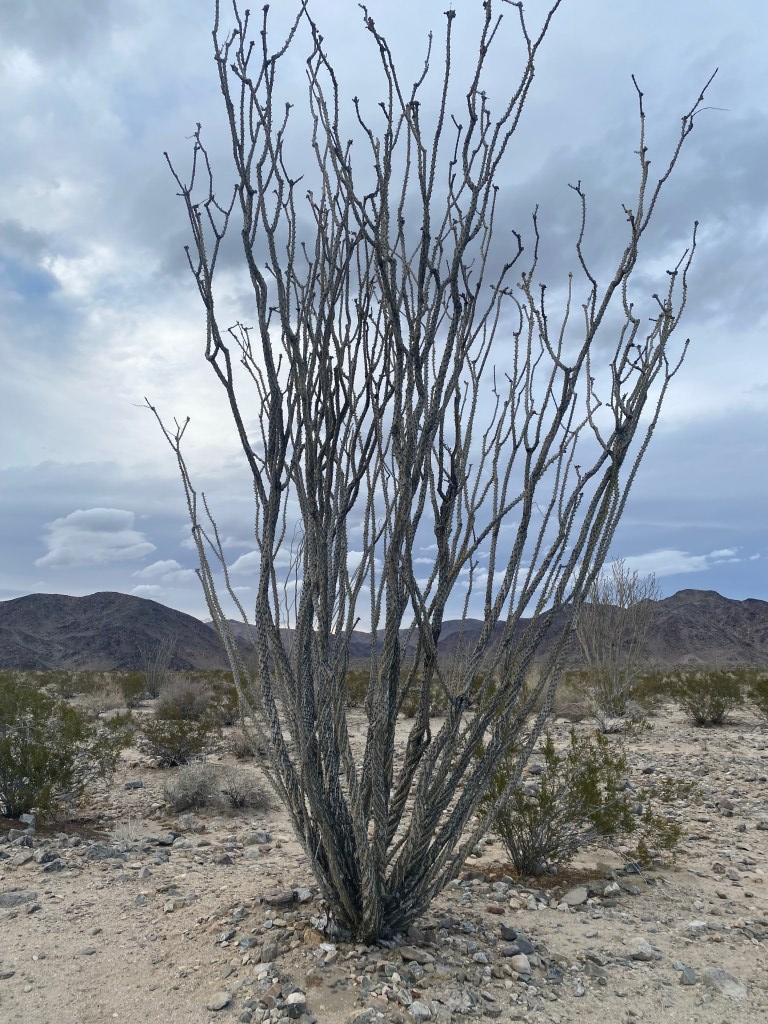
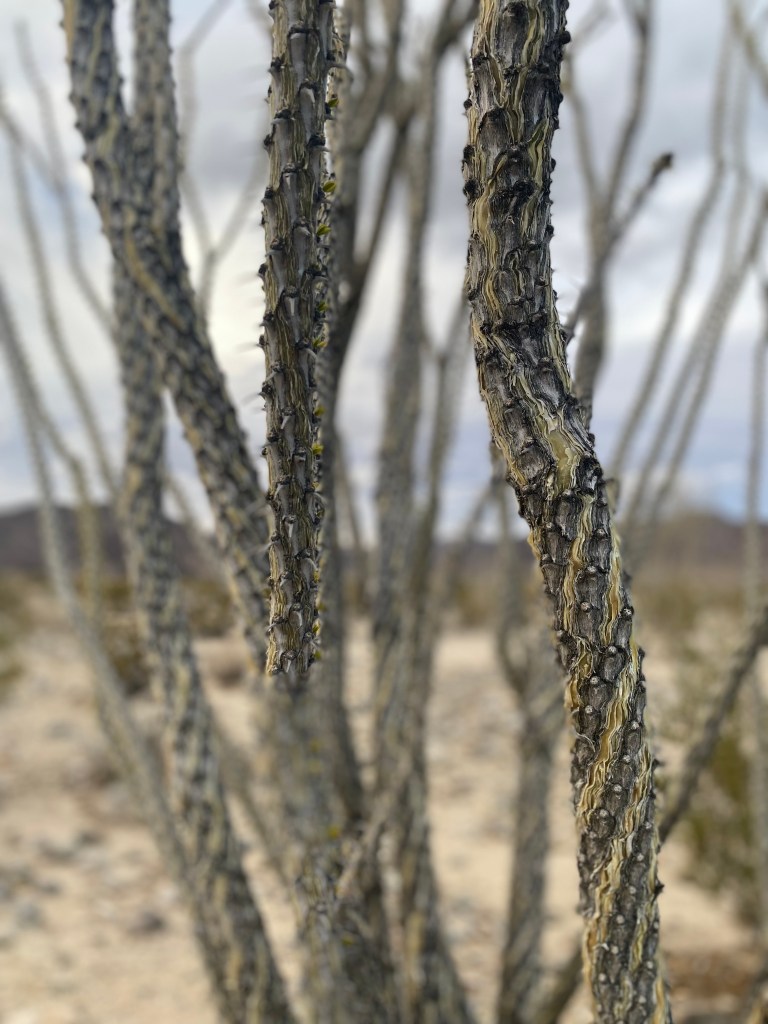
While we were there, these weren’t in bloom. It’s said that they bloom 2-3 times roughly per year. When they do bloom, they become green, luscious, and even bear flowers. Obviously the pictures we have here tell a different story – not one of thriving and blooms. We saw a few that were starting their regrowth cycle, but I think we must have been too early in the season to see their full potential.

The full bloom of these magnificent cacti-trees. Quite something rare indeed.

Read up more on how strange these are here.

Advertisements

Places We Didn’t Get to Go in Joshua Tree:

(Due to weather conditions or not enough time.)

Key’s View

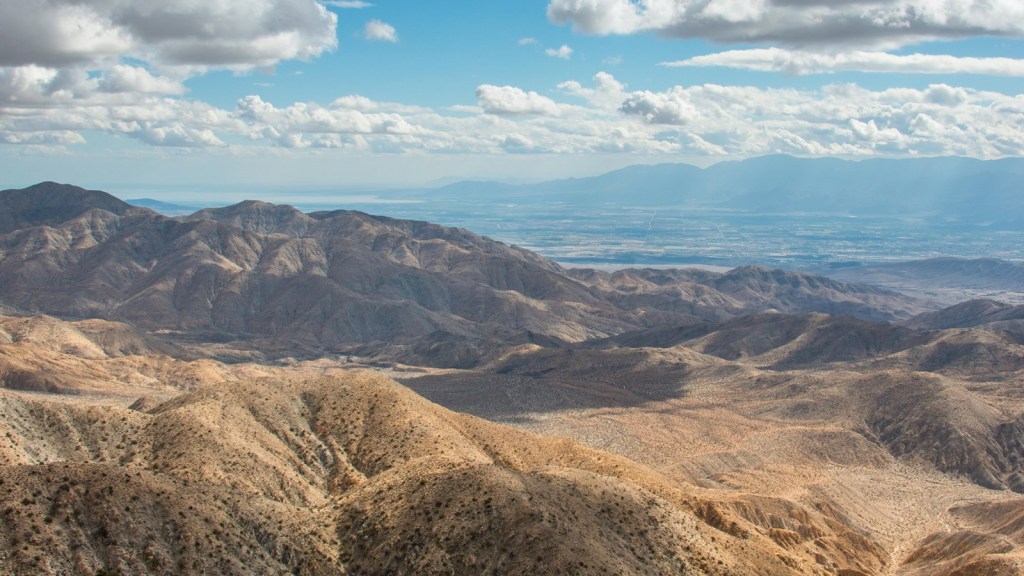
This popular destination, perched on the crest of the Little San Bernardino Mountains, provides panoramic views of the Coachella Valley and is well worth the 20-minute drive from Park Boulevard down Keys View Road.

Maybe you should consider having a picnic and lunch here, we definitely wanted to but the road was closed due to weather!


Key’s Ranch

Advertisements

The Keys Ranch is the prime example of early settlement in the Joshua Tree National Park area. Bill Keys was the area’s leading character, and his ranch is a symbol of the resourcefulness of early settlers. The ranch is an extensive complex of small frame buildings built between 1910 and Keys’ death in 1964.

See Key’s Ranch for yourself, and imagine yourself as an early settler.


Hidden Valley

The Hidden Valley Nature Trail Trailhead is located just off Park Boulevard. This trailhead provides access to the Hidden Valley Nature Trail, an easy one mile loop through Hidden Valley on a dirt and rock trail. This is a popular hike through a rock-enclosed valley surrounded by unique rock formations. Along the way there are interpretive signs with information on the area. The trail has an average width of three feet and an average grade of 4% with a max grade of 19% and involves climbing both steps and open rock.

Hike the Hidden Valley trail yourself when in the park.


Ryan Mountain

Ryan Mountain is a difficult three mile out and back hike with 1,050 feet of elevation in the central part of Joshua Tree National Park. The first section of the trail is relatively flat, but quickly gains in elevation up the mountain. This is one of the most popular hikes as it provides sweeping panoramic views of the park. 

The trailhead for Ryan Mountain is located along Park Boulevard between Ryan Campground and Sheep Pass Campground. There is a secondary trailhead for campers at Sheep Pass Campground, but there is no parking available at Sheep Pass for non-campers. 

Test your mettle with the Ryan Mountain hike.


Barker Dam

Explore the rocky desert landscape of Joshua Tree on the Barker Dam Trail, an easy 1.1 (1.8 km) loop. Wander through Joshua Tree’s iconic monzogranite boulders, namesake Joshua trees, and past the historic Barker Dam. Visit a rock art site and experience human history from a respectful distance.

Encounter rock climbers, spot wildlife big and small, scramble over boulders, and walk along desert washes. Catch a glimpse of the far-off San Gorgonio Mountain. View the plant life of the Mojave Desert, including Joshua trees, creosote, Mojave yucca, and pinon pines.

Advertisements

This trail is ideal for short visits, families, wildlife enthusiasts, rock art and history enthusiasts, photographers, and novice scramblers.

Barker Dam has a little bit of everything and is an easy loop to hike!


Lost Horse Mine

Today Lost Horse Mill is considered one of the best preserved mills of its kind in a National Park Service unit. Lost Horse is also a popular destination for visitors looking for a moderate hike. The trailhead is located off Keys View Road. The trail, which is a four-mile round-trip, follows the road developed by the Ryans to haul ore and supplies. Mine shafts are dangerous, and historic structures are easily damaged. While the Lost Horse site has been stabilized, it is still not safe to walk on so proceed with caution.

Check out this mill with existing mine shafts and history.


Lost Palms Oasis

Lost Palms Oasis is located in the southeastern portion of Joshua Tree National Park. This oasis can be reached on a 7.5 mile out and back hike from Cottonwood Spring with 500 feet of elevation gain. The trail is on a mix of rock, dirt, and sandy washes with very little shade and includes a strenuous climb on rocky terrain out of the canyon that the oasis is located in at the far end of the trail. The oasis is located in Lost Palms Canyon where a permanent water source allows fan palms and other plants to thrive, supporting a vibrant desert wildlife community.

Want to experience a difficult hike to see incredible palm trees? This one is for you! If not, you can also visit the Cottonwood Oasis near the Cottonwood Visitor Center for a much easier chance without the long hike!

Advertisements

Fortynine Palms Oasis

Fortynine Palms Oasis is one of Joshua Tree National Park’s desert oases and is open to the public in the fall, winter, and spring. Located in the northern portion of the park, this oasis provides a refuge among the desert mountains. By providing a reliable source of water, this little oasis allows life to thrive in this seemingly harsh environment.

The oasis is reachable by the Fortynine Palms Oasis Trail, a three mile out and back hike with 300 feet elevation gain in each direction. The trail is on compact dirt with an average grade of 8% and max grade of 27%.

This oasis is a sensitive biological area, please follow posted signs and do not enter the oasis as this is a crucial water supply for plant and wildlife. 

In the summer, Fortynine Palms Oasis, its trail, and the parking area all close to allow bighorn sheep undisturbed access to surface water. The park is under drought conditions and herds in the area are increasingly reliant on the oasis spring to survive the hot summer months. The closure will remain in place until summer or fall monsoons provide adequate rainfall to increase water availability. 

See where the bighorn sheep roam, and have a chance to see one for yourself.


Which Adventure Will You Take in Joshua Tree National Park?

We’ve had a blast writing this blog and hopefully you’ve got some awesome tips for your next trip to Joshua Tree National Park. My girlfriend’s favorite tree is a Joshua Tree – and for good reason. This park is loaded with thousands of them in all directions, and they’re all unique in their own way. Plus, we had the excitement of adventuring the park during a snow day, which is quite an unusual occurrence – like we are!

Advertisements
<img alt="Matt with
Matt with
No Place Like Gone

Hey! I’m the man behind the magic – A.K.A. the camera and blog. I’m also a purveyor of craft beer, grill master, and chief RV driver.

Subscribe to get the best travel info and tips & tricks:

For related reads:

Categories
Adventure travel

Little Painted Desert County Park

We were luckily enough to speak with a veteran park ranger at a local campground here in Arizona where he gave us some insider details on the most adventurous things to do nearby! We would have had ZERO clue that there is a beautiful work of art right around the corner from the campground where were staying at the time.

A quick 20 minute drive away from Winslow, Arizona is how you get off the beaten path to this excellent wonder of Mother Nature. What is Winslow, Arizona known for you ask? If you’ve heard of the famous song “Take It Easy” by The Eagles, then you are in good company. Not only is merchandise available all over the town for the infamous Route 66, but also you can get yourself wonderful pictures by Standin’ On The Corner.

Standin’ On The Corner – Winslow, Arizona
Advertisements

What is the Painted Desert like?

100% worth it. It’s a little sketch though, I won’t lie. Since the county and state authorities have given up on maintenance and taking care of this park, you’ll be greeted by potholes and graffiti all over the place. Heck, the ONLY other person that we saw there was sleeping in their car… but they didn’t bother us the whole time! No big deal for us.

Seriously, though. This place is worth the views. And even if you don’t want to get out of your car, you can drive around most of the rim and get excellent views without walking. Now the roads are pretty awful and falling apart, so you might feel better driving an SUV or truck, but definitely not required.

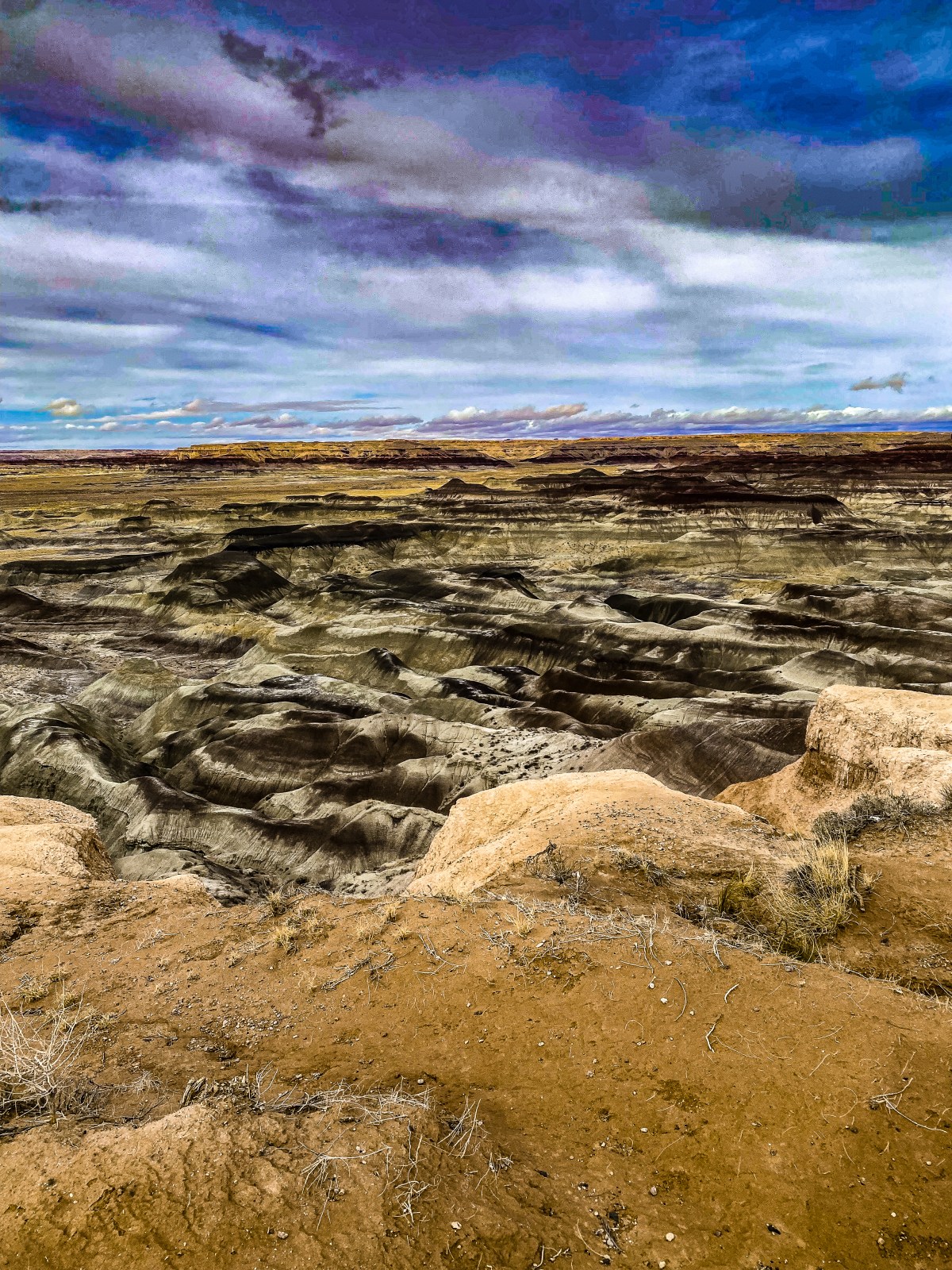
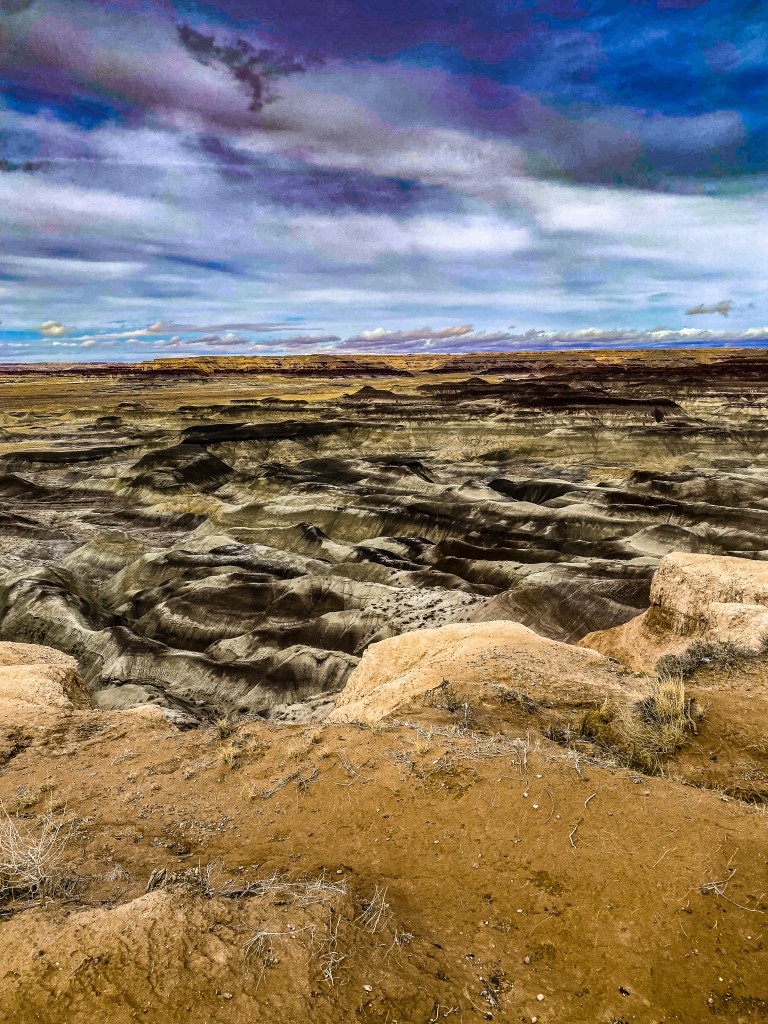
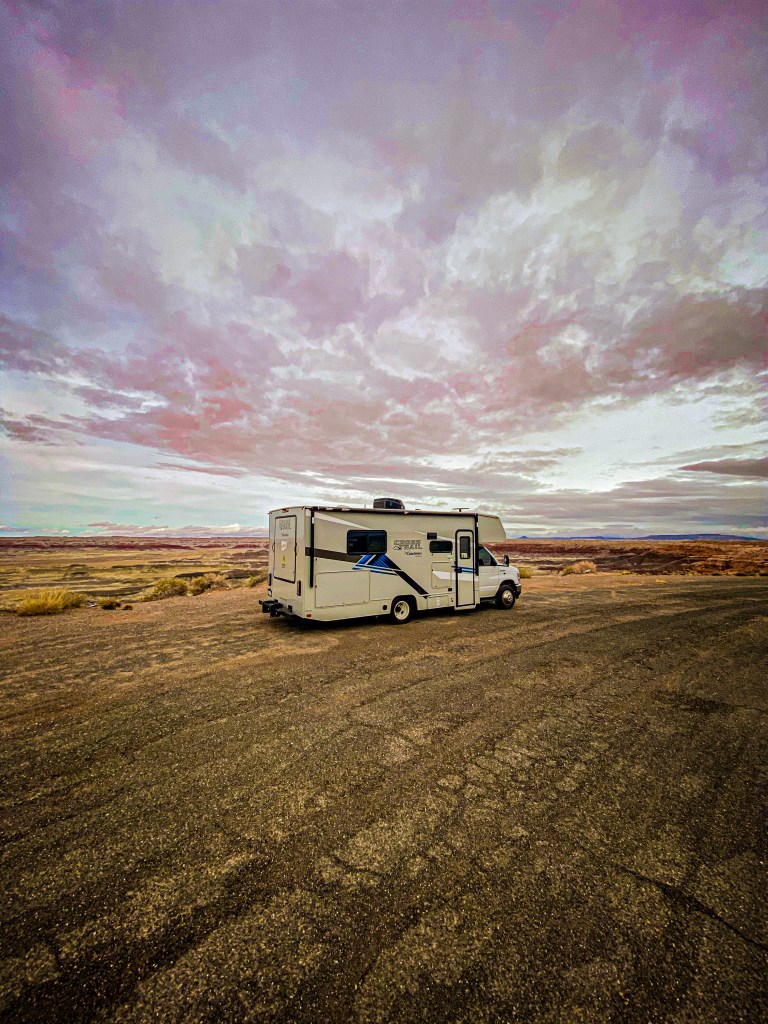
Here’s some images we got there:

Advertisements
Advertisements
Advertisements

You can’t deny that the views of this place are magnificent. It’s so unfortunate that the park isn’t funded and taken care of by the government anymore. However, if you are planning on swinging by the beautiful town of Winslow, Arizona then now you know this place is a hop, skip, and a drop away!

Plan your trip of the Little Painted Desert County Park today! The address to plugin your GPS is: Painted Desert Rim Dr, Winslow, AZ 86047.


Do you want exclusive camping discounts to stay nearby Winslow, AZ?

Check out my partners for 30% off of signing up right now:

Harvest Hosts: Celebrate the season with 30% off a year of unlimited overnight stays at wineries, breweries, farms, and more! For only $69.30, a Harvest Hosts membership gives you access to trip-planning tools, $1500 worth of Member benefits, and 4000+ overnight RV stays for a whole year. Start a membership today and see where the road takes you. Hurry, the sale ends on 12/31/22!

Use my exclusive link here for 30% off of your yearly Harvest Hosts subscription. You must use the code FRIENDS30 at checkout for the discount to apply!

Boondockers Welcome: Boondockers Welcome opens up a world of new camping opportunities. Escape the crowded and noisy campground in favor of a private spot on a beautiful property and a meaningful connection with a friendly host.  Enjoy truly unique stay experiences often without any sacrifice to comfort as 70% of Boondockers Welcome hosts offer hookups.

Use my exclusive link here for 30% off of your yearly Boondockers Welcome subscription. You must use the code BWFRIENDS15 at checkout for the discount to apply!


Want our latest travel updates, tips and tricks, camping hacks, blogs, and more sent to you frequently? Get connected with us below by clicking on our social media buttons!