
We have all heard of OCD (Obsessive Compulsive Disorder) and how some people can literally brush their teeth 20 times before they are able to leave for work in the morning. Sometimes this diagnosis is so life-altering, that they may not even be able to leave the house become of germs, and their monotonous habits of extreme cleanliness. What causes these sometimes incessant behaviors? The better question is how can we learn from these habits and routines? Life is all about learning – and mental health is astounding itself.
Studies have discovered that people with mental health conditions often have higher IQ scores than a person without these conditions. Some of these being anxiety, depression, bipolar, and autism, just to name a few. Elon Musk, being the world’s richest man (depending on the day, could be Jeff Bezos the next day) has a condition called Asperger’s disorder. This lands on the autism spectrum, and is listed as being higher-functioning generally. This condition can affect the ability to effectively communicate and socialize, and also result in an all-absorbing interest in specific topics. To name a few of these for Elon Musk: rockets, electric vehicles, bitcoin; how interesting that science often proves true!

The reality is that almost 3 out of 4 millionaires keep a to-do list, and even schedule or “block off” time during every day for specific activities. Regardless of where you are in life, almost everyone can agree that daily tasks easily can get overwhelming and the days quickly get away from us. No matter whether you’re an engineer, a CEO, the President of the United States, time is our greatest and most invaluable asset. Learning to manage time and be organized might be the most life-changing systems that you can educate yourself on.
Here’s a few tips I’ve learned to stay organized:
1. Keep a Schedule
Whether you like Apple’s Calendar & Reminders, Google Calendar, Microsoft Outlook, a physical day planner, it doesn’t matter. I suggest you try them all, so that you can decide which one fits you best. I personally use Apple’s own calendar and reminders, and have everything merged with my girlfriend so we can keep up with each other’s hectic schedules and lives.

Write it down every time that you make an appointment, have a deadline, a birthday party, or anything else. Practice this behavior every single day, so that it can become another extension of your body. Say goodbye to forgetting about a meeting or appointment, because it’s right there on your phone or planner. Check your calendar every day so that you don’t forget upcoming events, or add any events that you may have forgotten about. That phone call you received during a work meeting where Auntie wanted you to come by for a kid’s birthday party this weekend, yeh that also needs to be calendared too.
Another huge benefit of keeping a calendar is that you won’t be living life on the edge anymore. Your days become more predictable, and you can plan more efficiently where you need to put your energy. This will help reduce anxiety and stress in the long term for almost anyone. Another tip is that you can also schedule time for a hobby, or activity that you want to practice. There’s nothing in the planning guide that says you can’t schedule playing video games. It’s allowed.
2. Block Time Out
Do you feel yourself get overwhelmed and not finding enough time in the day to get specific tasks done? Often times if you work a lot, you might find that your work-home balance suffers. I know there are weeks when I don’t have the time to shave, or keep up with hygiene, and that’s life. Unfortunately, work will hit you in all different directions sometimes.
Try clearing a block of time out of your day, which is essentially the opposite of scheduling, or keeping a to-do list. Blocking time out refers to leaving an open slot for a certain task, or multiple tasks. An example of this could be: if I know I’m extremely busy with work, I might block out 8pm-9pm when I get home to be the designated time for eating dinner, taking a shower, and shaving.
In the professional world, many organized individuals will block time out for meetings, catching up on emails, pouring their energy into a new project, etc. Blocking time out is an effective way to organize your life, especially when used in combination with scheduling and keeping a daily to-do list.
3. Finishing Tasks
When you start something, make sure that you finish it! Procrastination can creep up on all of us, presenting itself as the demon of laziness. It’s easy to lose interest in an overly daunting task. A popular strategy here to implement is to break down overly complicated tasks, into bite size portions. You’ve heard the phrase “What’s the best way to eat an elephant?” and the answer “One bite at a time”. Some tasks are too large, or require too much energy than one day can allow you to accomplish.
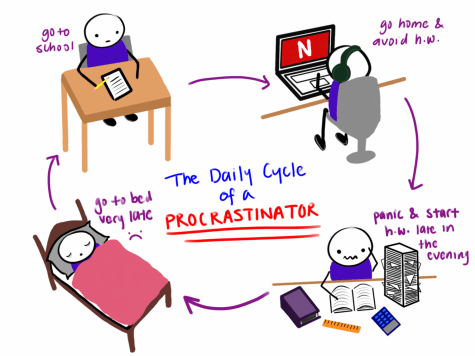
If you have started something, and have trouble finishing it, try starting with the easier portions of the task. Break down the task into what’s easy, harder, or time-consuming. Eventually, after you’ve knocked out easy task after easy task, you can work your way up to the daunting portion of the project. I frequently use this method at work to build up confidence towards completing a mammoth of a responsibility near the end of the day.
One thing to note is that if you procrastinate, you might frequently find yourself falling into ruts. These ruts will allow you to think that being lazy, or not completing something, is OK. Maybe you are overthinking a task or responsibility, making it more complicated than it actually needs to be. You can seek guidance from co-workers and other people in your space. Sometimes you don’t need to put your entire soul into an email response. Just respond, and move on to the next one.
4. Clean Up Regularly
It’s currently Winter and that means that Spring cleaning is right around the corner! Hell, where I live it’s Winter in the morning and Spring by the afternoon… the weather can be exciting, or bipolar. Depends how you look at it.
Cleaning your office desk, car, or home space can be quite valuable. This can allow you to reset your mental image of the mess that can follow you around all day, subconsciously. It will swing wide the door to a new beginning of the week, or month. I definitely suggest doing this once a month, or more often to keep yourself cycling old mess out, and new joys in.

You can also allow yourself to clean out your to-do list, which feels like cleaning out your mind cobwebs, in a way at least. Maybe you’ve had a few daunting tasks that you haven’t made the time for yet. They either aren’t that important, so clear them off the list. Or if they are important, you can delegate them to someone else if time isn’t allowing you to get around to them. Often times your significant other, a family member, or even a co-worker can spare a little time to help. Clean up frequently, so you can constantly keep moving towards fresh behaviors!
5. Plan for Others
One phenomenon that I have discovered is that no matter how much I prepare for something, often things simply take longer than I had planned for. Often times the cause of this is another person in the meeting throwing the train off course by being late, or forgetting valuable information. You can’t control other people’s planning and behaviors. You can control how you plan for others though!
If you think that project meeting will take 30 minutes, chances are that the client has a lot of questions and will push it closer to an hour. Unless you great with setting timetables and boundaries, you’re going to be expected to spend more time with certain daily events. Always allow for more time than is actually planned. Although none of us can foresee the fortune, trust that planning for additional time will often not get you into trouble.
6. Simplify Decision Making
Making decisions can quickly complicate the organization process, but why is that? If we spend more of our time trying to decide what to do, rather than actually doing it, we clearly aren’t organized enough for the task. Burning time can quickly set you behind a deadline, or previously scheduled timeframe. Use your time wisely.
Rather than flailing around like a Magikarp in the ocean, quickly decide how important this decision could be and what else it affects. Schedule the time for important decisions to be made, and let them play out how they need to. Even so, you might find it useful to set a boundary of time. A recent technique that I have been implementing is to allow myself one hour for a task. When it’s around 30-45 minutes into the task, I make a decision on what’s the most important part of the task and what do I think that I can finish within the hour. Once I am nearing the hour mark, I make the final decisions and move on. Sure, there were three other right answers, but if I spent another hour or two worrying about that, I potentially risk throwing off the rest of my day’s schedule.

A very popular method used in counseling especially for ADHD diagnosed patients is called Goal, Plan, Action. That’s all you need, three steps. List a goal, create a plan, take action.
Goal: I want to clean the house.
Plan: I will clean the house at 6pm by sweeping, doing the dishes, and making the bed.
Action: At 6pm, I started sweeping. Next, I started on the dishes. Afterwards, I made the bed. Obviously these are actions, and describing them isn’t the same as actually doing them, but you get the point!
7. Delegate Tasks to Others
When time is not on your side, often it is in your best interest to allow the grunts to do the work! Kidding. Seriously though, if you have an assistant or coworkers who are capable of helping you, use them! There are many times when others may not have as difficult of a work load as you, and they can step in and take a menial task off of your stress meter.
You can also have productive conversations with your boss. If work is piling up faster than you can handle it, relay this to upper management. Typically there is a way to prioritize tasks, and some of them will always be the most important. Even though there are too many tasks to handle, maybe you can focus on the few higher priority ones and let the boss know the others aren’t possible right now. In some cases, they could hire another employee or outsource work, if the tasks are truly that important.
The same applies to family, or having a lovely significant other. You might have a crazy deadline at work and have to work extra this week, and your partner could make the grocery trips this week instead of you. Maybe you both are tied up and can’t find the time to cut the grass this week, well maybe it’s the time to find the additional money to pay someone to come and cut the grass for you. There’s always a way to plan a path forward, so delegate tasks that you can’t get done by yourself!
In Summary:
Once you set the systems in place and become organized, they begin to ingrain themselves into your daily routine with repeated patterns. A book that I can highly recommend to help you with creating healthier habits, and replacing your bad habits, is Atomic Habits by James Clear. It’s a great read that will explain the difference between having good habits (productivity, work-ethic, etc.) and bad habits (procrastination, laziness, etc.). It’ll also give you realistic approaches to re-shaping your bad habits into these new good habits, in every aspect of your life.
Remember when you used to be late to meetings because you slept in Time Management 101 class (this doesn’t exist I hope…) in college? Well now, you as a changed person can arrive 10 minutes before any meeting. Shirt ironed, presentation memorized, able to speak fluently or tackle any question at any given time. No one can stop you, and it’s a powerful feeling to have. Others will notice how prepared and organized you are, and will come to you for guidance!
You’ve graduated, young grasshopper.
 No Place Like Gone